Hosts looking for sugar-free sweets
If sugar-free status is essential, choose by the exact pack’s claim and sugars information, not by a small portion size or a similar-sounding label.


Choose a sugar-free gummy only after checking the exact pack against guests’ ages and dietary needs. Free From Fellows’ listed gummy bears avoid gelatine but carry a warning that they are not suitable for young children; de Bron Fruit Gums contain gelatine. Both listings warn that excessive consumption may cause laxative effects, so neither belongs in an unrestricted self-serve bowl.
If sugar-free status is essential, choose by the exact pack’s claim and sugars information, not by a small portion size or a similar-sounding label.
Gummy sweets can differ in their ingredients. The Free From Fellows gummy-bear listing has no gelatine in its ingredients, while the de Bron Fruit Gums listing includes gelatine; check the pack you intend to serve.
The two sugar-free gummy listings carry excessive-consumption warnings. The Free From Fellows listing also says its gummy bears are not suitable for young children, making guest age an important check before purchase.
Start with the sugar-free requirement, then choose a format that works for the guest list and the way the food will be served.
| Priority | What to check | Your needs |
|---|---|---|
| Sugar-free status | Look for a sugar-free claim on the exact product and compare the sugars figure per 100 g. Do not treat “no added sugar” or a smaller pack as the same claim. | I need the sweets themselves to be labelled sugar-free, rather than simply serving less of an ordinary sweet. |
| Guest age and portions | Read sweetener and age warnings. The Free From Fellows gummy-bear listing says it is not suitable for young children; both it and de Bron Fruit Gums warn about excessive consumption. | For a children’s party, I need to know whether a product is appropriate for the guests and be able to manage how much is served. |
| Dietary suitability | Check the current ingredients for gelatine and other guest-specific restrictions. The listed Free From Fellows gummy bears contain no gelatine; de Bron Fruit Gums list gelatine. | Some guests avoid gelatine, so a sugar-free label alone does not settle which sweets I can offer. |
| Serving format | Decide whether you need ready-to-hand-out gummies or can prepare and serve jelly as a dessert. Jelly for a dessert table is not a direct substitute for sweets in party bags. | I can prepare a dessert if there will be somewhere to serve it, but party bags call for a different format. |
| Pack information | Check ingredients and allergen information on every current pack, and keep the packaging available if sweets are put into bowls or party bags. | I need to be able to identify what each guest is being offered, especially when the original wrappers are out of sight. |
“Low sugar”, “no added sugar” and “sugar-free” do not mean the same thing. A smaller serving of ordinary jelly sweets does not make the product sugar-free.
Check the precise claim and the sugars figure per 100 g for the pack you plan to buy.
The Free From Fellows and de Bron listings both warn that excessive consumption may cause laxative effects. A shared bowl makes portions harder to keep track of.
Check the warnings before serving, use controlled portions and consider another option for guests who should avoid these sweets.
HARIBO lists 49 g sugars per 100 g for Goldbears Sour. Sainsbury’s listings of Rowntree’s sweets do not establish sugar-free status for a particular Rowntree’s pack.
Make the decision product by product, using the exact label rather than the brand alone.
The listed Free From Fellows gummy bears contain no gelatine, whereas de Bron Fruit Gums list it. That difference matters independently of sugar-free status.
Ask about known restrictions, check ingredients and allergen information on the pack served, and retain its packaging during the party.
These examples show why the exact product matters: a sugar-free gummy, an ordinary sweet and a jelly dessert answer different serving needs.
G. Baldwin & Co lists the 100 g Sugar Free Vegan Gummy Bears as a gelatine-free gummy option made with maltitol syrup.
Sweets Without lists de Bron Sugar Free Fruit Gums with 0.0 g sugars and 73 g polyols per 100 g.
HARIBO’s UK Goldbears Sour page provides a useful example of why ordinary gummies should be checked separately from sugar-free ones.
Sainsbury’s lists Rowntree’s Fruit Pastilles, Fruit Gums and Jelly Tots among its sweets.
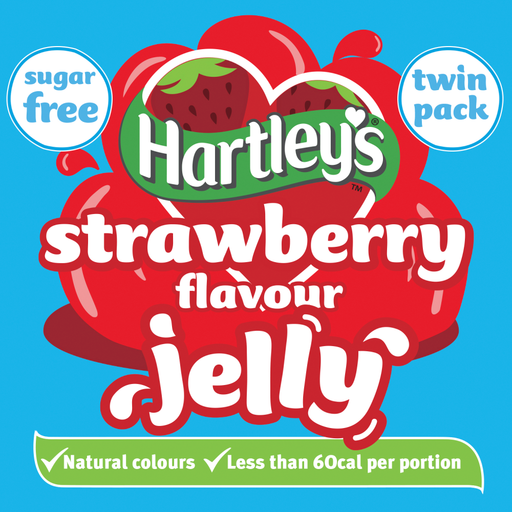
Tesco lists Hartley’s sugar-free ready-to-eat jelly and jelly crystals in its jelly range.
This sugar-free jelly is an option for a prepared birthday-party dessert, rather than a gummy sweet to hand out or put in party bags.
 No image available
A sugar-free strawberry jelly for a dessert table, not an individual gummy sweet. Allow for preparation and setting, and check the current pack’s ingredients against guests’ dietary requirements before serving.
No. Check for a sugar-free claim on the exact pack and read its sugars figure per 100 g; “no added sugar” and “sugar-free” are different claims.
Check the particular product’s age and consumption warnings first. The Free From Fellows gummy-bear listing says it is not suitable for young children, and both that listing and de Bron’s Fruit Gums listing warn that excessive consumption may cause laxative effects.
Do not assume so. HARIBO lists 49 g sugars per 100 g for Goldbears Sour; check each other product’s own claim and nutrition panel rather than treating that figure as representative of a whole brand.
Ask the school or caterer before bringing them. Department for Education guidance concerns food and drink provided in state-funded schools in England, and the Requirements for School Food Regulations 2014 define confectionery to include non-chocolate confectionery whether or not it contains sugar. The arrangements for a particular event need checking with the school.
Keep the original packs so you can check each product’s current ingredients, allergen information and warnings after decanting. Ask about known guest restrictions before choosing what to include.