Shoppers who want chewy sweets
Choose a ready-to-eat fruit gum if texture matters. Compare pack sizes and read the sugars, polyols, ingredients and any laxative-effects warning before choosing a bag.


If you want a ready-to-eat chewy sweet, look for sugar-free fruit gums; if a spoonable dessert will do, sugar-free jelly crystals offer a different format but need preparation and chilling. For a budget shop, compare pack sizes within the format you will use, and check the nutrition panel, ingredients and dietary warnings rather than assuming familiar jelly sweets are sugar-free.
Choose a ready-to-eat fruit gum if texture matters. Compare pack sizes and read the sugars, polyols, ingredients and any laxative-effects warning before choosing a bag.
Jelly crystals may suit you if a spoonable dessert meets the brief and you have time to prepare and chill it. They are not a direct substitute for chewy sweets.
Check gelatine and sweeteners on the exact product. Diabetes UK notes that polyols contain carbohydrate and calories, while the NHS says aspartame is unsuitable for people with phenylketonuria (PKU). Seek advice from your healthcare team for individual diabetes-management questions.
Decide whether you need a chewy sweet or can prepare a dessert, then compare products that meet that need.
| Priority | What to check | Your needs |
|---|---|---|
| Sugars | Look for the sugar-free claim, then read sugars per 100g and the ingredients. Fruit flavour or a familiar brand name is not a substitute for the label: Tesco Groceries lists 54.6g sugars per 100g for Rowntree's Jelly Tots, while Sainsbury's lists 63g per 100g for Haribo Nostalgix. | I want to distinguish a sugar-free product from an ordinary jelly sweet before comparing packs. |
| Format | Check whether the product is ready to eat or needs water and chilling. Compare pack size and usable servings within the format you intend to eat. | A chewy sweet is what I'm after; a dessert mix will only work if I'm happy to make and serve jelly instead. |
| Ingredients | Read the sweetener, gelatine and warning declarations. SweetsWithout lists maltitol and a laxative-effects warning for De Bron Fruit Gums; Tesco Groceries lists aspartame and a phenylalanine warning for Hartley's Strawberry Jelly Crystals. | I need to check whether the ingredients and warnings fit my dietary requirements before choosing either format. |
| Budget fit | Compare the current pack price, pack size and availability. For crystals, consider the prepared servings and time required rather than comparing dry weight directly with ready-to-eat sweets. | I'd rather compare what I can actually serve or eat than choose by the pack price alone. |
Tesco Groceries lists 54.6g sugars per 100g for Rowntree's Jelly Tots; Sainsbury's lists 63g per 100g for Haribo Nostalgix. Neither checked product is a sugar-free alternative.
Check the claim and nutrition panel on the particular pack, not just its fruit flavour, brand or texture.
Diabetes UK explains that polyols contain carbohydrate and calories. Sugar-free fruit gums should not be treated as a personalised diabetes-management choice on the strength of the label alone.
Read sugars, carbohydrate, polyols and serving information. If you adjust insulin, ask your healthcare team how to account for the product.
The SweetsWithout listing for De Bron Fruit Gums warns that excessive consumption may cause laxative effects.
Read the warning and consider the amount you intend to eat before buying a bag.
Jelly crystals are mixed with water and chilled, while fruit gums are ready to eat. Their dry pack weights do not describe like-for-like portions.
Choose the format first; then compare pack sizes, prepared servings where stated, and the preparation time you can accommodate.
Its checked Fruit Gums listing offers a ready-to-eat sugar-free chewy sweet.
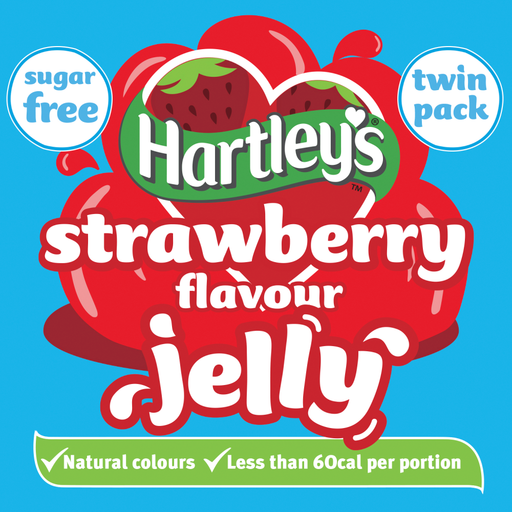
The checked Sugar Free Strawberry Jelly Crystals are a dessert mix, not a ready-to-eat sweet.
The checked Jelly Tots product is a conventional jelly sweet, not a sugar-free option.
The checked Nostalgix product illustrates why jelly-sweet texture does not establish sugar-free status.
Tesco Groceries lists sugar-free products in both prepared-jelly and ready-to-eat jelly formats.
This jelly-crystal option is for shoppers willing to prepare a sugar-free dessert rather than buy a ready-to-eat chewy sweet.
 No image available
A sugar-free jelly dessert mix for shoppers who can prepare and set jelly rather than eat a chewy sweet straight from the pack. It requires boiling water and time to set; it contains pork gelatine and aspartame and carries a phenylalanine warning.
No. Check the sugar-free claim, ingredients and sugars value on the product you intend to buy. Tesco Groceries lists 54.6g sugars per 100g for Rowntree's Jelly Tots, and Sainsbury's lists 63g per 100g for Haribo Nostalgix.
No. The checked De Bron Fruit Gums contain maltitol, and Diabetes UK explains that polyols contain carbohydrate and calories. If you adjust insulin, ask your healthcare team for individual advice on accounting for the product.
The checked De Bron Fruit Gums contain maltitol, and their SweetsWithout listing warns that excessive consumption may cause laxative effects. Read the warning when deciding whether a pack suits the amount you intend to eat.
Only if you are happy with a different texture and some preparation. Hartley's Sugar Free Strawberry Jelly Crystals are made into a spoonable dessert and chilled to set, rather than eaten as ready-to-eat chewy sweets.
Check the ingredients for aspartame and read the phenylalanine declaration. Tesco Groceries lists aspartame and a phenylalanine warning for Hartley's Sugar Free Strawberry Jelly Crystals; the NHS says aspartame is not suitable for people with phenylketonuria (PKU).