Do not rely on sugar-free jelly sweets as your primary marathon fuel simply because they are sugar-free. World Athletics’ endurance guidance plans carbohydrate intake in grams per hour, so check what each serving actually provides and practise your chosen fuel in training. Gels, chews or drinks with stated carbohydrate amounts offer a clearer basis for that plan; some maltitol-sweetened sweets also carry a laxative-effect warning.
Who is making this choice?
The useful distinction is between choosing a sweet to eat and choosing a serving you can count towards a practised running-fuel plan.
Runners planning fuel for long runs
If you plan carbohydrate intake by the hour, check the amount in each serving rather than estimating it from a handful of sweets. World Athletics gives different intake ranges for endurance events of 1–2.5 hours and those lasting longer than 2.5 hours.
Runners who prefer sugar-free sweets
A preference for less sugar does not establish whether a jelly sweet supplies carbohydrate in a useful amount for a run. Check its nutrition and sweetener information, including any laxative-effect advisory on the pack.
Runners who dislike conventional gels
Chews or a more drink-like gel offer different textures while still allowing you to look for stated carbohydrate per serving. Practise eating or drinking the chosen format at running pace.
What should you check before choosing?
World Athletics lists 30–60 g of carbohydrate per hour for endurance events lasting 1–2.5 hours, and up to 90 g per hour for events over 2.5 hours. Those ranges are a planning reference, not a serving instruction for a particular sweet or gel; the distance-running guidance published with World Athletics also calls for a personalised plan practised in training.
Sugar-free jelly sweets
Consider for: An occasional sweet, rather than assuming it will provide your planned running fuel.
Trade-off: The sugar-free description alone does not tell you the usable carbohydrate amount or sweetener type; a maltitol-sweetened jelly-bear product listed by A Quarter Of carries a laxative-effect advisory.
Measured carbohydrate gels
Consider for: A stated carbohydrate serving that you can count towards a long-run plan.
Trade-off: A measured sachet does not establish that its texture, serving rate or combination with fluids will suit you; practise the full plan while training.
Measured carbohydrate chews
Consider for: A chewable alternative if you can comfortably eat while running and want stated portions.
Trade-off: You still need to check carbohydrate per chew or packet and practise consuming it at your intended pace.
| Priority |
What to check |
Your needs |
| Carbohydrate per serving |
Read the grams of carbohydrate per serving and the serving size. Count all fuel consumed within the hour; World Athletics’ ranges depend on event duration. |
I want to know what each portion contributes, rather than guessing from the number of sweets I eat. |
| Carbohydrate ingredients |
Check the exact ingredients rather than relying on a sugar-free label. For the highest intake range in events over 2.5 hours, World Athletics identifies glucose with fructose or glucose polymers such as maltodextrin. |
If I am planning a longer event, I need to know whether the product fits the carbohydrate approach I have practised. |
| Sweeteners and tolerance |
Read the sweetener list and any pack advisory. A Quarter Of lists maltitol syrup in its Sugar Free Jelly Bears and advises that eating large quantities may have a laxative effect. |
I would rather find out how a sweet or fuel format suits me during ordinary training than try it for the first time in a race. |
| Format and fluid plan |
Check whether you can carry, open and consume the serving while running. Plan carbohydrate from drinks alongside gels, chews and food, and check each product’s directions. |
A chewable portion may suit me better than a gel, but I still need to keep track of everything I consume and practise the combination. |
What can go wrong with a fuel plan?
-
Assuming “sugar-free” means suitable running fuel
A sugar-free label does not establish the carbohydrate amount or ingredients needed for a planned hourly intake. World Athletics’ endurance guidance expresses intake in grams of carbohydrate per hour.
Check the exact serving declaration and ingredients. If you need a measured fuel, build your practised plan around products whose carbohydrate contribution you can count.
-
First trying polyol-sweetened sweets on race day
Some sugar-free sweets use polyols. A Quarter Of lists maltitol syrup in its Sugar Free Jelly Bears and advises that eating large quantities may have a laxative effect; individual tolerance also matters during a run.
Read the exact pack’s sweetener and advisory information. If you choose to eat the sweets, try a realistic amount during an ordinary training session, not for the first time in a race.
-
Counting gels but forgetting drinks and other food
An hourly carbohydrate plan covers everything consumed in that hour, not just gel sachets. The distance-running guidance published with World Athletics also emphasises balancing carbohydrate and fluid intake with gut comfort.
Add the stated carbohydrate from each gel, chew, drink and food portion, then practise the combined plan at a relevant pace and duration.
Brand and product references
These named products illustrate the difference between ordinary confectionery and measured sports-fuel servings; a brand’s inclusion here does not describe every product it makes.
HARIBO
HARIBO Jelly Beans are an example of conventional sugary confectionery, not a sugar-free option.
- HARIBO UK lists 93 g carbohydrate per 100 g for Jelly Beans.
- The same manufacturer declaration lists 66 g sugars per 100 g. To use any confectionery in a fuel plan, you would still need to calculate the amount in the portion you carry.
HIGH5
HIGH5 Energy Gel Aqua illustrates a gel with a stated carbohydrate amount per sachet.
- HIGH5 states that Energy Gel Aqua provides 23 g carbohydrate per sachet and is intended for before or during exercise.
- Its stated serving makes counting possible, but you still need to practise the format and account for other fuel and fluids.
Precision Fuel & Hydration
The PF 30 product information gives stated carbohydrate portions in both gel and chew formats.
- Precision Fuel & Hydration states that PF 30 Gel provides 30 g carbohydrate and that a PF 30 Chews packet contains two chews with 15 g carbohydrate each.
- Choose the format and serving pattern you can practise while running; these stated portions do not establish individual tolerance.
Measured gel options on Joybuy
These are gel options for runners considering a measured fuel format instead of using sugar-free jelly sweets as their main marathon fuel. Check the exact pack’s carbohydrate and sugar declarations before choosing: a gel is not necessarily sugar-free, and pack size alone does not set an hourly serving plan.
 No image available
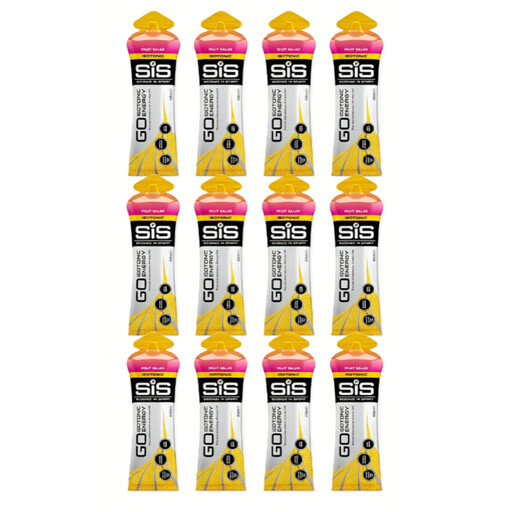
Science in Sport GO Isotonic Fruit Salad Gel, 60ml (12 packs)
A gel format to consider if you prefer individual portions to a handful of sweets. The product name specifies 60ml and 12 packs; check the carbohydrate and sugar amounts on the exact pack before fitting a serving into your running plan.
View on Joybuy
 No image available
Applied Nutrition Endurance Elite Tri-Source Energy Gel, Orange Burst, 40g Carbs (20 gels)
A gel option for a plan that counts carbohydrate rather than relying on a sugar-free sweet. The product name specifies 40g carbohydrate and a pack of 20 gels; confirm the serving declaration, sugars and directions on the exact pack, then practise your intended intake during training.
View on Joybuy
 No image available
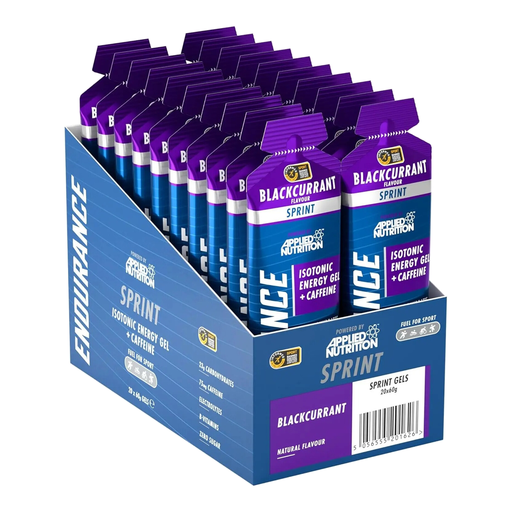
Applied Nutrition Energy Gel + Electrolytes Endurance, Blackcurrant (20 x 60g)
Another gel format to assess for a measured running-fuel plan. The product name specifies 20 servings of 60g; check carbohydrate, sugars and the serving directions on the exact pack rather than treating its format as proof that it meets a sugar-free preference.
View on Joybuy
Questions about sweets and running fuel
Can sugar-free jelly sweets be my main marathon fuel?
Do not choose them as your main fuel on the strength of a sugar-free label alone. World Athletics lists 30–60 g carbohydrate per hour for endurance events lasting 1–2.5 hours and up to 90 g per hour for events over 2.5 hours; check whether the exact sweet provides a measurable carbohydrate serving and fits the plan you have practised.
Why check the sweeteners in sugar-free jelly sweets?
Some sugar-free sweets contain polyols, and the exact ingredients and advisory matter when you may eat them during a run. A Quarter Of lists maltitol syrup in its Sugar Free Jelly Bears and advises that eating large quantities may have a laxative effect. Check your pack and do not make a race your first trial.
How should I choose between gels and chews?
Start with the carbohydrate amount per serving, then choose a texture you can carry and consume at running pace. HIGH5 states that Energy Gel Aqua provides 23 g carbohydrate per sachet; Precision Fuel & Hydration states that PF 30 Gel provides 30 g and a PF 30 Chews packet contains two 15 g chews. Check the exact product you buy and practise your full plan in training.
Do I need water with a gel or chew?
Follow the directions for the exact product and plan fluids alongside all your fuel. The distance-running guidance published with World Athletics calls for a practised balance of carbohydrate and fluid intake that accounts for gut comfort; one product’s format does not establish what will suit you during a run.


