Gym-goers limiting sugar
If you want something sweet after training but require a sugar-free product, check the exact claim on the pack. A reduced-sugar gummy is a different choice.


A sugar-free jelly can be a sweet treat after training, but check whether you are buying a jelly dessert or the chewy sweets you had in mind. Reduced sugar is not the same as sugar-free: Marks & Spencer lists 36.9g sugars per 100g for Reduced Sugar Percy Pig. If the snack is intended to contribute to recovery after high-volume or intense exercise, consider its protein and carbohydrate content rather than relying on its sweet format.
If you want something sweet after training but require a sugar-free product, check the exact claim on the pack. A reduced-sugar gummy is a different choice.
After high-volume or intense exercise, the snack’s protein and carbohydrate contribution may matter more to you than whether it tastes like a sweet. The Journal of the International Society of Sports Nutrition’s position stand discusses planned nutrient intake in this setting.
Check dietary information for the exact product. Marks & Spencer labels Reduced Sugar Percy Pig vegan and vegetarian, but that product is not sugar-free.
Decide whether you want a sweet treat or a snack chosen for its nutritional contribution, then check the format and label of the individual product.
Choose it when: You want a sweet treat and are happy with a jelly dessert rather than chewy sweets; Tesco Groceries lists Hartley’s Sugar Free Jelly variants.
Keep in mind: Check the individual product’s nutrition and preparation instructions before using it as your whole post-gym snack.
Choose it when: You prefer a chewy sweet and do not require it to be sugar-free; Marks & Spencer describes Reduced Sugar Percy Pig as having a third less sugar.
Keep in mind: The M&S product lists 36.9g sugars and 1.0g protein per 100g.
Choose it when: After high-volume or intense exercise, you want the snack to contribute protein and carbohydrate to your recovery plan.
Keep in mind: A sweet can remain an optional extra, but its sugar-free label alone does not tell you what protein or carbohydrate it provides.
| Priority | What to check | Your needs |
|---|---|---|
| Sugar claim | Look for an explicit sugar-free claim, then read sugars per 100g or 100ml and per serving. The claim condition published by Legislation.gov.uk is no more than 0.5g sugars per 100g or 100ml. | I want a sweet that meets a sugar-free requirement, not one described only as reduced sugar. |
| Snack nutrition | Compare protein and carbohydrate per serving, alongside the rest of the meal. The Journal of the International Society of Sports Nutrition discusses planned nutrient intake after high-volume or intense exercise. | If I am counting on this snack as part of recovery, I want to know what it actually contributes. |
| Format and preparation | Confirm whether the product is a chewy sweet, a jelly to prepare or a ready-to-eat dessert. Check preparation instructions and serving size. | I may want something I can eat straight after training rather than a dessert that needs to set. |
| Dietary suitability | Read the current ingredients, allergen information and any vegan or vegetarian statement for the exact variant. Check any child-safety notice if relevant. | For a dietary requirement or allergy, I need the details on the product I am buying, not a claim about the wider range. |
A lower-sugar version can still contain sugar: Marks & Spencer lists 36.9g sugars per 100g for Reduced Sugar Percy Pig.
If sugar-free is your requirement, check for that exact claim and read the sugars figure on the pack.
A sweet’s flavour or sugar claim does not establish its protein and carbohydrate contribution. The M&S reduced-sugar gummy lists 1.0g protein per 100g.
After high-volume or intense exercise, choose food for its intended nutritional contribution first; have a jelly sweet as an optional treat if you want one.
The Department for Education’s school-food guidance addresses food and drink provided to pupils in state-funded schools in England. It does not classify every jelly sweet or answer what an adult should buy after the gym.
Use the exact product label and your reason for choosing the snack to make this decision.
Ingredients and dietary information can change. Marks & Spencer advises shoppers to check the label of Reduced Sugar Percy Pig.
Read the current pack, particularly when an allergy or dietary requirement affects your choice.
Reduced Sugar Percy Pig is a chewy-sweet option for shoppers who accept some sugar; it is not a sugar-free product.
Tesco Groceries lists Hartley’s Sugar Free Jelly in Strawberry, Raspberry and Lemon & Lime variants. These are jelly products rather than a confirmed chewy-sweets choice.
Tesco Groceries groups low-calorie and sugar-free jelly products in a retailer category, including Hartley’s variants.
This option is a sugar-free jelly to prepare, for someone who wants a sweet treat after training rather than a ready-to-eat chewy sweet.
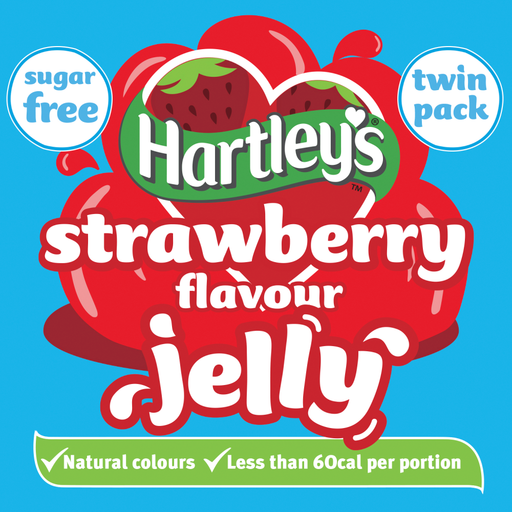 No image available
Choose this 23g strawberry jelly if you want a sugar-free sweet treat and are happy to prepare it and let it set. Check the current pack for ingredients, preparation instructions and nutrition if it needs to serve another purpose in your post-gym snack.
No. Legislation.gov.uk publishes a sugar-free claim condition of no more than 0.5g sugars per 100g or 100ml. Marks & Spencer describes Reduced Sugar Percy Pig as having a third less sugar, but lists 36.9g sugars per 100g for that product.
If you intend the snack to contribute to recovery after high-volume or intense exercise, assess its protein and carbohydrate rather than choosing by sweet format alone. The Journal of the International Society of Sports Nutrition discusses planned nutrient intake in that setting; for comparison, M&S Reduced Sugar Percy Pig lists 1.0g protein per 100g.
The Department for Education guidance considered here concerns food and drink provided to pupils in state-funded schools in England. Its scope does not establish a general rule for adult retail purchases or classify a particular jelly sweet. For your snack choice, check the individual product’s label and nutritional role.
Check the exact sugar claim, sugars and protein per serving and per 100g, ingredients, allergens, dietary statements and preparation instructions. Check any child-safety notice if relevant. Marks & Spencer advises reading the current pack label because product information can change.