Do not choose sugar-free jelly sweets as a routine toddler snack simply because they contain less sugar: the NHS identifies hard, gooey and sticky sweets as choking hazards for babies and young children. For regular snack time, consider an age-appropriate non-confectionery option; if buying an occasional sweet for an older child, check the exact pack’s age warning, texture, sugars and ingredients.
Who is this choice for?
Parents of children under three
If you are considering chewy or sticky sweets for snack time, start with the child’s age and the sweet’s texture, not its sugar claim. The NHS identifies hard, gooey and sticky sweets as choking hazards for babies and young children. M&S also warns that its Jelly Babies are not suitable for children under 36 months because of a potential choking hazard.
Parents choosing an occasional treat for an older child
Once a child is beyond any age warning on the particular pack, sugar content and ingredients may help you compare occasional sweets. A sugar-free or reduced-sugar label does not settle questions about texture or age suitability; the NHS also notes that lower- or no-calorie sweeteners do not necessarily make a food healthy.
People choosing food for a nursery or school setting
Food provided in a care or school setting calls for checks specific to that setting, rather than applying a household snack decision to catering. For English schools, the Department for Education says proposed updated school-food standards are subject to Parliamentary approval for September 2027.
What should you check first?
For toddler snack time, rule out unsuitable textures and age warnings before comparing sugar claims. If the aim is a regular snack rather than an occasional sweet, consider a non-confectionery option suited to the child’s eating stage.
| Priority |
What to check |
Your needs |
| Texture and age |
Read the exact pack’s age warning. The NHS says babies and young children should not have hard, gooey or sticky sweets because they are choking hazards. |
I want a snack suited to my child’s age and chewing ability, rather than assuming a soft-looking or sugar-free sweet is suitable. |
| Snack or treat |
Decide whether you are buying something for regular snack time or an occasional sweet. For a snack, assess a non-confectionery option against the child’s age guidance, ingredients and eating stage. |
For an everyday snack, I would rather compare age-appropriate food options than use a jelly sweet as the starting point. |
| Sugars |
Compare the exact products’ ‘of which sugars’ values per 100 g and their ingredients. HARIBO UK lists 55 g of sugars per 100 g for its Jelly Babies; that figure does not describe other products or variants. |
If I am buying an occasional sweet for an older child, I want to compare what the packs actually say instead of relying on fruit-related wording. |
| Sweeteners and warnings |
For a sugar-free or reduced-sugar sweet, read its ingredients and on-pack warnings as well as its sugars value. The NHS says lower- or no-calorie sweeteners do not necessarily make a food healthy. |
Reducing sugar may matter to me, but I still need to decide separately whether the sweet’s texture and age advice make it an appropriate choice. |
Common buying mistakes
-
Treating ‘sugar-free’ as an age-suitability label
A sugar claim does not change a sweet’s texture. The NHS identifies hard, gooey and sticky sweets as choking hazards for babies and young children.
Check the specific product’s age warning and texture first. Do not choose a hard, gooey or sticky jelly sweet for toddler snack time on the strength of its sugar claim.
-
Using fruit-related wording instead of the nutrition label
A product’s name or fruit-related presentation does not tell you its sugars value. HARIBO UK lists 55 g of sugars per 100 g for its Jelly Babies.
When comparing occasional sweets for an older child, read the ‘of which sugars’ figure and ingredients on each exact pack.
-
Letting sweetener information replace the safety check
The NHS says lower- or no-calorie sweeteners do not necessarily make a food healthy. Their presence does not answer whether a jelly sweet is suitable for a young child.
Read the ingredients and warnings, but make the child’s age and the product’s texture your first checks for toddler snack time.
Brand and retailer references
Individual product labels are more useful here than a brand-wide assumption about sugar content or suitability for toddlers.
Haribo
Haribo sells conventional jelly sweets, including Jelly Babies. Its product information can help with a comparison of a specific sweet, not establish suitability for toddler snack time.
- HARIBO UK lists 55 g of sugars per 100 g for its Jelly Babies.
- For a young child, the NHS warning about hard, gooey and sticky sweets remains a separate consideration.
M&S
M&S product labels illustrate why age advice must be checked on the particular sweet being considered.
- The M&S Jelly Babies label gives an explicit under-36-month age warning.
- That label says the product is not suitable for children under 36 months because of a potential choking hazard; a different M&S sweet needs its own label check.
A non-confectionery snack option
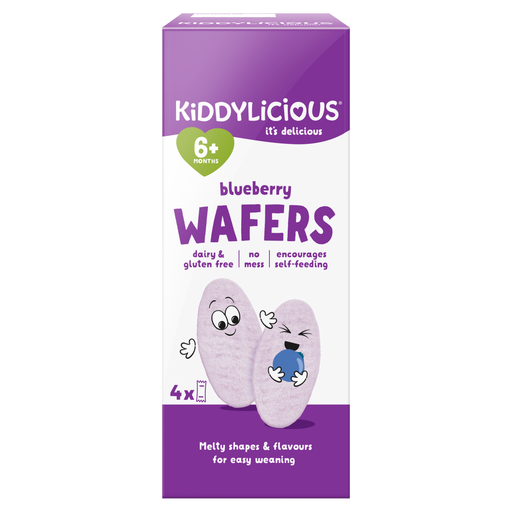
For regular snack time rather than jelly sweets, this blueberry wafer is an option labelled for children aged 6 months and over. Check its eating-stage guidance and ingredients against your child’s needs.
 No image available
Kiddylicious Blueberry Wafers 6+Months 4x4g
These blueberry wafers are a non-confectionery option labelled 6+Months, in a 4x4g pack. The product information calls for a child experienced with chewing firmer textures, upright seating and supervision while eating. Check the exact pack’s ingredients and allergen information before serving.
View on Joybuy
Questions about jelly sweets and toddlers
Are sugar-free jelly sweets suitable for toddlers?
Not simply because they are sugar-free. The NHS says babies and young children should not have hard, gooey or sticky sweets because they are choking hazards. Check texture and age guidance before considering sugar content.
What does ‘sugar-free’ tell me about a jelly sweet?
It concerns the sweet’s sugar content, not whether it is suitable for a young child. Read the sugars value per 100 g alongside the ingredients and any age warning on the exact pack.
Do sweeteners settle the question of whether a sweet is a good toddler snack?
No. The NHS says lower- or no-calorie sweeteners do not necessarily make a food healthy. For toddler snack time, the sweet’s texture and age guidance still need checking first.
Which warnings should I check when buying jelly sweets?
Check the particular pack for age and choking warnings, then read its ingredients, allergen information and any sweetener-related warnings. M&S Jelly Babies, for example, carry a warning that they are not suitable for children under 36 months because of a potential choking hazard.


