For a ready-to-share, chewy sweet, Tesco Marketplace lists Diablo Sugar Free Gummy Bears, but their gelatine rules them out for vegan or vegetarian recipients, and their maltitol and sorbitol make the pack warnings worth checking. If a heart-shaped dessert matters more than a gummy texture, Hartley’s Sugar Free Strawberry Jelly Crystals can be set in moulds, but need preparation and contain pork gelatine. A vegan recipient who is happy with a spoonable dessert could consider a sugar-free Hartley’s 10 Cal Jelly Pot instead, subject to checking the exact flavour and availability.
Who is each jelly format for?
Shoppers seeking a chewy sweet to share
A gummy is the relevant format if the recipient expects confectionery rather than a dessert served with a spoon. Tesco Marketplace lists Diablo Sugar Free Gummy Bears with gelatine, maltitol and sorbitol, so check those ingredients against the recipient’s requirements.
People making a heart-shaped dessert
Hartley’s Sugar Free Strawberry Jelly Crystals can be prepared in moulds for a homemade Valentine’s Day dessert. Allow time for the jelly to set, and note that the Sainsbury’s listing identifies pork gelatine.
Vegan recipients happy with a jelly pot
Sainsbury’s describes the Hartley’s 10 Cal Blueberry and Blackcurrant Jelly Pot as sugar-free and vegan. It is a ready-to-eat, spoonable dessert, not a chewy sweet or a jelly to set in a mould; check the exact flavour and availability before buying.
What should you check before choosing?
Decide on the texture and presentation first, then check the exact pack’s sugar claim, ingredients and preparation directions against the recipient’s needs.
| Priority |
What to check |
Your needs |
| Sugar claim |
Read the current sugar-free wording and sugars value per 100 g or 100 ml. Check the exact variety rather than relying on its flavour, vegan status or a different pack. |
I want a product labelled sugar-free, not simply a familiar fruit sweet. ASDA lists 34 g sugars per 100 g for Haribo Fruitilicious Fruit Gums; Tesco lists 54.6 g per 100 g for Rowntree’s Jelly Tots. |
| Texture and presentation |
Distinguish ready-to-eat gummies, spoonable jelly pots and crystals that must be dissolved and chilled. For a moulded dessert, check the pack’s setting directions. |
A chewy sweet makes sense if I want something to share straight from the pack. If I’m making a heart-shaped dessert, I can prepare jelly crystals in advance instead. |
| Ingredients |
Check for gelatine and its stated source, plus any vegan wording on the exact product. Read aspartame and phenylalanine information where relevant. |
The recipient may avoid animal-derived ingredients or pork gelatine. Diablo gummies contain gelatine, Hartley’s Strawberry Jelly Crystals contain pork gelatine, and Sainsbury’s describes the Hartley’s 10 Cal Jelly Pot as vegan. |
| Sweeteners and portions |
Read the sweetener list and any pack warnings. Diabetes UK notes that polyols such as maltitol and sorbitol still provide carbohydrate and calories; GOV.UK describes a laxative-effect warning for foods containing more than 10% added polyols. |
I want to know what sweetens the gummy before serving it. Tesco Marketplace lists both maltitol and sorbitol in Diablo Gummy Bears, so I would check the final pack rather than assume sugar-free means unrestricted portions. |
What can make a jelly treat unsuitable?
-
Assuming a fruity sweet is sugar-free
The checked Haribo Fruitilicious Fruit Gums and Rowntree’s Jelly Tots contain sugar, according to their ASDA and Tesco listings. A fruit flavour or vegan label does not establish that a sweet is sugar-free.
Check the sugar claim and sugars value on the exact pack before choosing it for someone who wants sugar-free sweets.
-
Overlooking gelatine and polyols in gummies
Tesco Marketplace lists gelatine, maltitol and sorbitol in Diablo Sugar Free Gummy Bears. The gelatine makes this listed product unsuitable for vegan or vegetarian recipients; the polyols also make the sweetener information and pack warnings relevant.
Read the delivered pack’s ingredients and warnings, especially when buying for someone else.
-
Treating “no added sugar” as the same pack claim
ASDA describes Hartley’s Strawberry Jelly Pot as “No Added Sugar”. That wording is different from the sugar-free claim used on the other Hartley’s products discussed here, even though its listing gives a sugars value of less than 0.5 g per 100 g.
If the recipient specifically wants a product labelled sugar-free, check the wording and nutrition panel on the item being purchased rather than relying on another Hartley’s variety.
-
Starting a moulded jelly too late
Hartley’s Sugar Free Strawberry Jelly Crystals need to be mixed with water and refrigerated to set. Sainsbury’s preparation information also warns that fresh pineapple, kiwi or papaya can prevent setting.
Follow the pack’s water quantities and setting directions, and prepare the moulded dessert ahead of serving.
Which brands provide useful reference points?
Diablo
Tesco Marketplace lists Diablo Sugar Free Gummy Bears as a chewy, bear-shaped sweet with sweeteners.
- The listed gummy format suits someone seeking a ready-to-share sweet rather than a spoonable dessert.
- The listed product contains gelatine, maltitol and sorbitol; check the final pack’s nutrition information and warnings.
Hartley’s
Hartley’s has distinct jelly dessert formats: sugar-free crystals for making a set dessert and a ready-to-eat 10 Cal Jelly Pot described by Sainsbury’s as sugar-free and vegan.
- Sainsbury’s lists 0.5 g sugars per 100 g as prepared for the Sugar Free Strawberry Jelly Crystals, which can be used in moulds.
- Those crystals contain pork gelatine and carry a phenylalanine warning. The vegan 10 Cal pot is spoonable rather than mouldable.
Haribo
Haribo Fruitilicious Fruit Gums provide a familiar jelly-sweet comparison, but the specific sharing bag checked at ASDA is not a sugar-free substitute.
- The checked product is a ready-to-share fruit gum.
- ASDA lists sugar and glucose syrup in its ingredients and 34 g sugars per 100 g. Check other Haribo varieties individually rather than extending that figure to the brand.
Rowntree’s
Tesco describes the checked Rowntree’s Jelly Tots sharing bag as vegan, but its ingredients and nutrition information do not make it a sugar-free option.
- The checked bag offers a vegan jelly-sweet format.
- Tesco lists sugar and glucose syrup, with 54.6 g sugars per 100 g for this product. Vegan suitability and sugar-free suitability are separate checks.
Joybuy option for a moulded jelly dessert
This option is for making a sugar-free strawberry jelly dessert that can be set in a mould, rather than buying a ready-to-eat gummy sweet.
 No image available
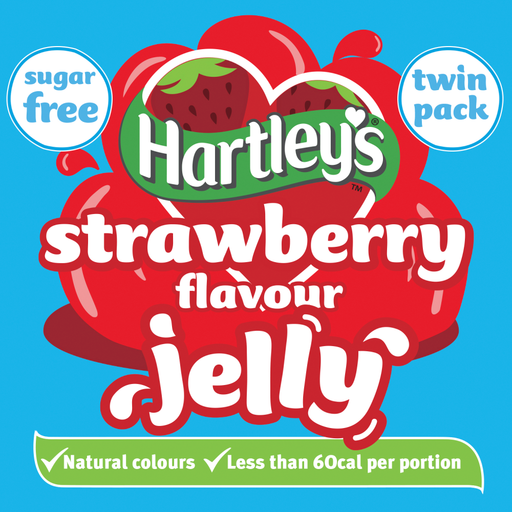
Hartley's Strawberry Jelly Sugar Free 23g
Consider this 23 g strawberry jelly for a homemade moulded dessert when presentation matters more than a chewy texture. The product information identifies pork gelatine, aspartame and acesulfame K; it requires preparation and refrigeration to set. Check the delivered pack’s ingredients and phenylalanine warning before serving, particularly when buying for a vegan recipient or someone advised to avoid phenylalanine.
Joybuy
Questions about sugar-free jelly treats
How can I tell whether a jelly sweet is sugar-free?
Check the sugar-free claim and sugars value on the exact current pack. Fruit flavour and vegan suitability are different characteristics: ASDA lists 34 g sugars per 100 g for Haribo Fruitilicious Fruit Gums, while Tesco lists 54.6 g per 100 g for Rowntree’s Jelly Tots.
Are sugar-free gummies suitable for a vegan Valentine’s gift?
Not automatically: Tesco Marketplace lists gelatine in Diablo Sugar Free Gummy Bears. Hartley’s Sugar Free Strawberry Jelly Crystals contain pork gelatine too. If a spoonable dessert is acceptable instead, Sainsbury’s describes the Hartley’s 10 Cal Jelly Pot as vegan and sugar-free; check the exact flavour before buying.
Why check the sweeteners in sugar-free gummies?
The sweetener list can affect how you choose and serve the product. Diablo Gummy Bears contain maltitol and sorbitol; Diabetes UK explains that these polyols provide carbohydrate and calories, and GOV.UK specifies a laxative-effect warning for foods containing more than 10% added polyols. Read the final pack’s ingredients and warnings rather than assuming its sugar-free claim answers every portion question.
Why does Hartley’s Sugar Free Strawberry Jelly carry a phenylalanine warning?
The Sainsbury’s listing identifies aspartame and a source-of-phenylalanine warning for the Strawberry Jelly Crystals. GOV.UK sets out warning wording for foods whose ingredients list names aspartame. Check the exact pack if the recipient has been advised to avoid phenylalanine.
Can sugar-free jelly crystals be set in heart moulds?
Yes. Hartley’s Sugar Free Strawberry Jelly Crystals can be dissolved as directed, poured into moulds and refrigerated to set. Follow the pack’s water quantities and allow setting time; Sainsbury’s instructions warn against adding fresh pineapple, kiwi or papaya because they can prevent the jelly from setting.


