Adults looking for a sugar-free sweet
If you want a chewy afternoon treat, compare the sugars figure and named sweeteners on the pack. A sugar-free label does not tell you which sweeteners the product contains.


Choose a labelled sugar-free gummy sweet if you want a chewy confectionery snack and its ingredients and consumption warning suit you. Choose a sugar-free jelly pot if you prefer a soft, ready-portioned dessert; it will not have the same texture. In either case, check the per-100g sugars figure, sweeteners and dietary information rather than relying on the front-of-pack claim alone.
If you want a chewy afternoon treat, compare the sugars figure and named sweeteners on the pack. A sugar-free label does not tell you which sweeteners the product contains.
A ready-to-eat jelly pot offers a defined pack portion without the chew of a gummy sweet. Check its ingredients and nutrition information for the particular flavour you buy.
Check the exact pack for gelatine, sweeteners, allergen information and any consumption warning. Sugar-free gummy sweets and dessert jellies can have different ingredient lists.
Choose when: A gummy or jelly-sweet chew matters more than a soft dessert texture.
Bear in mind: The cited maltitol-sweetened gummy products carry excessive-consumption warnings, and some contain gelatine.
Choose when: You prefer a soft jelly in a single pot, without preparation.
Bear in mind: It is a dessert-style jelly rather than a chewy sweet; check the named sweeteners on the flavour you choose.
| Priority | What to check | Your needs |
|---|---|---|
| Sugars label | Compare the declared claim with sugars per 100g or 100ml. The sugar-free claim criterion published by legislation.gov.uk is no more than 0.5g sugars per 100g or 100ml. | I want a product labelled sugar-free, not one whose label says only that no sugar was added. |
| Sweeteners and warnings | Read the named sweeteners and any pack warning. Sweet Treats Direct lists maltitol syrup in its Sugar Free Gummy Bears and warns about excessive consumption. | If I choose chewy sugar-free sweets, I want to know what sweetens them and whether the pack carries a consumption warning. |
| Snack format | Check whether it is a chewy sweet, a ready-to-eat pot or a jelly that needs preparing. Compare the pack or serving amount in the form you will eat. | A soft jelly may suit my afternoon snack better than a gummy, but I need to know whether it is ready to eat. |
| Dietary ingredients | Check gelatine, dietary labels, allergens and cross-contact information on the exact pack. Do not carry a claim across flavours or formats. | I need the ingredients of the particular product to fit my dietary requirements, not just a sugar-free claim. |
The claim concerns sugars, not every ingredient or the amount you plan to eat. The NHS notes that using lower- or no-calorie sweeteners does not, by itself, determine a food’s overall nutritional quality.
Compare the per-100g nutrition panel, ingredients and pack size as well as the claim.
The cited sugar-free gummy products warn that excessive consumption may produce laxative effects.
Read the warning on the particular pack and consider how much you intend to eat, especially when choosing a larger bag or mixed tube.
Some cited gummy sweets list gelatine, while the Hartley’s jelly pot is presented as a different, soft-jelly format. A shared sugar-free claim does not establish matching ingredients.
Check the exact flavour and pack for gelatine, dietary labels, allergens and cross-contact information.
England’s Requirements for School Food Regulations 2014 define confectionery to include non-chocolate confectionery whether or not it contains sugar. A sugar-free claim alone does not establish that a gummy sweet is suitable for food supplied by a state-funded school in England.
For school food provision in England, check the applicable school-food requirements rather than relying on the sugar-free label.
Its sugar-free mixed tube is an option for shoppers who want several chewy jelly-sweet shapes.
The No Added Sugar Blackcurrant Jelly Pot offers a soft, ready-to-eat alternative to gummy sweets.
Its Jelly Beans provide a familiar jelly-sweet format for comparison, not a sugar-free option.
Tesco lists Rowntree’s Jelly Tots among its jelly and chewy sweets.
Its jelly-and-chewy-sweets category lists branded products including Rowntree’s and HARIBO.
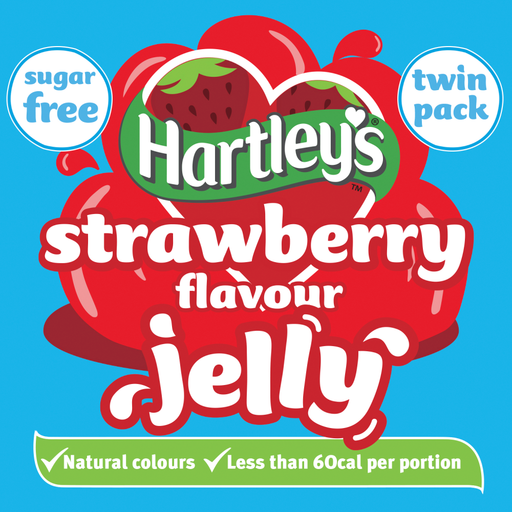
This option is a strawberry jelly to prepare for a soft afternoon snack, rather than a ready-to-eat pot or a chewy gummy sweet.
 No image available
Choose this 23g pack if you want a soft strawberry jelly and can allow time to prepare and set it. The listing notes pork gelatine and aspartame, with a phenylalanine statement; check the supplied pack’s current ingredients, allergen information and prepared nutrition values.
The sugar-free claim criterion published by legislation.gov.uk sets a limit of no more than 0.5g sugars per 100g or 100ml. Check the per-100g or per-100ml nutrition panel when comparing differently sized packs; the claim does not describe every other ingredient.
No. A ready-to-eat jelly pot is soft and already portioned, while a gummy sweet has a chewy confectionery texture. Check the particular product’s sugars figure and ingredients whichever format you prefer.
The maltitol-sweetened gummy products described by Sweet Treats Direct, A Quarter Of and Feel Good Sweets warn that excessive consumption may produce laxative effects. Follow the wording on the product you buy rather than assuming every sugar-free sweet has the same ingredients or warning.
A sugar-free claim alone does not establish suitability. England’s Requirements for School Food Regulations 2014 define confectionery to include non-chocolate confectionery whether or not it contains sugar; check the applicable requirements for food supplied by a state-funded school in England.
Read the exact pack’s gelatine, sweetener, allergen and dietary-labelling information. Some cited sugar-free gummy sweets contain gelatine, and ingredient lists differ between gummies and jelly pots; do not apply one flavour’s label to another.