Hosts needing a sugar-free sweet bowl
Check both the sugar-free claim and the sugars-per-100-g figure. A reduced-sugar label does not establish that a jelly sweet meets the sugar-free claim condition.


For a wedding-buffet bowl of ready-to-eat jelly sweets, choose a pack labelled sugar-free and check its nutrition panel: legislation.gov.uk gives the Great Britain sugar-free claim condition as no more than 0.5 g sugars per 100 g, or per 100 ml for liquids. Check the exact product for gelatine, polyols and any excessive-consumption warning, and keep its ingredient information beside sweets served out of their packaging. A jelly dessert that needs preparing and setting calls for a different serving plan.
Check both the sugar-free claim and the sugars-per-100-g figure. A reduced-sugar label does not establish that a jelly sweet meets the sugar-free claim condition.
Keep sugar-free, vegan and conventional choices clearly separate. The De Bron and Sugar Free Fruit Salad Gums examples contain gelatine, while M&S Reduced Sugar Percy Pig is labelled vegan but is not sugar-free.
Keep each product’s pack or a product-specific information card with its container, so guests can check ingredients, sweeteners and warnings after the sweets have been decanted.
Start with the sugar claim and nutrition panel, then check whether the ingredients and serving format suit the people and buffet you are planning for.
| Priority | What to check | Your needs |
|---|---|---|
| Sugar-free claim | Check the claim on the exact pack and its sugars figure per 100 g. Legislation.gov.uk gives the Great Britain sugar-free claim condition as no more than 0.5 g sugars per 100 g, or per 100 ml for liquids; reduced sugar is a different claim. | I need a genuinely sugar-free bowl, not a reduced-sugar sweet placed under the same sign. |
| Sweeteners and warnings | Read the sweetener, carbohydrate and polyol information, plus any excessive-consumption warning. The De Bron and Sugar Free Fruit Salad Gums product information lists maltitol or maltitol syrup and carries a laxative-effect warning for excessive consumption. | Guests should be able to see what sweetens the sweets and decide how much to take. |
| Ingredients and dietary labels | Check the exact pack for gelatine, dietary statements and allergy information. Do not infer vegan suitability from a fruit flavour or sugar-free label. | If guests need a vegan choice, I can offer a separate, clearly identified product after checking its label. |
| Buffet labelling | Keep the original pack accessible or put product-specific ingredient and warning information beside each decanted jar. Avoid mixing different sweets in one unlabelled container. | Once sweets are out of their packets, guests still need to know which information belongs to each bowl. |
| Serving format | Check whether the item is a ready-to-eat sweet or a jelly that needs preparing and setting. For a prepared jelly, check the pack’s directions and nutrition basis. | A bowl of sweets needs a different plan from a dessert I must prepare ahead of the reception. |
M&S lists 36.9 g sugars per 100 g for Reduced Sugar Percy Pig. That does not meet the Great Britain sugar-free claim condition of no more than 0.5 g sugars per 100 g stated on legislation.gov.uk.
Label a reduced-sugar choice separately, and check the claim and nutrition panel for any bowl described as sugar-free.
The De Bron and Sugar Free Fruit Salad Gums examples carry warnings that excessive consumption may cause laxative effects. Diabetes UK also explains that polyols contain carbohydrate and calories.
Leave the pack warning accessible and avoid presenting the sweets as carbohydrate-free or suitable for every guest.
The De Bron and Sugar Free Fruit Salad Gums examples contain gelatine, so their fruit flavours do not establish vegan suitability.
Check the ingredients and dietary statement on each exact product; label any separately chosen vegan sweets on their own terms.
An unlabelled jar leaves guests unable to connect a sweet with its ingredients, sugar content or warnings.
Keep each original pack available or place a card based on that product’s current label beside its jar. For a catered buffet, confirm allergen-information arrangements with the caterer.
These examples show why the claim and ingredients on a particular product matter more than the brand name alone.
De Bron Sugar Free Fruit Gums are an example of a product explicitly described as sugar-free.
Reduced Sugar Percy Pig is a separately labelled vegan, reduced-sugar example, not a substitute for a strict sugar-free bowl.
HARIBO Jelly Babies illustrate a conventional jelly sweet that needs its own label if served alongside a sugar-free choice.
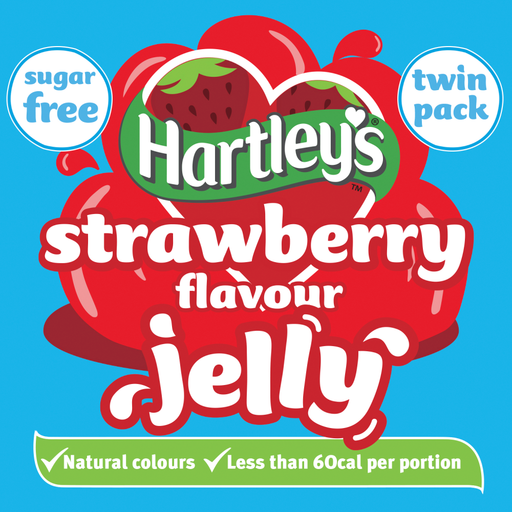
This option is a strawberry jelly dessert to prepare and set, rather than a ready-to-eat jelly sweet for a buffet bowl.
 No image available
This jelly requires preparation and setting before it can be served at a buffet. Check the current pack’s sugars figure for the prepared jelly and its pork gelatine and phenylalanine information when planning how to label it.
No. Legislation.gov.uk gives the Great Britain sugar-free claim condition as no more than 0.5 g sugars per 100 g, or per 100 ml for liquids. M&S Reduced Sugar Percy Pig, for example, lists 36.9 g sugars per 100 g; check the exact pack rather than treating the two claims as interchangeable.
No. Diabetes UK explains that polyols such as maltitol contain carbohydrate and calories. Keep the sweetener and nutrition information accessible so guests can assess the particular product for themselves.
The De Bron and Sugar Free Fruit Salad Gums product information lists maltitol or maltitol syrup and warns that excessive consumption may cause laxative effects. Keep that warning with the sweets if you transfer them to a buffet bowl.
Check the exact product rather than assuming they are vegan. The De Bron and Sugar Free Fruit Salad Gums examples contain gelatine; the M&S vegan example is reduced sugar, not sugar-free. Separate bowls may be needed for those different requirements.
Keep the original pack available or put that product’s current ingredients, allergy information and relevant warnings beside its jar. For a catered buffet, ask the caterer how guests can obtain allergen information; a general sugar-free sign does not identify the contents of each jar.