Shoppers looking for sugar-free sweets
If sugar-free is a firm requirement, check the claim against the sugars figure on the exact pack. Reduced-sugar sweets are a different choice.


For ready-to-eat sweets, choose a sugar-free jelly sweet rather than treating a reduced-sugar pack as equivalent: the UK sugar-free claim threshold published on legislation.gov.uk is no more than 0.5 g sugars per 100 g or 100 ml. If the weekly shop is for desserts you can prepare and chill, sugar-free jelly crystals are another format, but check the preparation instructions, ingredients and any sweetener warnings.
If sugar-free is a firm requirement, check the claim against the sugars figure on the exact pack. Reduced-sugar sweets are a different choice.
Jelly crystals can provide portions to prepare and chill at home. Follow the directions for the chosen product, including any instruction about the drink used to make it.
Read the ingredients and allergy statement for the specific variant. Jelly products in these examples include both gelatine-containing options and products labelled vegan; the category name alone does not settle the question.
Decide first whether you need a ready-to-eat sweet or a dessert to make at home, then compare the labels within that format.
| Priority | What to check | Your needs |
|---|---|---|
| Sugar-free claim | Check the sugars figure per 100 g or 100 ml. Legislation.gov.uk gives a limit of 0.5 g for a sugar-free claim; reduced-sugar wording does not mean the same thing. | I need the sweets to be sugar-free, not simply lower in sugar than another product. |
| Sweeteners and warnings | Read the ingredients and warning statement. GOV.UK says foods containing more than 10% polyols require the warning that excessive consumption may cause a laxative effect. | For a bag that several people might share, I want to see the sweetener and any pack warning before buying it. |
| Dietary fit | Check the gelling agent and allergy statement on the exact variant. Tesco lists pork gelatine in Hartley's Create Your Own Jelly Crystals; M&S labels Reduced Sugar Percy Pig Sweets vegan but says they are not suitable for people with a milk allergy. | Someone eating the jelly avoids particular ingredients, so a vegan label or a familiar brand name cannot replace an allergy check. |
| Format and preparation | Distinguish a ready-to-eat sweet bag from dessert jelly that needs preparing and chilling. Tesco instructs shoppers to use a sugar-free drink to keep its Hartley's Create Your Own Jelly Crystals sugar-free. | Do I want sweets ready to put away after the shop, or do I have time and fridge space to set a dessert? |
M&S lists 36.9 g sugars per 100 g for Reduced Sugar Percy Pig Sweets. That is distinct from the sugar-free claim threshold of no more than 0.5 g per 100 g published on legislation.gov.uk.
When sugar-free is required, compare the sugars declaration with that threshold rather than relying on the word “reduced”.
The Sweetswithout listing for De Bron Sugar Free Fruit Gums gives 73 g polyols per 100 g and carries an excessive-consumption laxative-effect warning.
Read the sweetener ingredients and warning on the pack, particularly when choosing a bag for the household.
Tesco lists pork gelatine in Hartley's Create Your Own Jelly Crystals, while M&S labels Reduced Sugar Percy Pig Sweets vegan but flags them as unsuitable for people with a milk allergy.
Check the exact variant's ingredients and allergy statement for everyone who will eat it.
A named product may not be available when you place the weekly order, so a planned sweet and a make-at-home dessert should not be treated as interchangeable substitutes.
Check live availability for the exact pack and decide in advance whether a different sugar-free sweet or a dessert jelly would meet your needs.
Haribo Jelly Beans provide a conventional jelly-sweet comparison, not a sugar-free example.
Reduced Sugar Percy Pig Sweets are an example of reduced-sugar sweets rather than sugar-free sweets.
Tesco lists both a sugar-free jelly-sweet pack and sugar-free dessert-jelly products; check which format you are ordering.
De Bron Sugar Free Fruit Gums are a ready-to-eat confectionery example.
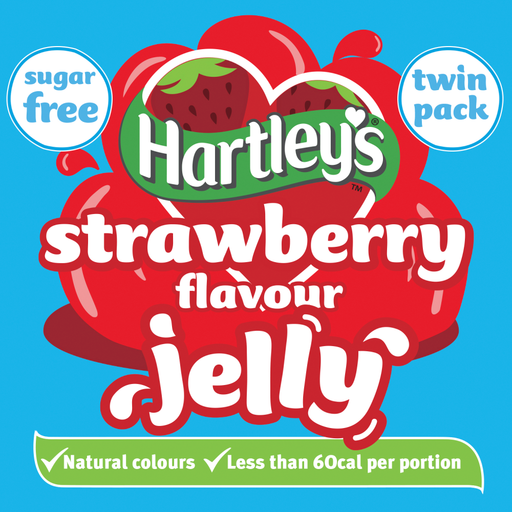
This option is for making a sugar-free jelly dessert at home, not for buying a ready-to-eat bag of jelly sweets.
 No image available
Prepare and allow this dessert jelly to set rather than eating it as a sweet from a bag. Its product information flags pork gelatine and a source of phenylalanine; check the pack for everyone who will share it.
The sugar-free claim threshold published on legislation.gov.uk is no more than 0.5 g sugars per 100 g or 100 ml. Check the nutrition declaration on the exact pack; “reduced sugar” is a different claim.
Some contain polyols. GOV.UK says foods with more than 10% polyols require an “Excessive consumption may cause a laxative effect” warning; the Sweetswithout listing for De Bron Sugar Free Fruit Gums gives 73 g polyols per 100 g and includes that warning.
No. M&S labels Reduced Sugar Percy Pig Sweets vegan and vegetarian but says they are not suitable for people with a milk allergy. Read the allergy statement on the exact product.
They serve a different purpose: jelly crystals make a dessert that needs preparing and chilling, rather than ready-to-eat sweets. For Hartley's Sugar Free Create Your Own Jelly Crystals, Tesco instructs shoppers to use a sugar-free drink to keep the prepared jelly sugar-free.