Hosts looking to reduce sugars
Compare the sugar-free claim with sugars per 100 g, then check the sweeteners and any warning on the pack before choosing a bowl for movie night.


If reducing sugars is the deciding factor for movie night, look for an explicit sugar-free claim and compare the sugars figure per 100 g with the 0.5 g threshold set out in the legislation.gov.uk annex. Check total carbohydrate, sweeteners and pack warnings as well: vegan and conventional sharing marshmallows meet different needs, and the Joybuy options below are not sugar-free substitutes.
Compare the sugar-free claim with sugars per 100 g, then check the sweeteners and any warning on the pack before choosing a bowl for movie night.
Check ingredients and allergy statements for each product. Vegan suitability, gelatine content and a sugar-free claim answer different questions.
A sugar-free claim does not describe total carbohydrate. Diabetes UK notes that polyols contain carbohydrate and calories, so the nutrition panel matters alongside the sugars figure.
Choose when: Reducing sugars is the reason for buying marshmallows.
Bear in mind: The Free'ist example contains polyols and carries a laxative-effect warning; sugar-free does not mean carbohydrate-free.
Choose when: Avoiding animal-derived ingredients is the deciding requirement.
Bear in mind: M&S describes its vegan marshmallows as free from animal products, not as sugar-free; check its product-specific allergy statement too.
Choose when: A sharing bag or marshmallows intended for toasting suit the plan and sugar reduction is not the deciding factor.
Bear in mind: Check sugars and gelatine on the exact pack; hot marshmallows also need careful handling.
| Priority | What to check | Your needs |
|---|---|---|
| Sugars | Read sugars per 100 g and look for an explicit sugar-free claim. The legislation.gov.uk annex sets a threshold of no more than 0.5 g sugars per 100 g or 100 ml for that claim. | “I’m reducing sugars, so a vegan label or a sharing-size pack alone won’t settle the choice.” |
| Sweeteners | Read the ingredients, total carbohydrate and polyols per 100 g. GOV.UK guidance specifies a laxative-effect warning for foods containing more than 10% polyols. | “I want to understand what is in a sugar-free sweet before putting out a bowl for everyone.” |
| Dietary needs | Check the gelatine or vegan statement and the exact product’s allergy information; one dietary label does not establish another. | “Some guests avoid animal-derived ingredients or have allergies, so I need to check the pack I’ll actually serve.” |
| Serving format | Compare net weight, any stated servings and whether the marshmallows are intended for sharing or toasting. Recheck sugars and ingredients after choosing a format. | “I’m planning a sharing bowl or hot drinks and need a pack that suits how I’ll serve it.” |
Diabetes UK notes that polyols contain carbohydrate and calories. The Free'ist retailer listing reports 77 g polyols per 100 g, despite reporting less than 0.5 g sugars per 100 g.
Compare the sugars and total carbohydrate lines, as well as the sweeteners in the ingredients list.
GOV.UK guidance specifies a laxative-effect warning for foods with more than 10% polyols. The Free'ist listing reports 77 g polyols per 100 g.
Read the warning on the current pack and consider how much each person will be served.
M&S describes its vegan marshmallows as free from animal products; that does not establish a sugar-free claim.
If reducing sugars is the priority, check the sugars line separately from the vegan label.
Tesco listed Free'ist Sugar Free Marshmallows 75G as out of stock when the product was checked.
Check current availability and the label before planning to serve it. Assess any substitute against the same sugar-free and ingredient requirements.
These examples illustrate different label and serving decisions; a brand name alone does not establish whether a particular pack is sugar-free or suitable for a guest.
Its Sugar Free Marshmallows 75G are a labelled sugar-free option to compare with conventional packs.
M&S describes its Vegan Marshmallows as free from animal products.
Pink and White Marshmallows are a conventional 200 g sharing-bag example.
Giant Toastin' Mallows are presented as a conventional marshmallow for toasting.
These marshmallows are options for a conventional movie-night snack, hot drinks or sharing. They are not replacements for a pack that must be sugar-free; check the current nutrition and ingredient label for the people you are serving.
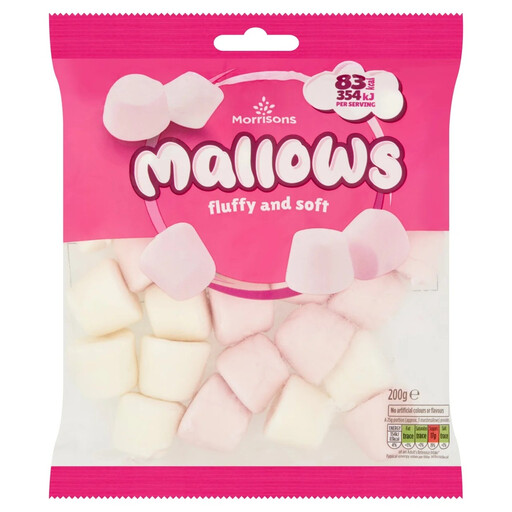 No image available
A 200 g conventional option to consider for a sharing bowl or hot chocolate. It is not a sugar-free substitute; check the current pack’s sugars and ingredients before serving.
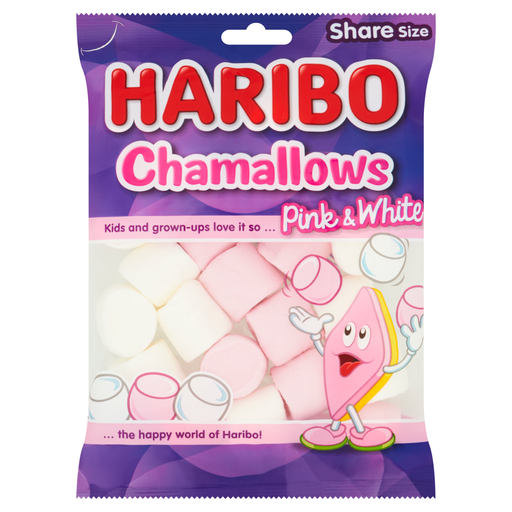 No image available
A 140 g conventional marshmallow option for snacking or adding to hot chocolate. Do not use it in place of a required sugar-free option; check the current ingredients and allergy information for guests.
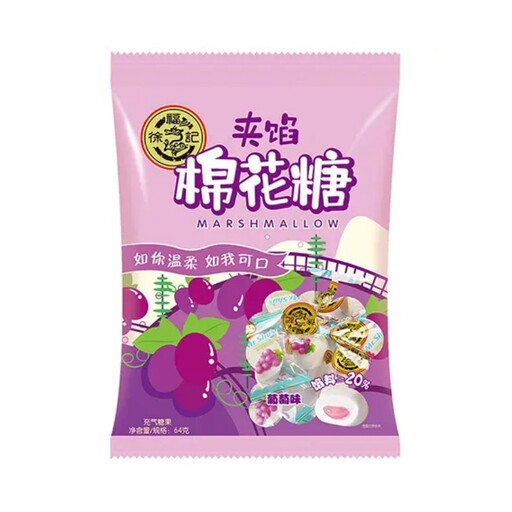 No image available
A 64 g grape marshmallow snack to consider when a conventional sweet suits the occasion. It is not a sugar-free substitute; check the current ingredients, allergy information and pack warnings before sharing.
The sugar-free claim condition in the legislation.gov.uk annex is no more than 0.5 g sugars per 100 g or 100 ml. Check the nutrition panel as well as the front of the pack; a vegan or gluten-free label does not establish the sugars figure.
No. Diabetes UK notes that polyols contain carbohydrate and calories. Read total carbohydrate and the sweeteners in the ingredients list rather than relying on the sugar-free claim to describe the whole product.
GOV.UK guidance specifies that foods containing more than 10% polyols carry the warning “Excessive consumption may cause a laxative effect”. The Free'ist retailer listing reports 77 g polyols per 100 g, so read the warning on the pack before serving it.
Not necessarily. The Free'ist product information lists gelatine, while M&S describes its Vegan Marshmallows as free from animal products. Check vegan suitability and sugar-free status separately on the exact pack.
Read the age and safety information on the exact pack. M&S gives an under-36-month choking warning for its Vegan Marshmallows, and the Waitrose listing for Epic Giant Toastin' Mallows warns that hot marshmallows can be a burning or choking hazard.