What should you check before choosing?
Decide whether you are buying fuel for a run or a sweet for another occasion, then compare the serving, sweeteners and ingredients on the specific pack.
Carbohydrate fuel for running
Choose when: You need a measurable carbohydrate serving to include in a practised long-run plan.
Bear in mind: A running-fuel product may not meet an off-run preference for a sugar-free sweet, and its serving and fluid plan still need practice.
Sugar-free marshmallows off the run
Choose when: You want a sweet with little declared sugar rather than a planned source of running carbohydrate.
Bear in mind: Some examples contain substantial polyols or gelatine; check the pack and your tolerance rather than relying on the sugar-free wording.
| Priority |
What to check |
Your needs |
| Carbohydrate for long runs |
Read the carbohydrate amount per serving and work out how portions fit your planned hourly intake. World Athletics advises 30–60 g per hour for events lasting 1–2.5 hours and up to 90 g per hour for events over 2.5 hours; practise your own product and fluid plan in training. |
For a long run, I want portions I can measure and use while moving, rather than choosing a sweet solely because its label says sugar-free. |
| Sweetener and polyol content |
Check the ingredients for sweeteners such as maltitol syrup and isomalt, then compare sugars and polyols per 100 g with the amount you intend to eat. Diabetes UK notes that large amounts of polyols can cause digestive upset. |
If I choose a lower-sugar sweet, I want to know what replaces the sugar. I would not try an unfamiliar polyol-sweetened product just before a demanding run. |
| Format and portions |
Compare a drink, gel or portioned confectionery with what you can carry and consume during a run. Check the stated serving and any mixing directions instead of estimating portions from a share bag. |
A format I can practise with makes more sense for my run than an unmeasured handful of marshmallows. |
| Ingredients and dietary fit |
Read the current pack for gelatine, allergens, nutrition information and sweetener wording. Do not infer vegan or vegetarian suitability from a sugar-free claim. |
If I avoid animal ingredients or have another ingredient restriction, I need the particular product’s label to meet that requirement. |
| Ordinary marshmallows |
If you are comparing conventional confectionery, check its sugars per serving and portion size. Waitrose & Partners lists glucose syrup and sugar in its Pink and White Marshmallows and declares 4.70 g sugars per serving; that does not make them a practised sports-fuel plan. |
If I specifically want sugar-based marshmallows, I still need to see whether I can portion, carry and tolerate them during training. |
Brand and product references
These examples illustrate the difference between sugar-free confectionery and ordinary marshmallows; they are not a ranking of marathon fuels.
Free'ist
The 75 g Sugar Free Marshmallows listing provides an example of a polyol-sweetened marshmallow.
- Hungry Expats lists less than 0.5 g sugars and 77 g polyols per 100 g.
- That sugars figure is not a measure of how the product fits a long-run carbohydrate plan; check the pack and consider the polyol content.
Food2Smile
Mellow Marshmallows are listed as sugar-free confectionery by Sweets Without.
- The retailer’s ingredient list identifies maltitol syrup and isomalt, making the sweetener choice clear.
- The listed product contains gelatine, and the retailer warns that excessive consumption may cause laxative effects.
de Bron
Its marshmallows provide another sugar-free confectionery example in the Sweets Without listing.
- The listed ingredients identify maltitol syrup and isomalt.
- The same ingredient list includes gelatine, so check the exact pack if you avoid animal ingredients.
Waitrose
Its Pink and White Marshmallows offer a conventional, sugar-based comparison rather than a sugar-free option.
- Waitrose & Partners lists glucose syrup and sugar and declares 4.70 g sugars per serving.
- The product lists beef gelatine; its serving information alone does not establish a suitable running-fuel plan.
A Joybuy running-fuel option
This option is a powdered carbohydrate product for the running-fuel route, not a sugar-free marshmallow. Check its current pack information and practise how you would use it before a key run.
 No image available
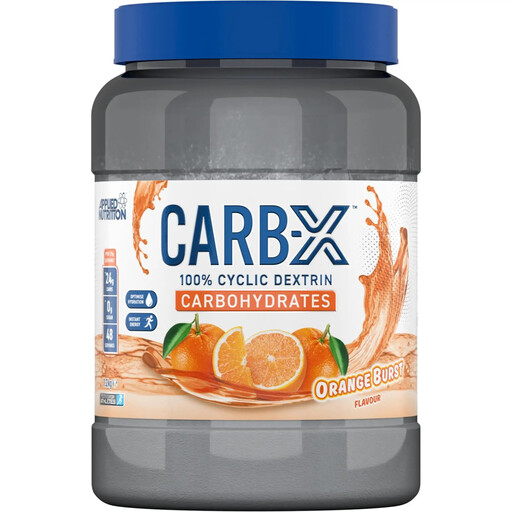
Applied Nutrition Carb X Carbohydrate Energy Powder, Orange Burst flavour, 1.2 kg
A powdered carbohydrate option to consider if a drink format suits your training-run plan. It is not a ready-to-eat marshmallow; check the current carbohydrate amount per serving and mixing directions when planning what to carry and consume.
View on Joybuy
Frequently asked questions
Are sugar-free marshmallows suitable as my main marathon fuel?
Do not rely on them as your main planned fuel for a long run. World Athletics advises 30–60 g carbohydrate per hour for events lasting 1–2.5 hours and up to 90 g per hour for events over 2.5 hours. The sugar-free marshmallow examples here use polyol sweeteners; choose a carbohydrate source with a measurable serving and practise it in training.
Why can sugar-free marshmallows still show carbohydrate on the label?
Total carbohydrate can include polyols, so read the sugars and polyols lines separately. The Free'ist listing from Hungry Expats declares 80 g carbohydrate per 100 g, including 77 g polyols and less than 0.5 g sugars. Do not treat its total carbohydrate figure as interchangeable with a planned serving of conventional running fuel.
Could polyol-sweetened marshmallows cause digestive upset?
Large amounts of polyols can have a laxative effect and cause bloating, flatulence and diarrhoea, according to Diabetes UK. Check the ingredients and portion size, and try an unfamiliar product away from a long run or race.
What should I read on a sugar-free marshmallow pack?
Check the ingredients for sweeteners and gelatine, the nutrition panel for sugars and polyols, and any allergen or sweetener wording relevant to you. GOV.UK guidance identifies wording used for foods containing sweeteners or both sugar and sweeteners; read the current pack rather than relying on an older listing.
Are sugar-free marshmallows also vegan?
Not necessarily. The de Bron sugar-free marshmallows listed by Sweets Without contain gelatine. Check the particular pack for an explicit vegan claim and its ingredients; sugar-free describes a different aspect of the product.


