For baking with children, choose a sugar-free mint only after checking its sweeteners, allergen information and the texture it will leave in the finished food; the claim does not establish that it can replace sugar in a recipe. NHS guidance says babies and young children should not have hard, gooey or sticky sweets because they pose a choking risk. Keep the current pack to hand when checking ingredients and warnings, particularly if children may taste the mints while baking.
Who needs to take particular care?
Families baking with babies or young children
Consider what the child will eat, not just what goes into the mixing bowl. NHS guidance identifies hard, gooey and sticky sweets as choking hazards and advises considering the size, shape and texture of a child’s food.
Families choosing a mint sweetener
A sugar-free claim does not tell you which sweetener a mint contains or how it will behave in a recipe. Compare the ingredients and nutrition panel before deciding whether to use it.
Allergy-aware home bakers
Check the current pack against the recipe’s ingredient requirements before children handle the sweets or eat the bake. A mint can introduce ingredients that were not in the rest of the recipe.
What should you check before baking?
Start with the finished bake and who will eat it, then check the mint’s ingredients, warnings and intended role in the recipe.
| Priority | What to check | Your needs |
|---|
| Finished texture |
Look for whole mints or hard fragments in the finished food. Consider each child’s ability to manage its size, shape and texture; the NHS advises that babies and young children should not have hard, gooey or sticky sweets. |
I’m baking for a young child, so I need a finished food without a hard mint piece for them to eat. |
| Sugars and sweeteners |
Read both the sugars figure and the named sweeteners. Under the UK sugar-free claim condition published on legislation.gov.uk, a product may carry the claim if it contains no more than 0.5 g sugars per 100 g or 100 ml; that does not identify its sweetener. |
I want to know whether the mint uses an ingredient such as sorbitol or xylitol, rather than choosing by the sugar-free wording alone. |
| Polyol warning |
Check for a laxative-effect warning and any serving directions. GOV.UK states that foods with more than 10% added polyols require the warning that excessive consumption may cause a laxative effect. |
Children might ask to taste the mints repeatedly while we bake, so I need to keep the pack’s warning in view. |
| Allergens |
Check the current ingredient list and highlighted allergens against everyone who will eat the bake. Include any precautionary information relevant to the household. |
If I’m baking around an allergy or intolerance, the mint needs to fit the same ingredient requirements as the rest of the recipe. |
| Recipe role |
Decide whether the mint is intended to add flavour or be an edible decoration. Do not assume a crushed sweet replaces granulated sugar measure for measure, or that it will dissolve in a particular recipe. |
I need to check how the finished bake turns out before relying on a mint to provide flavour or a suitable texture. |
Common mistakes to avoid
-
Letting children taste sugar-free mints without checking the warning
Sugar-free mints can contain polyols. GOV.UK requires a laxative-effect warning for foods with more than 10% added polyols.
Read the pack before baking and keep an open tin or roll out of reach between planned uses.
-
Using hard mints as a topping for a young child’s bake
A sugar-free claim does not change the choking risk from a hard sweet. NHS guidance says babies and young children should not have hard, gooey or sticky sweets.
Avoid whole mints and hard fragments in food for babies and young children; choose a decoration with an appropriate finished texture instead.
-
Choosing a familiar brand without checking the variant
Tesco lists sorbitol and sucralose in Trebor Mighties Extra Strong Sugar Free, while Waitrose lists sugar and glucose syrup in a regular Trebor Extra Strong Peppermint product.
Check the exact variant’s name, ingredients and sugars figure, especially when changing flavour or pack format.
-
Assuming sugar-free also means suitable for an allergy
The sugar-free claim concerns sugars, not the other ingredients or allergen information in a sweet.
Check the current pack against the recipe’s requirements before adding a mint to food that someone with an allergy or intolerance will eat.
Mint brands and product ranges to check
These examples show why the exact product matters; a brand name alone does not establish its ingredients or suitability for a child’s bake.
POLO
Tesco lists POLO Sugar Free as a mint made with sorbitol and mint oils.
- Its listed ingredients also identify magnesium stearate, making the sweetener straightforward to check.
- The ingredient list does not establish how the mint will behave in a baked recipe; consider the texture of any pieces left in the food.
Smint
Smint sells sugar-free mints in tins. A Sainsbury’s Smint listing carries an excessive-consumption laxative-effect warning.
- The tin format lets you keep the product information close by while preparing ingredients.
- Check the warning and ingredients on the particular tin; one Smint product’s formulation should not be assumed for another.
Peppersmith
Waitrose lists Peppersmith Peppermint as sugar-free mints made with xylitol and peppermint oil.
- The listing identifies xylitol for households comparing named sweeteners.
- Its sweetener does not establish that the mints can replace sugar in baking or that hard pieces suit young children.
Sulá
Waitrose lists Sulá Mint Humbugs as a mint sweet and states that they are not suitable for children under 3 years of age.
- The stated age restriction is an important check when deciding who may eat the finished food.
- Check the current pack’s full ingredients and allergen information before using a humbug in a family recipe.
Trebor
Trebor sells distinct regular and sugar-free mint products; their names need checking rather than treating them as interchangeable.
- Tesco lists sorbitol, sucralose and 0 g total sugars for Trebor Mighties Extra Strong Sugar Free.
- Waitrose lists sugar and glucose syrup in regular Trebor Extra Strong Peppermint. Check the exact pack before using either variant.
A Joybuy mint option
This spearmint option is relevant if you want to compare its sweeteners and warnings before deciding whether mint confectionery has a place in a family bake.
 No image available
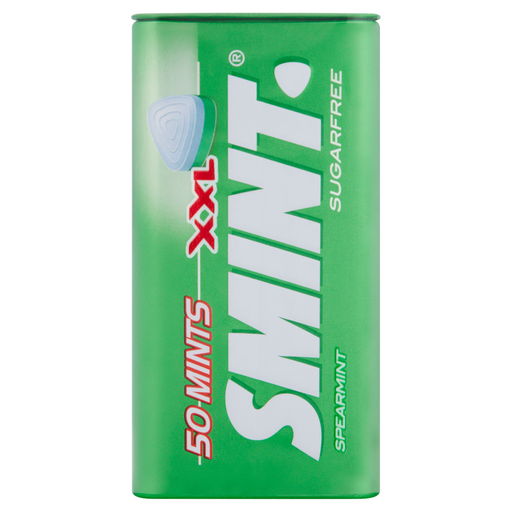
Smint Sugarfree Spearmint Tin XXL
For a baking activity with children, consider the listing’s warning that this product is not suitable for young children because of choking risk. The listing names sorbitol and aspartame and gives 0 g sugars and 99 g polyols per 100 g. Check the current pack’s allergen information, and do not assume the mints will dissolve or substitute for sugar in your recipe.
View on Joybuy
Questions about sugar-free mints in baking
Does sugar-free mean a mint has no sweetener?
No. The UK sugar-free claim condition published on legislation.gov.uk allows no more than 0.5 g sugars per 100 g or 100 ml; it does not mean the product is unsweetened. Check the ingredients for the sweetener used.
Can a baby or young child eat a bake topped with hard mints?
Do not give babies or young children a bake that leaves hard mint sweets or fragments for them to eat. NHS guidance identifies hard, gooey and sticky sweets as choking hazards and advises considering the finished food’s size, shape and texture.
Why might sugar-free mints have a laxative-effect warning?
Some contain polyols. GOV.UK states that food with more than 10% added polyols must carry a warning that excessive consumption may cause a laxative effect. Check the particular pack before children taste mints during baking.
How do I check whether a mint fits an allergy-aware recipe?
Read the current pack’s full ingredients and allergen information against the requirements of everyone who will eat the bake. Do this before mixing in the mints rather than assuming a sugar-free variant has the same ingredients as another product from the brand.
Can crushed sugar-free mints replace sugar in a baking recipe?
Do not assume a measure-for-measure substitution: the sugar-free claim describes sugars content, not how a mint will behave in a recipe. If using mints for flavour or decoration, check the finished texture and whether it is suitable for each child who will eat the bake.


