Parents baking snacks with children
Choose plain oats when you want to decide whether, and how, sweetness is added to flapjacks, oat biscuits or baked-oat recipes rather than starting with a syrup-flavoured product.


For a strict sugar-free requirement, choose oats whose current pack or official product page explicitly makes that claim, and check the ingredients and nutrition panel before buying. For baking where you simply want to control added sweeteners, plain single-ingredient oats offer a flexible base, but the recipe additions and allergen information still need checking.
Choose plain oats when you want to decide whether, and how, sweetness is added to flapjacks, oat biscuits or baked-oat recipes rather than starting with a syrup-flavoured product.
Look for the claim on the exact product rather than assuming that a plain oat ingredient list means the product is sugar-free. Flahavan’s presents its Organic Oats as Sugar Free and lists 100% organic wholegrain rolled porridge oats.
Check gluten-free labelling, cereal cross-contamination information and nut warnings on every pack. Plain oats are not automatically suitable for every allergy-sensitive household.
Start with the claim you need, then check the ingredient list, the nutrition panel and any allergy information for the exact pack.
| Priority | What to check | Your needs |
|---|---|---|
| Sugar-free claim | Check that the current pack explicitly says sugar-free. Under Regulation (EC) No 1924/2006, a sugar-free claim is limited to products with no more than 0.5g sugars per 100g or 100ml. Compare nutrition values on a per-100g basis. | I need the oat product itself to be explicitly presented as sugar-free, not merely made from oats alone. |
| Plain baking base | Choose an unflavoured product with a single oat ingredient when you want to control recipe additions. For flapjacks, standard rolled oats are a practical starting point; a finer texture may require blending the oats. | I want to decide what goes into the bake instead of beginning with pre-sweetened sachets. |
| Sweetening ingredients | Read the ingredients as well as the nutrition panel. Avoid flavoured sachets if you do not want sugar or syrup already included, and assess sugar, honey, syrup, sweetened fruit and chocolate in the full recipe. | The finished biscuit or flapjack matters to me, not just whether the oats are plain. |
| Gluten and allergens | For coeliac disease, choose oats explicitly labelled gluten-free. Check precautionary statements for wheat, barley and nuts every time, including after packaging or recipe changes. | I need an oat product that matches a child’s coeliac or allergy requirements rather than relying on terms such as organic or 100% oats. |
A single-ingredient oat product can still contain naturally occurring sugars above the threshold for a sugar-free claim. The researched Waitrose Essential and Mornflake plain-oat panels list 0.9g or 1.0g sugars per 100g.
When sugar-free status is essential, look for the explicit current claim and check the per-100g panel. Otherwise, describe the product as plain oats without a sweetening ingredient.
Flavour names can conceal added sugar. Mornflake Golden Syrup Sachets list sugar as an ingredient and 8.8g sugars per 36g sachet.
Use unflavoured oats for recipes where you want to control sweetness, then add any chosen ingredients yourself.
Coeliac UK explains that organic, pure and 100%-oat wording does not establish gluten-free suitability. Manufacturer warnings can also differ between products.
For coeliac disease, buy explicitly gluten-free oats. For allergies, read the exact pack’s ingredients and precautionary statements before each purchase.
A recipe can contain sugar or other sweet ingredients even when the oats themselves are plain. Flahavan’s cited oat shortbread recipe, for example, includes caster sugar.
Assess the whole recipe, including sweeteners and sweetened additions, rather than judging the finished bake by the oats alone.
Flahavan’s is relevant where an explicitly sugar-free plain rolled oat product is required. Its UK Organic Oats page presents the product as Sugar Free and lists 100% organic wholegrain rolled porridge oats.
Mornflake offers plain organic and superfast 100%-oat products alongside sweetened Golden Syrup sachets, so the exact product format matters.
Waitrose Essential Porridge Oats is a plain rolled-oat reference for flapjack-style baking.
Jordans Organic Porridge is a wholegrain rolled-oat option within a broader porridge range.
Quaker is a familiar porridge-oat and instant-sachet brand in UK retail ranges.
Dorset Cereals is principally relevant here as a breakfast-cereal brand rather than as a like-for-like plain porridge-oat reference.
Joybuy product options for plain porridge-oat baking, including choices for households that need gluten-free oats or want to control recipe sweeteners.
 No image available
A plain oat base for baking where gluten-free oats are required and recipe sweeteners are controlled separately.
The listing states gluten-free oat flakes (100%) and 1.1g sugars per 100g. Check the current gluten-free label and individual tolerance where relevant.
 No image available
A larger plain organic oat option for households making regular batches and controlling all recipe additions.
The listing states 100% organic wholegrain oat flakes and 0.9g sugars per 100g. Check the current pack before relying on a sugar-free claim, and do not use it where certified gluten-free oats are required.
 No image available
A smaller plain organic oat pack for recipes where you choose the sweetening ingredients yourself.
The listing states 100% organic wholegrain oat flakes and 0.9g sugars per 100g. Check the current pack before relying on a sugar-free claim; oats are not presented here as gluten-free.
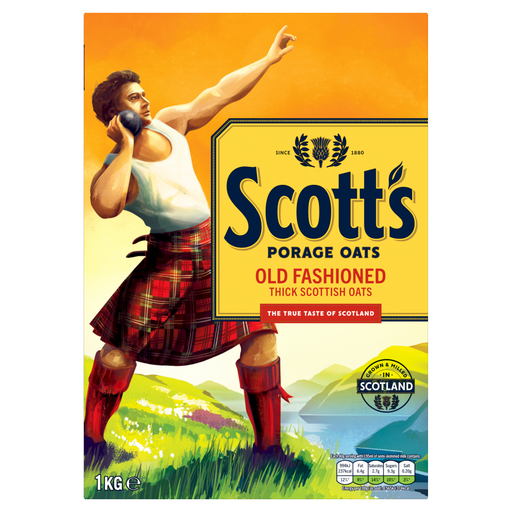 No image available
A thicker rolled-oat option for recipes where you prefer a more substantial oat texture.
The listing identifies 100% rolled oats and 1.1g sugars per 100g. It may contain wheat and barley, so it is not suitable where certified gluten-free oats are needed.
 No image available
A plain oat option for recipes where sweetness is added, or left out, separately.
The listing identifies thicker, lightly roasted 100% oatmeal and 1.0g sugars per 100g. It may contain wheat and barley, so choose certified gluten-free oats where required.
No. A 100%-oat ingredient list means that no sweetening ingredient has been added to the oat product, but it does not automatically establish a sugar-free claim. Under Regulation (EC) No 1924/2006, the cited condition for that claim is no more than 0.5g sugars per 100g or 100ml; the researched Waitrose Essential and Mornflake panels list 0.9g or 1.0g sugars per 100g.
Not necessarily. Oats are only one ingredient, and sugar, honey, syrup, fruit purées, sweetened dried fruit or chocolate can add free sugars to the finished bake. Check the complete recipe rather than relying on the oat product alone.
Choose oats explicitly labelled gluten-free rather than oats described only as organic, pure or 100% oats. Coeliac UK says that standard oats may be contaminated with wheat, barley or rye, and gluten-free oats do not suit every person with coeliac disease.
Store them in a cool, dry place and transfer them to an airtight container once opened if the pack instructions allow. Check the best-before date and any product-specific storage guidance on the packaging.