Cream-tea hosts seeking a sugar-free biscuit
Choose by the exact biscuit’s sugars declaration, rather than assuming the scones, jam and cream have the same dietary properties.


If the biscuit itself needs to be sugar-free, Farmhouse Biscuits Sugar Free Viennese Shorties are a shortbread-like option: Farmhouse declares 0.2 g sugars per 100 g. They are Viennese-style shortcake rather than traditional all-butter shortbread, and their maltitol, carbohydrate and allergens still matter. Check the current pack, and assess the scones and jam separately if the requirement applies to the whole cream tea.
Choose by the exact biscuit’s sugars declaration, rather than assuming the scones, jam and cream have the same dietary properties.
Look at total carbohydrate, portion size and the sweetener alongside the sugars figure. A sugar-free label does not describe all of those details.
Decide whether a sugar-free biscuit is essential before choosing between a shortbread-like biscuit and conventional all-butter fingers.
Choose when: The biscuit needs a sugars declaration consistent with a sugar-free choice; Farmhouse Biscuits declares 0.2 g per 100 g for its Sugar Free Viennese Shorties.
Trade-off: This is not a traditional all-butter shortbread finger, and its maltitol and total carbohydrate need separate consideration.
Choose when: The familiar shortbread format matters and the biscuit does not need to be sugar-free.
Trade-off: Walker’s Mini Bag Shortbread Fingers declare 16.2 g sugars per 100 g, while Waitrose Shortbread Fingers declare 14.9 g per 100 g, according to their respective product declarations.
| Priority | What to check | Your needs |
|---|---|---|
| Sugars declaration | Read sugars per 100 g for the exact variety. Legislation.gov.uk’s original adopted text specifies no more than 0.5 g per 100 g for a sugar-free claim; it notes that the text may have been updated. Farmhouse declares 0.2 g per 100 g for its Sugar Free Viennese Shorties. | I need the biscuit itself to fit a sugar-free spread, not merely to carry a ‘free from’ label for another ingredient. |
| Biscuit style | Check whether the product is Viennese-style shortcake, an all-butter finger or another type of biscuit. Consider scones and jam separately if the requirement covers the whole serving. | I want a biscuit that fits the way I plan to serve tea, without assuming one biscuit changes the rest of the spread. |
| Carbohydrate and sweetener | Read total carbohydrate and the ingredients as well as sugars. Farmhouse declares 67.6 g carbohydrate per 100 g and uses maltitol; its pack warns that excessive consumption may cause laxative effects. | For guests paying attention to carbohydrate or sweeteners, I need to consider the amount served as well as the sugar-free description. |
| Allergens | Read the delivered pack’s ingredients and any relevant precautionary wording. Farmhouse’s Sugar Free Viennese Shorties contain wheat. | If a guest has an allergy, I need to check the particular biscuit before serving it. |
These labels can refer to different ingredients. The Joybuy listing for Lazy Day Free From Shortbread declares 21.7 g sugars per 100 g.
Read the sugars-per-100 g declaration for the exact variety before placing it among sugar-free biscuits.
Farmhouse’s Sugar Free Viennese Shorties declare 67.6 g carbohydrate per 100 g despite declaring 0.2 g sugars per 100 g.
Check total carbohydrate, the sweetener and the portion you intend to serve, rather than relying on the sugars figure alone.
The scone and jam are separate foods from a sugar-free biscuit.
If the requirement applies to the entire serving, check each accompaniment individually.
A brand’s range can contain biscuits with different ingredients and sugars declarations, so compare exact products rather than brand names.
Its Sugar Free Viennese Shorties offer a shortbread-like shape for a cream-tea biscuit.
Its Mini Bag Shortbread Fingers are a conventional all-butter option for guests who do not need a sugar-free biscuit.
Its Shortbread Fingers provide a conventional shortbread format.
Its shortbread range includes all-butter styles and Made Without varieties.
Its Zero range includes several biscuit types, including digestives.
These are biscuit alternatives for tea when a traditional shortbread style is not essential: a digestive and a sandwich cookie. Check each exact product’s current nutrition and ingredients before choosing it for a sugar-free serving.
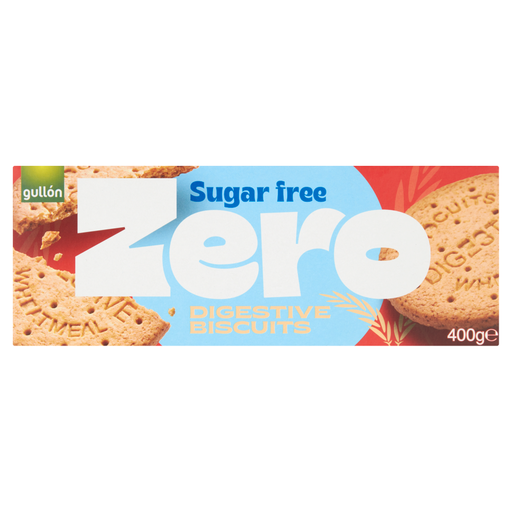 No image available
A digestive biscuit to consider with tea if shortbread style is not essential. Check the exact pack’s sugars per 100 g, total carbohydrate, sweeteners and allergen information before serving.
 No image available
A sandwich cookie rather than shortbread, so choose it only if that different biscuit style suits the tea table. Check the exact pack’s sugars declaration, ingredients and allergen information.
No. Check which ingredient the label refers to and read the exact biscuit’s sugars declaration. For example, the Joybuy listing for Lazy Day Free From Shortbread declares 21.7 g sugars per 100 g.
No. Farmhouse Biscuits declares 67.6 g carbohydrate per 100 g for its Sugar Free Viennese Shorties. Read the full nutrition panel and consider the portion being served, rather than using the sugars figure as a substitute for total carbohydrate.
Read the ingredients and relevant precautionary wording on the delivered pack for each biscuit. UK government allergen-labelling guidance says regulated allergens present as ingredients in prepacked food must be clearly identified; a sugar-free claim is not an allergen claim.
For a biscuit, compare the exact product’s sugars per 100 g. Legislation.gov.uk’s original adopted text specifies no more than 0.5 g per 100 g for a sugar-free claim, while noting that the text may have been updated. Farmhouse Biscuits declares 0.2 g per 100 g for its Sugar Free Viennese Shorties; check the current pack before serving.