Buyers providing a sugar-free choice
Check the exact biscuit’s sugars declaration per 100 g rather than relying on a familiar brand name or the words ‘no added sugar’.


For a hotel breakfast buffet, choose a shortbread-style biscuit whose current label supports a sugar-free claim; a conventional all-butter shortbread or a biscuit labelled ‘no added sugar’ does not qualify on that description alone. A UK retailer lists Gullón Sugar Free Shortbread at under 0.5 g sugars per 100 g, while Farmhouse Biscuits lists its sugar-free Viennese Shorties at 0.2 g per 100 g but describes them as shortcake biscuits. Check ingredients, sweetener warnings and serving format before deciding what to put out for guests.
The right biscuit depends on whether the buffet needs a sugar-free shortbread-style choice, a different sugar-free biscuit, or conventional shortbread offered separately.
Check the exact biscuit’s sugars declaration per 100 g rather than relying on a familiar brand name or the words ‘no added sugar’.
Use the exact product’s ingredient and allergen information, particularly if biscuits will be removed from their packs. Sugar-free does not mean allergen-free.
An all-butter recipe or wrapped fingers may suit a conventional offering. Keep it clearly distinct from any biscuit presented as sugar-free.
Start with the claim and the exact product label. Then decide how closely the biscuit needs to resemble shortbread and how guests will receive its ingredient information.
Choose when: The sugar-free choice should also be described as shortbread; a UK retailer lists Gullón Sugar Free Shortbread at under 0.5 g sugars per 100 g.
Bear in mind: Its listed vegetable-oil and sweetener ingredients are not an all-butter shortbread recipe.
Choose when: A sugar-free biscuit matters more than a traditional shortbread recipe; Farmhouse Biscuits declares 0.2 g sugars per 100 g for its Viennese Shorties.
Bear in mind: The maker calls them shortcake biscuits and lists 24% maltitol powder and an excessive-consumption warning.
Choose when: An all-butter recipe or wrapped shortbread fingers are wanted as a separate, non-sugar-free offering.
Bear in mind: Walker’s lists 16.2 g sugars per 100 g for its wrapped twin packs; their format does not make them sugar-free.
| Priority | What to check | Your needs |
|---|---|---|
| Sugar-free claim | Read sugars per 100 g on the exact pack. The sugar-free claim criterion published on legislation.gov.uk specifies no more than 0.5 g sugars per 100 g; ‘no added sugar’ is a different claim. | I need to put out a biscuit that can be presented as sugar-free, not one chosen by its packaging or brand name alone. |
| Biscuit style | Compare the product description and ingredients: Gullón’s listed biscuit is called shortbread, while Farmhouse Biscuits calls its Viennese Shorties shortcake biscuits. | If guests have asked for shortbread, I want to know whether a proposed substitute matches that description. |
| Other nutrition and sweeteners | Read total carbohydrate and energy alongside sugars. Farmhouse Biscuits lists 67.6 g carbohydrate and 491 kcal per 100 g for its Viennese Shorties and carries an excessive-consumption warning. | A sugars figure alone does not answer every question guests may have about the biscuit. |
| Allergen information | Check the exact pack’s ingredients, allergen statements and any precautionary wording. Plan how guests can obtain that information if biscuits are served loose. | When packs are removed for display, I still need a reliable way to give guests product-specific allergen information. |
| Serving format | Check whether the selected variant is individually wrapped or supplied for loose serving, and confirm its current pack quantity before ordering. | Wrapped portions may fit one buffet setup; for loose biscuits, I need to plan presentation and access to the pack information. |
The checked Walker’s, M&S and Waitrose shortbread products declare sugars above the sugar-free claim criterion.
Offer conventional shortbread as a distinct choice, and assess any sugar-free candidate using that exact product’s current per-100 g label.
Farmhouse Biscuits lists 67.6 g carbohydrate and 491 kcal per 100 g for its sugar-free Viennese Shorties, which contain maltitol.
Make the full nutrition panel and sweetener warning available rather than making a blanket claim about suitability for individual guests.
Dean’s describes individually wrapped shortbread fingers for hotel use, but that listed product declares 17.1 g sugars per 100 g.
Check the sugars declaration and current availability separately from the serving format.
These examples concern the named products, not every biscuit made by each brand or their availability from Joybuy.
A UK retailer lists a 330 g Sugar Free Shortbread product.
Its sugar-free Viennese Shorties are described by the maker as shortcake biscuits.
A conventional shortbread reference with a wrapped twin-pack format.
The maker describes its individually wrapped fingers as suitable for hotel service.
Its Scottish All Butter Shortbread Fingers provide a conventional recipe reference.
Its Shortbread Fingers are another conventional product for comparing labels.
These are sugar-free-labelled biscuit alternatives for a buffet, not shortbread selections. Check each supplied pack’s sugars declaration and ingredient information before deciding how to describe or serve it.
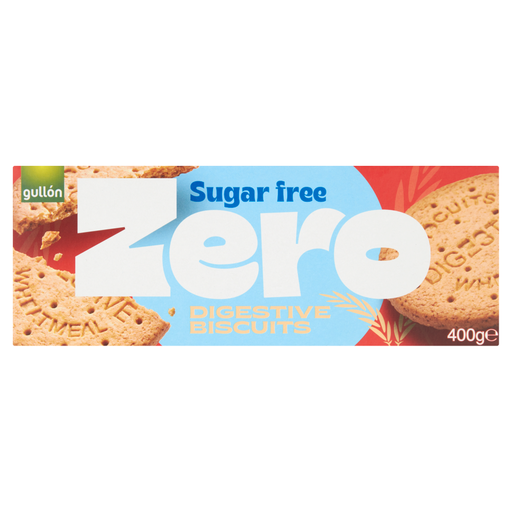 No image available
A digestive biscuit offers a different style of sugar-free-labelled buffet option; it should not be described to guests as shortbread.
Check the pack’s sugars per 100 g, ingredients, allergen information and any sweetener warning before serving.
 No image available
A sandwich biscuit is a separate buffet choice rather than a substitute to label as shortbread.
Check the physical pack’s sugars declaration, allergen information, serving format and any sweetener warning.
No. The sugar-free claim criterion published on legislation.gov.uk specifies no more than 0.5 g sugars per 100 g; ‘no added sugar’ alone does not establish the finished biscuit’s sugars figure. Check the exact pack.
No. A sugars figure alone cannot establish suitability for an individual. Check the portion and total carbohydrate information as well, rather than making a blanket claim to guests; Diabetes UK notes that polyols contain carbohydrates and calories.
Guests still need a reliable way to obtain allergen information for the exact food served. Keep the product’s ingredient information accessible and account for cross-contact during service; a sugar-free claim does not address allergens.
Read the ingredient list and any warning on the exact pack. GOV.UK specifies a laxative-effect warning for foods containing over 10% polyols; Farmhouse Biscuits lists 24% maltitol powder and an excessive-consumption warning for its Viennese Shorties. Other biscuits may use different ingredients.
Confirm the selected pack’s sugars declaration, ingredients, allergen statements, serving format and storage instructions, then check the quantity and current availability needed for your service. A wrapped conventional shortbread pack does not become a sugar-free option because its format suits the buffet.