Sugar-conscious lunch packers
If you want shortbread with lunch, compare the exact biscuit’s sugars per 100 g rather than relying on its name. A larger pack may also need portioning before you leave.


For a shortbread-labelled biscuit to pack with lunch, the Gullón listing reports less than 0.5 g sugars per 100 g. Farmhouse Viennese Shorties list 0.2 g per 100 g, but their maker calls them shortcake rather than traditional shortbread. Portion a larger pack before leaving and check ingredients as well as sugars; if an all-butter recipe matters more, the conventional fingers compared here contain substantially more sugar.
If you want shortbread with lunch, compare the exact biscuit’s sugars per 100 g rather than relying on its name. A larger pack may also need portioning before you leave.
A sugar-free label does not tell you the biscuit’s total carbohydrate or the amount in the portion you pack. Check those figures separately.
If an all-butter finger is the preference, compare its recipe and portion information without assuming it is sugar-free. The conventional examples discussed below list sugars well above the figures for the sugar-free alternatives.
Decide whether the biscuit must be shortbread, whether a related shortcake will do, or whether the familiar all-butter recipe matters more than a sugar-free label.
Choose this when: You want a product sold as shortbread with a stated low sugars figure; the UK Gullón retailer lists less than 0.5 g per 100 g.
Trade-off: The listed recipe uses sunflower oil and the sweeteners maltitol and isomalt, rather than the butter-and-sugar recipe of the Walker’s fingers compared here.
Choose this when: Shortbread-style biscuits are acceptable: Farmhouse Biscuits lists 0.2 g sugars per 100 g for its Viennese Shorties.
Trade-off: Farmhouse calls them shortcake, lists maltitol in the recipe and warns that excessive consumption may cause laxative effects.
Choose this when: An all-butter or traditional finger is more important to you than choosing a sugar-free biscuit.
Trade-off: The checked Walker’s, Dean’s and Waitrose fingers list 16.2 g, 17.1 g and 14.9 g sugars per 100 g respectively, according to their product information.
| Priority | What to check | Your needs |
|---|---|---|
| Sugars | Read “of which sugars” per 100 g on the exact pack. The original sugar-free claim annex published by legislation.gov.uk states a limit of 0.5 g sugars per 100 g for solid food; “no added sugar” is a different description. | I want to know whether the biscuit itself meets my sugar requirement, rather than judging by its brand, shape or front-of-pack wording. |
| Lunch portion | Check the pack format and how much you intend to take. The Gullón shortbread listing is for 330 g, while Farmhouse describes its Viennese Shorties as a carton; neither description establishes individually wrapped portions. | I would rather pack the amount I plan to eat than carry a whole carton or larger pack. |
| Other nutrition | Compare energy and total carbohydrate as well as sugars, using the same per-100 g or intended-portion basis. Farmhouse Biscuits lists 491 kcal and 67.6 g carbohydrate per 100 g for its Viennese Shorties. | Less sugar alone does not answer my question about the nutrition of the portion in my lunch. |
| Ingredients | Read the ingredient, allergen and precautionary statements on the purchased pack. Compare butter with vegetable-oil recipes and check any sweetener warning that applies to that product. | I may prefer an all-butter recipe, or need to check wheat, milk and other allergen information before choosing. |
Walker’s, Dean’s and Waitrose list 16.2 g, 17.1 g and 14.9 g sugars per 100 g respectively for the fingers compared here. A familiar shape or brand does not establish the sugar content of a particular recipe.
For a sugar-free purchase, start with the exact product’s “of which sugars” figure per 100 g.
Farmhouse Biscuits lists 67.6 g carbohydrate and 491 kcal per 100 g for its sugar-free Viennese Shorties. The sugar figure does not replace the rest of the nutrition table.
Compare those entries for the amount you actually plan to pack.
Farmhouse’s maltitol-containing Viennese Shorties carry a warning that excessive consumption may cause laxative effects.
Read the warning on your chosen biscuit and pack a deliberate portion rather than assuming every sugar-free recipe has the same ingredients.
These figures describe the named biscuits, not every product made by each brand; compare the purchased pack if its recipe or size differs.
A shortbread-labelled sugar-free option listed by UK retailer Nutz4Nuts.
Its sugar-free Viennese Shorties are described by the maker as shortcake, making them a related alternative rather than traditional shortbread.
Its Shortbread Fingers provide an all-butter recipe to compare with the sugar-free alternatives.
Its Traditional Shortbread Fingers offer another conventional finger recipe for comparison.
Its Shortbread Fingers include both per-100 g and per-finger nutrition information.
Its All Butter Scottish Shortbread Assortment is a conventional recipe comparison, not a sugar-free lunch biscuit.
These Joybuy options are sugar-free-labelled alternatives for a packed lunch, not shortbread. Choose between a larger digestive pack and a smaller sandwich-cookie pack, then check the current pack information before relying on its sugar or ingredient details.
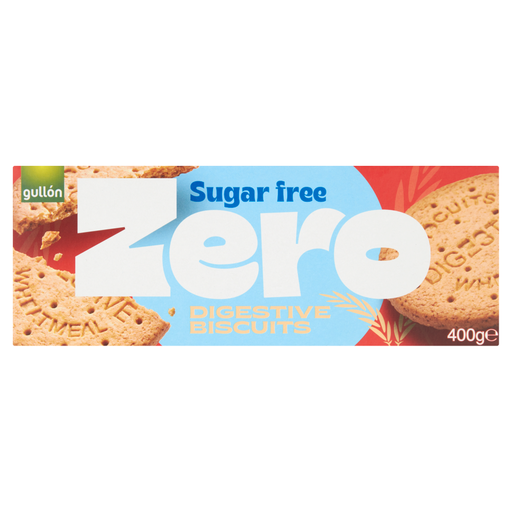 No image available
A digestive rather than shortbread. The 400 g pack calls for portioning if you do not want to carry it all with lunch; check its nutrition table and sweetener warning for the portion you choose.
 No image available
A 97 g sandwich-cookie option rather than a shortbread-style biscuit. If pack format or sweeteners affect your lunch choice, check those details on the product and purchased pack.
No. “No added sugar” does not tell you the finished biscuit’s sugars per 100 g. The original sugar-free claim annex published by legislation.gov.uk states a limit of 0.5 g sugars per 100 g for solid food; read the exact biscuit’s “of which sugars” entry rather than treating the two descriptions as interchangeable.
Not necessarily. Farmhouse Biscuits lists 67.6 g carbohydrate and 491 kcal per 100 g for its sugar-free Viennese Shorties. Compare the nutrition table for the portion you intend to pack instead of using the sugar claim as a stand-in for other figures.
The biscuits discussed here do not need preparation, but you may want to portion a larger pack or carton before leaving. Follow the purchased pack’s storage directions; Walker’s specifies cool, dry storage for its Shortbread Fingers.
Read the purchased pack’s ingredients and precautionary statements, not just its sugar-free wording. The checked Gullón shortbread listing includes wheat and milk-derived decoration, while Farmhouse lists wheat for its Viennese Shorties and warns of possible milk, egg, soya and tree-nut cross-contact. GOV.UK explains that specified allergens in prepacked food must be clearly identified in the ingredients list.