Buyers with a sugar-free requirement
Check the claim and sugars figure on the exact shortbread pack. A different ‘free from’ label does not answer the same question.


If sugar-free shortbread is essential for the office, check that the current pack makes that claim and lists no more than 0.5 g sugars per 100 g. A UK retailer lists Gullón Sugar Free Shortbread below that figure; separately bagged conventional shortbread may be more useful for sharing when sugar-free is not required, but the checked examples contain sugar. Check carbohydrates and ingredients separately before putting biscuits out for colleagues.
Check the claim and sugars figure on the exact shortbread pack. A different ‘free from’ label does not answer the same question.
Consider whether separate bags or a larger pack fits how the biscuits will be offered, and keep ingredient information available.
Read the carbohydrate figure as well as sugars per 100 g. A sugar-free claim does not describe the biscuit’s total carbohydrate content.
Decide whether the biscuit must be shortbread and sugar-free before comparing pack formats or other label details.
Choose this when: the office specifically needs sugar-free shortbread and the current pack confirms the claim.
Also check: the UK-listed Gullón 330 g product contains wheat and milk ingredients and is listed with 68 g carbohydrate per 100 g.
Choose this when: sugar-free is not required and a conventional biscuit or separate portions better fits the occasion.
Keep in mind: the checked Walker’s, Dean’s and Waitrose shortbreads list sugar.
| Priority | What to check | Your needs |
|---|---|---|
| Sugar-free claim | Check the exact pack’s claim and sugars per 100 g. For a sugar-free claim in Great Britain, the condition published on legislation.gov.uk is no more than 0.5 g sugars per 100 g. | I need shortbread that meets a sugar-free requirement, not simply a biscuit with another ‘free from’ label. |
| Other ingredients | Read carbohydrates per 100 g, the sweetener ingredients and any relevant pack warnings separately from sugars. | If I am comparing recipes, the sugars figure alone will not tell me what else is in the biscuit. |
| Allergen information | Check the exact pack’s ingredients and precautionary statements. Keep that information available when biscuits are shared. | Colleagues need to be able to check ingredients for themselves; sugar-free does not mean free from allergens. |
| Serving format | Compare separate bags with a larger sharing pack, without treating packaging as a nutrition claim. Walker’s lists six individual bags of Wee Shorties, which contain sugar. | Separate portions may be convenient at work, but I cannot use that Walker’s format to meet a sugar-free requirement. |
M&S offers a Made Without Wheat shortbread, but that wording does not establish its sugars content.
Match the claim to the office requirement, then read sugars per 100 g on the current pack.
The UK retailer listing for Gullón Sugar Free Shortbread gives 68 g carbohydrate per 100 g and lists wheat and milk ingredients.
Check carbohydrates, ingredients and allergen statements separately, and leave the pack information accessible when sharing.
Walker’s individually bagged Wee Shorties offer separate portions, but their listed ingredients include sugar.
Settle the sugar-free requirement before choosing a serving format.
These examples illustrate different claims and formats; check the exact product rather than extending one listing’s details to a whole brand.
A UK retailer lists Gullón Sugar Free Shortbread Biscuits in a 330 g pack.
Wee Shorties offer a conventional shortbread format for separate portions.
The 150 g All Butter Shortbread Fingers are a conventional option when sugar-free is not required.
Its 200 g Shortbread Fingers listing provides nutrition information for comparison.
Made Without Wheat All Butter Shortbread Rounds are relevant when comparing the meaning of dietary labels.
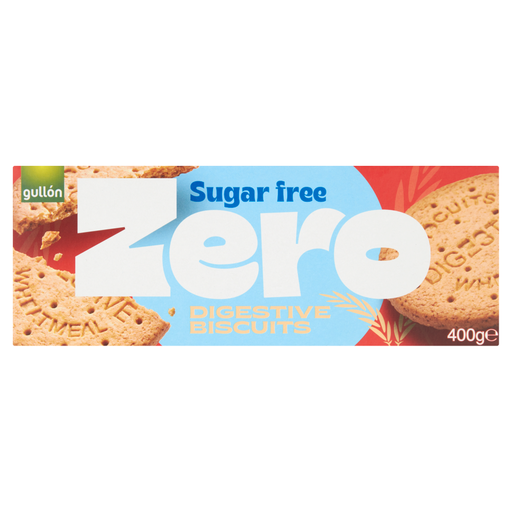
These Joybuy options are sugar-free-labelled biscuits for an office snack, but neither is shortbread. If shortbread itself is essential, check the biscuit type before considering either alternative.
 No image available
A sugar-free-labelled digestive biscuit to consider only if the office can use a biscuit other than shortbread. Check the current pack’s sugars per 100 g, carbohydrates, ingredients and allergen information before sharing.
 No image available
A zero-sugar-labelled sandwich biscuit rather than shortbread. Check the current pack’s sugars per 100 g, ingredients and allergen information if considering it for colleagues.
No. The Great Britain claim conditions published on legislation.gov.uk distinguish them: ‘sugar-free’ limits total sugars to no more than 0.5 g per 100 g, while ‘no added sugar’ concerns sugars or foods added for sweetening. Check the nutrition declaration on the actual biscuit.
No. Nutz4Nuts lists 68 g carbohydrate per 100 g for its UK-listed Gullón Sugar Free Shortbread, alongside less than 0.5 g sugars per 100 g. Compare both figures on the current pack if carbohydrates matter to your choice.
Keep the exact pack or its ingredient and allergen information alongside the biscuits so colleagues can check it. The UK-listed Gullón sugar-free shortbread includes wheat and milk ingredients; do not infer allergen suitability from a sugar-free claim.
No. The Department for Education’s school-food guidance concerns food provided in state-funded schools in England, not an ordinary office snack purchase. The proposed revised standards were still subject to parliamentary approval and were not in force in September 2026; a biscuit’s name or sugar-free label alone does not establish its HFSS classification.