
24/7 Customer Support

Free returns

Same-day & Next-day Delivery

Quality Guaranteed

Unlock Your Welcome Offers: FREE Delivery | Up to 80% OFF | Free 30-day JoyPlus trial
Download the APP
For UK households, offices and party hosts, sugar-free soft drinks multipacks offer a convenient way to keep cola available without repeatedly buying individual cans. However, pack sizes, caffeine content and sweetener formulas can vary considerably, so the cheapest-looking option is not always the most suitable for your routine.
This guide highlights common buying traps, explains the specifications worth checking and matches several options to different household needs.
Most zero sugar cola products still contain caffeine. Coca-Cola Zero Sugar, Diet Coke, Pepsi Max and cherry cola varieties commonly list caffeine or flavourings containing caffeine in their ingredients.
If you want cola for evening use, children in the household or anyone avoiding caffeine, look specifically for wording such as “Caffeine Free” or “No Caffeine”. A sugar-free label alone does not indicate that the drink is stimulant-free.
A 24-pack of 330ml cans can suit a busy office or large family, but it requires more cupboard or garage space and may be inconvenient in a small flat. Large 2L cola bottles can offer more servings for gatherings, yet opened bottles gradually lose carbonation and need refrigeration.
Consider how quickly your household consumes soft drinks. A smaller pack may be more practical for occasional use, while a larger multipack can reduce the need for frequent shopping when consumption is predictable.
Sugar-free drinks use different sweetener combinations and flavour profiles. Several products in this category contain aspartame, which is a source of phenylalanine. People with phenylketonuria (PKU) should avoid products containing phenylalanine and follow appropriate medical guidance.
Always check the current packaging for ingredients, allergen information, caffeine statements and nutritional values before purchasing. Formulas and labels can change.
In the supplied product information, many cans contain 0g of sugar and approximately 1 calorie per 330ml can, although figures vary slightly between products. A drink described as a low-calorie soft drink may still have a different energy value from another “zero” option.
Compare nutrition per 100ml as well as per can or bottle. This is particularly useful when comparing 250ml cans with 330ml cans or pouring from 2L bottles.
Cans are easy to portion and chill, while bottles can produce less packaging per serving when shared. Check local recycling guidance, as collection arrangements can differ between UK councils.
Check whether the product is suitable for your household’s requirements. Several listed products are suitable for vegans and vegetarians, but this should be confirmed on the product label rather than assumed from the drink category.
For caffeine-sensitive shoppers, options such as Diet Coke Caffeine Free are more relevant than standard Diet Coke, Coca-Cola Zero Sugar or Pepsi Max. Also review the phenylalanine warning where applicable.
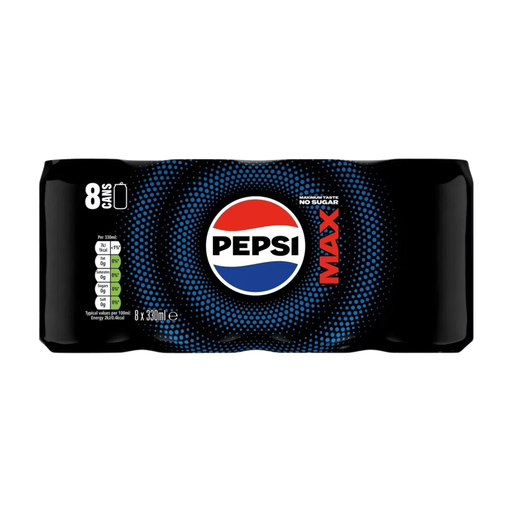
Why This Fits Their Persona: An 8-pack of standard 330ml cans gives occasional shoppers a manageable starting quantity for meals, home use or office breaks.
The pack size avoids overbuying while the product information clearly states zero sugar and approximately 1 calorie per 330ml can. It does contain caffeine and phenylalanine, so the label should be checked before purchase.
330ml cans; 0g sugar per can; suitable for vegetarians; recyclable packaging stated in the product information.
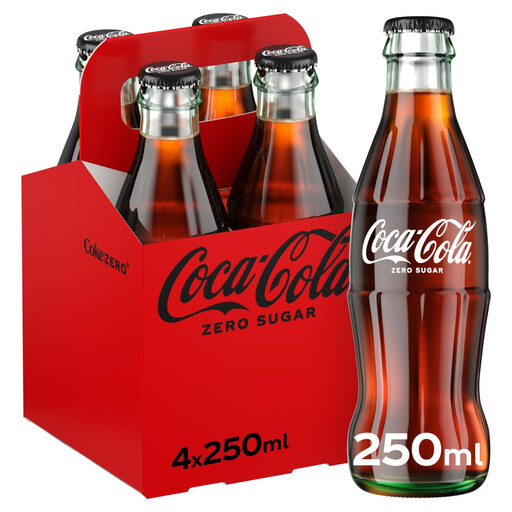
Why This Fits Their Persona: The smaller 250ml format offers controlled portions and a compact option for fridges, lunch occasions or occasional entertaining.
The four-can quantity limits storage pressure and reduces the chance of opening a large bottle that loses fizz before it is finished.
250ml cans; zero sugar and zero calories stated; suitable for vegans and vegetarians.
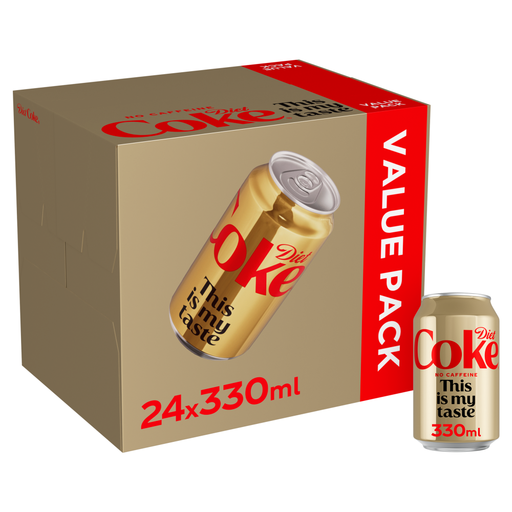
Why This Fits Their Persona: A larger can multipack suits offices, regular household consumption, parties and shoppers specifically seeking caffeine-free cola.
The product is explicitly identified as caffeine-free, preventing confusion with standard Diet Coke. It also lists zero sugar and zero calories per can.
24 x 330ml cans; caffeine-free formula; 0g sugar and 0g salt listed per can.
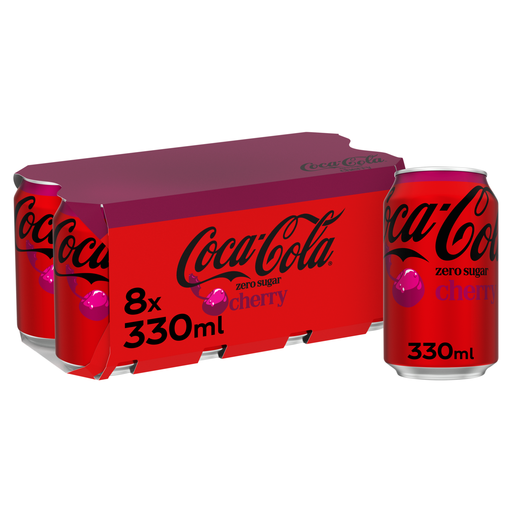
Why This Fits Their Persona: A cherry-cola option gives households a sugar-free flavour alternative for meals, film nights and informal gatherings.
The product name clearly identifies the cherry flavour, while the nutrition information lists 0g sugar per 100ml and approximately 1 calorie per 100ml.
8 x 330ml cans; cherry flavour; zero sugar; suitable for vegetarians.
We have compiled a complete, real-time list of products that fully satisfy these strict selection criteria and UK safety regulations.
They can fit into an everyday routine, but they should not replace water or a varied diet. Check the label for caffeine, sweeteners and phenylalanine warnings, particularly when buying for children or anyone with specific dietary requirements.
330ml cans provide consistent portions, chill quickly and are convenient for lunchboxes, offices and gatherings. 2L bottles are more suitable for sharing at meals or parties, provided you have enough fridge space and can finish them before carbonation declines.
Many do, including several Diet Coke, Coca-Cola Zero Sugar and Pepsi Max products. Choose a clearly labelled caffeine-free cola if avoiding caffeine is important. Always verify the ingredients and front-of-pack wording, as product formulations can vary.