What to check before buying
Start with the claim and the per-100-g nutrition panel, then check ingredients, allergens and delivery substitutions for the exact cereal you intend to receive.
| Priority |
What to check |
Your needs |
| Label meaning |
For a sugar-free claim, check that total sugars are no more than 0.5 g per 100 g. A no-added-sugar claim does not by itself show the total sugars figure. |
I want the label to match my goal: a cereal close to the sugar-free threshold, or one made without added sugars. |
| Total sugars and format |
Compare the “of which sugars” value per 100 g across cereals. Check the serving amount separately, especially for porridge prepared with milk or toppings. |
A plain oat or wheat-biscuit breakfast may suit me better than a fruit-based muesli when I want a lower total-sugars figure. |
| Ingredients and allergens |
Read the ingredient list and allergen statement for the exact variant. Check for cereals containing wheat, barley or oats, and for milk or nuts in muesli and granola. |
I need a cereal that works for my household as well as meeting my sugar preference. |
| Delivery substitutions |
Review the retailer’s substitution controls and the live product listing before checkout. Check the delivered pack if ingredients, allergens or a strict sugar requirement matter. |
I want the cereal I selected, not a superficially similar replacement with a different nutrition or allergen profile. |
Joybuy cereal options
Joybuy product options for a plain wholegrain porridge route with a low total-sugars figure per 100 g. Check the current listing and pack for ingredients, allergens and preparation details.
 No image available
Quaker Oat So Simple Big Bowl Original 6 Pack 231g
Individually portioned oat sachets for a quick porridge breakfast, with a stated 2.5-minute microwave preparation route.
The listing states 100% wholegrain rolled oats, 1.0 g sugars and 9.0 g fibre per 100 g. It is not sugar-free under the 0.5-g-per-100-g threshold; milk and toppings change the finished bowl.
Joybuy
 No image available
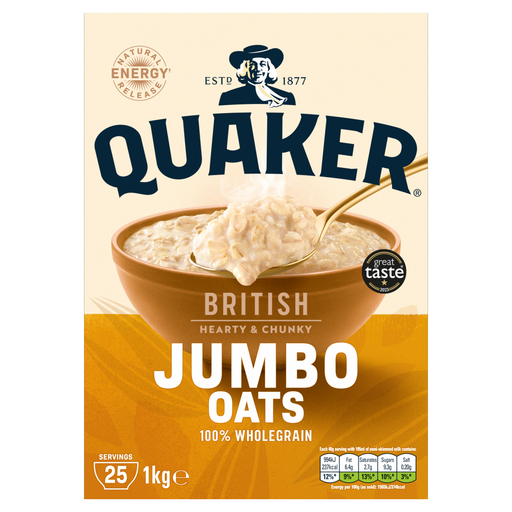
Quaker Jumbo Rolled Oats 1kg
A plain oat option for porridge, overnight oats or baking when you prefer to choose the liquid and additions yourself.
The listing states 100% wholegrain oat flakes, 1.0 g sugars and 9.0 g dietary fibre per 100 g. It may contain traces of wheat; preparation and additions affect the finished bowl.
Joybuy
 No image available
Scotts Porage Oats Old Fashioned Porridge Oats 1kg
This thicker rolled-oat option has stated hob and microwave preparation methods for shoppers making porridge at home.
The listing states 100% rolled oats and 1.1 g sugars per 100 g. It may contain wheat and barley, and milk or sweet toppings can raise sugars in the prepared bowl.
Joybuy
 No image available
Flahavan's Organic Porridge Oats 1kg
A 1 kg plain-oat option for regular porridge use and a simple wholegrain breakfast format.
The listing states 100% organic wholegrain oat flakes, 0.9 g sugars and 8.3 g fibre per 100 g. It is above the sugar-free threshold and contains oats/gluten; check the current pack for preparation details.
Joybuy
Frequently asked questions
Does no added sugar mean a breakfast cereal is sugar-free?
No. Under the sugar-free condition in the legislation.gov.uk annex to Regulation (EC) No 1924/2006, a food must contain no more than 0.5 g sugars per 100 g or 100 ml. No-added-sugar cereals can still contain sugars from dried fruit, date paste or fruit purée; Alpen No Added Sugar Muesli lists 18 g sugars per 100 g, while W. K. Kellogg No Added Sugar Granola lists 12 g per 100 g.
Which supplied cereal is closest to sugar-free?
Among the supplied verified examples, Nestlé Shredded Wheat Original is closest at 0.7 g sugars per 100 g, followed by Quaker Traditional Rolled Oats at 1.1 g per 100 g. Neither meets the 0.5-g-per-100-g sugar-free threshold.
What should I compare on an online grocery listing?
Compare the “of which sugars” value per 100 g first, then check the serving size, ingredients and allergen statement. NHS guidance identifies 5 g or less total sugars per 100 g as low in sugar, but total sugars can include naturally occurring sugars from fruit and milk as well as free sugars.
Should I allow substitutions for a reduced-sugar cereal order?
Do not accept an unreviewed substitute when you have a strict sugar target, allergen requirement or exact-product requirement. Tesco says substitutions may be offered when an unavailable item is allowed to be substituted; check your retailer’s current controls before checkout and inspect any replacement at delivery.
Are no-added-sugar mueslis suitable for nut or milk allergies?
Not automatically. Alpen No Added Sugar Muesli contains milk ingredients, hazelnuts and almonds, while Dorset Simply Delicious Muesli No Added Sugar lists Brazil nuts, hazelnuts, wheat, barley and oats. Read the current label for the exact pack before eating it.


