Hosts providing a sugar-free choice
A smaller portion of a regular Jaffa Cake is still a portion of a product containing sugar. Check the exact alternative's sugar-free claim and nutrition panel before putting it on the table.


For a Halloween table that needs a sugar-free choice, check the claim and sugars declaration on the exact pack rather than using ordinary Jaffa Cakes or a reduced-sugar biscuit. McVitie's and ASDA each list 50 g sugars per 100 g for their standard Jaffa Cakes, so those products do not meet that requirement; a separately labelled alternative need not have the same orange, chocolate and sponge format.
The right choice depends on whether sugar-free is a firm requirement and what guests need to know before taking a treat.
A smaller portion of a regular Jaffa Cake is still a portion of a product containing sugar. Check the exact alternative's sugar-free claim and nutrition panel before putting it on the table.
Keep the pack available so guests can check carbohydrates, serving information and sweeteners for themselves. Diabetes UK advises against assuming foods labelled for people with diabetes offer a special benefit; individual dietary advice still matters.
Do not rely on a treat's appearance to judge its ingredients. McVitie's lists wheat, egg, milk and soya in its Original Jaffa Cakes, so guests need the details for the exact product being served.
Decide first whether the treat must be sugar-free. Then check its format and ingredients: an orange-flavoured alternative is not necessarily a Jaffa Cake or suitable for every guest.
| Priority | What to check | Your needs |
|---|---|---|
| Sugar-free claim | Look for the claim on the exact pack and read sugars per 100 g or 100 ml. The adopted nutrition-claims annex published by legislation.gov.uk sets the sugar-free condition at no more than 0.5 g sugars on that basis. | I need a clearly labelled sugar-free option, not an ordinary cake served in a smaller piece. |
| Type of treat | Check whether it is a cake, biscuit, jelly or another product. Orange flavour or chocolate alone does not make something a Jaffa Cake. | If the orange-centred cake format matters to my guests, I need to check that separately from the sugar-free claim. |
| Carbohydrates and sweeteners | Read the carbohydrate declaration, serving information, sweeteners and any pack warnings. Diabetes UK notes that polyols contain carbohydrates and calories. | Guests managing blood glucose need access to the label rather than an assurance that any sugar-free sweet suits them. |
| Allergens and ingredients | Check the exact pack's ingredients, declared allergens and any may-contain statement. McVitie's and ASDA list wheat and egg among the ingredients of their standard Jaffa Cakes. | For a shared party table, I want guests to be able to identify what is in each option before choosing. |
A comparative claim can appear on a product that still contains sugar. Tesco lists McVitie's Digestives The Light One at 8.9 g sugars per 100 g, despite its reduced-sugar description.
For a sugar-free party choice, check the specific claim and per-100 g or per-100 ml sugars figure instead of relying on ‘light’ or ‘reduced sugar’.
McVitie's lists 5.4 g sugars per cake and 50.0 g per 100 g; ASDA lists 6.3 g per cake and 50 g per 100 g. Neither standard product is sugar-free.
Use the per-100 g declaration when checking the sugar-free condition, and describe regular Jaffa Cakes as a separate option.
A sugar-free claim does not answer questions about carbohydrates, sweeteners, allergens or other ingredients. Tesco's listing for Hartley's Sugar Free Orange Jelly, for example, carries a phenylalanine warning.
Keep original packaging or ingredient information available and let guests assess the labelled option against their own requirements.
These references help distinguish a standard Jaffa Cake from an orange-flavoured alternative; they do not imply that the products meet the same dietary need.
Its Original Jaffa Cakes are a reference point for the familiar cake format, not a sugar-free option.
ASDA's standard Jaffa Cakes are another regular cake option rather than a substitute for a sugar-free treat.
Sugar Free Orange Jelly offers an orange-flavoured option to consider separately from Jaffa Cakes; it is jelly, not cake.
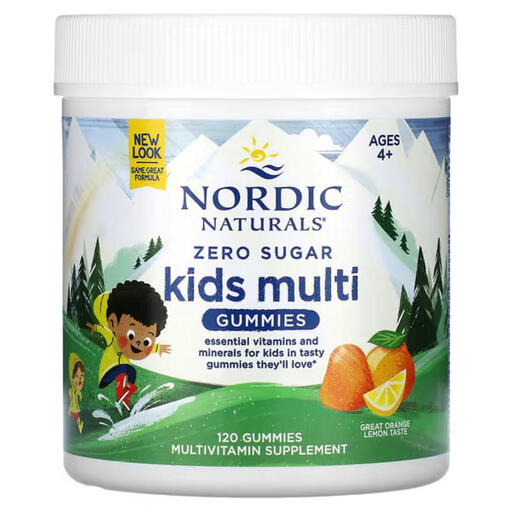
The products below are a Zero Sugar chocolate sandwich biscuit and a children's multivitamin supplement. Neither is a Jaffa Cake; the supplement should not be set out as a help-yourself Halloween sweet.
 No image available
For a Halloween biscuit option, this is a chocolate sandwich cookie rather than an orange-centred Jaffa Cake. Check the pack's sugars declaration and ingredients against guests' requirements; the product information identifies wheat and soya.
 No image available
Despite the orange and lemon flavour and Zero Sugar name, this is a children's multivitamin supplement, not a biscuit, cake or party confectionery. Do not offer it as a freely served treat; follow the product's directions for use.
The adopted nutrition-claims annex published by legislation.gov.uk sets the condition for a sugar-free claim at no more than 0.5 g sugars per 100 g or 100 ml. Check the claim and nutrition panel on the exact product you plan to serve.
No. McVitie's lists 50.0 g sugars per 100 g for its Original Jaffa Cakes, and ASDA lists 50 g per 100 g for its standard Jaffa Cakes. Serve them only as regular cakes, not as the sugar-free choice.
Not if the requirement is sugar-free: ‘reduced sugar’ is a different claim. Tesco lists McVitie's Digestives The Light One at 8.9 g sugars per 100 g, so its reduced-sugar description does not make it a sugar-free substitute.
No. A sugar-free label does not describe the product's total carbohydrates or an individual guest's dietary requirements. Diabetes UK advises people with diabetes to seek individual advice from their healthcare team; keep the product label available rather than presenting a party treat as tailored to them.
The Department for Education's September 2026 practical guide addresses school food standards in England, not ordinary private-party catering. If an event is run by an English school, check the school's applicable food requirements rather than treating a private party and school food provision as the same setting.