
24/7 Customer Support

Free returns

Same-day & Next-day Delivery

Quality Guaranteed

Unlock Your Welcome Offers: FREE Delivery | Up to 80% OFF | Free 30-day JoyPlus trial
Download the APP
A sun spray can make applying sunscreen to arms, legs and backs much quicker, particularly when you are preparing children for the park or packing for a beach holiday. However, convenience can also create gaps in coverage. A fine mist may look evenly distributed while leaving areas unprotected, and a higher SPF does not remove the need to apply enough product or reapply it.
This guide explains the practical differences between spray sunscreen formats, SPF levels, UVA and UVB protection, water resistance and formulas for specific skin types. It also highlights suitable options available from Joybuy for everyday UK use, travel and outdoor activities.
An aerosol sunscreen mist can feel quick and lightweight, but the product may drift in windy conditions or settle unevenly. Pump sprays and milk-in-spray formulas usually need to be spread by hand, while aerosol formats should not be sprayed directly onto the face.
Apply generously to exposed skin, then rub the product in where the instructions require it. Spray sunscreen should be used in a well-ventilated area and kept away from the eyes, mouth and sources of ignition.
A water-resistant sunscreen spray is designed to remain on the skin for a period during swimming or sweating, but no sunscreen remains fully intact after repeated water exposure, towelling or vigorous activity. Reapply after swimming, towelling and heavy perspiration, and follow the interval shown on the packaging.
Be cautious with products suggesting unusually long protection from one application. Check the label directions rather than assuming a single application will cover an entire day outdoors.
A tanning sunscreen spray may contain ingredients intended to enhance the appearance of a tan or support the skin’s natural tanning process. This does not make prolonged sun exposure safe. A tanning feature should be considered an optional cosmetic benefit, not a reason to lower your protection level.
For children, fair skin or strong summer sun, look first at the SPF level, UVA marking, application instructions and suitability information.
SPF primarily indicates protection against UVB, the radiation associated with sunburn. Look for a product that also clearly states UVA and UVB protection. In the UK, UVA protection may be shown through a UVA logo, a star rating or wording on the packaging.
No sunscreen provides complete protection from UV radiation. Avoid prolonged exposure, particularly around the middle of the day, and use a hat, sunglasses and suitable clothing.
Choose between:
For the face, spray into clean hands first and apply carefully, unless the product label gives different instructions.
If you have sensitive skin, compare the ingredient list and consider a fragrance-free sunscreen. Fragrance-free does not mean that irritation is impossible, so stop use if discomfort or a rash occurs. A non-greasy sunscreen may be more comfortable for commuting, sport or wearing beneath clothing, while moisturising ingredients can be useful if your skin feels dry.
Parents should select a clearly labelled children’s sun spray and follow the recommended minimum age. Babies and young children should be kept out of direct sunlight and protected with clothing and shade. Always supervise application.
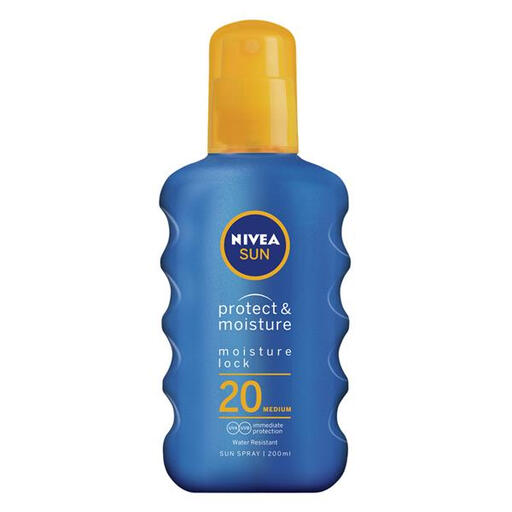
Why This Fits Their Persona: A 200ml pump spray with SPF 20 suits shoppers seeking a lower-SPF option for routine, less intense outdoor exposure.
Its SPF 20 positioning is clear, helping buyers avoid assuming that every spray offers SPF 30 or SPF 50 protection.
Water-resistant formula; includes Vitamin C and hyaluron and is described as fast-absorbing and non-sticky.
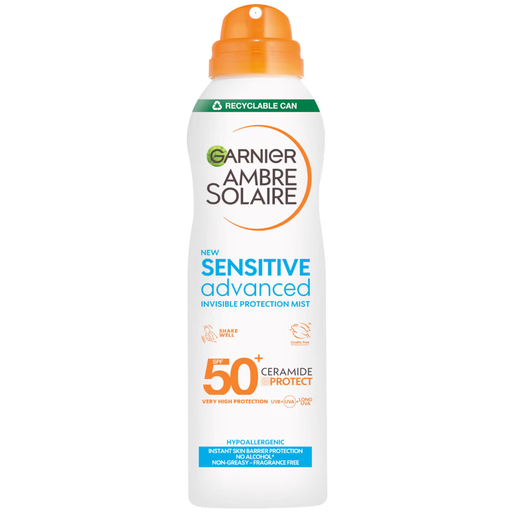
Why This Fits Their Persona: Suitable for shoppers who prioritise SPF 50+, a dry feel and a fragrance-free format for fair or sensitive skin.
The alcohol-free and fragrance-free description makes it easier to screen out scented formulas when those are unwanted.
SPF 50+; fragrance-free dry mist; water-resistant format designed for body application.
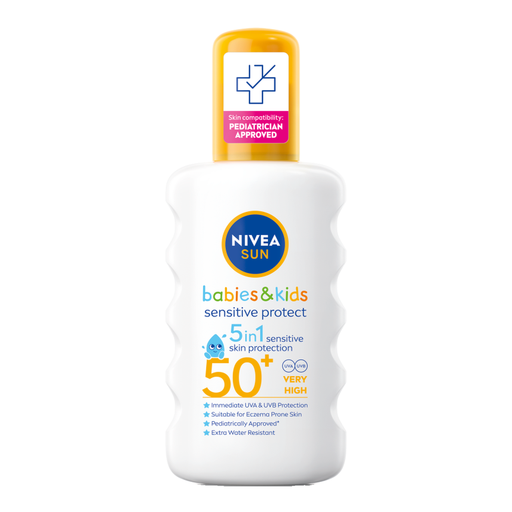
Why This Fits Their Persona: Designed for families needing a children’s sun spray for outdoor play, swimming and UK holidays.
The pump design reduces the need to release an airborne aerosol around children; the instructions still say to spray into palms first.
SPF 50+; fragrance-free formula; extra water-resistant; listed as suitable from six months.
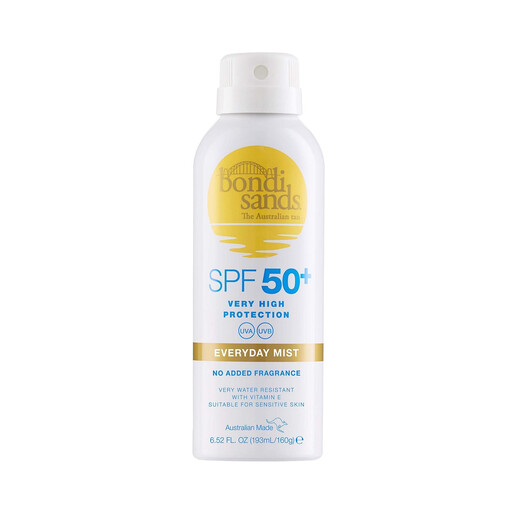
Why This Fits Their Persona: A portable aerosol sunscreen mist for people combining commuting, exercise, swimming or frequent outdoor activities.
Its instructions specify generous application and reapplication every two hours, including after swimming, exercise or towel drying.
SPF 50+; broad-spectrum UVA and UVB protection; water-resistant mist with Vitamin E and aloe vera.
We have compiled a complete, real-time list of products that fully satisfy these strict selection criteria and UK safety regulations.
If you want a cosmetic bronzing effect, products such as SPF 30 tanning sunscreen sprays may be considered, while a face and body sunscreen can reduce the need to carry separate products. For after-exposure care, an after sun spray can provide a cooling, moisturising layer, but it does not replace sunscreen or treat serious sunburn.
SPF 50 sun spray can be used for everyday outdoor exposure, especially by people with fair or sensitive skin. SPF selection should reflect your skin, exposure time and conditions. Apply enough product and reapply as directed; a high SPF cannot compensate for a thin or missed application.
Shelf life varies by product and storage conditions. Check the expiry date, open-jar symbol and manufacturer instructions. Heat, direct sunlight and repeated exposure to moisture can affect the product, so store it as directed and replace it when the label indicates.
Only use it on the face if the product instructions explicitly allow it. Many aerosol and pump sprays advise spraying into the hands first, then applying carefully while avoiding the eyes, lips and inhalation. A dedicated facial sunscreen may offer a more practical application method.