
24/7 Customer Support

Free returns

Same-day & Next-day Delivery

Quality Guaranteed

Unlock Your Welcome Offers: FREE Delivery | Up to 80% OFF | Free 30-day JoyPlus trial
Download the APP
Finding authentic Japanese noodles online can be harder than expected. Product pages often use broad descriptions such as “traditional”, “premium” or “extra chewy” without explaining the details that affect how the noodles cook and taste. For UK shoppers, checking the pack size, ingredients, origin and preparation method is more useful than relying on promotional wording.
Sunaoshi dried Hiyamugi noodles are designed for cooks who want a Japanese wheat noodle that sits between somen and udon in thickness. This guide explains what Hiyamugi means, which specifications matter and how to choose a pack for soups, salads or stir-fries.
Japanese noodles are not interchangeable. Somen is typically very fine and cooks quickly, while udon is noticeably thick and substantial. Hiyamugi occupies the middle ground: it is thicker than somen but thinner than udon, giving dishes a firmer bite without the heavier texture of thick noodles.
A listing that simply says “Japanese noodles” may not provide enough information to identify the noodle style. Check the product name and the stated texture before buying.
Dried Japanese noodles require cooking. Eating them straight from the packet can be unsafe and produces a hard, unpleasant texture. Sunaoshi Hiyamugi instructions specify boiling the noodles for approximately 7–8 minutes, or following the instructions printed on the packaging, until tender but still chewy.
Cooking time can vary according to the volume of water, pan size and personal preference, so it is sensible to taste a strand shortly before the recommended time ends.
Hiyamugi is generally a wheat-based noodle. The Sunaoshi product contains wheat and cereals containing gluten, with possible traces of soybeans and sesame. Anyone managing an allergy or intolerance should read the current packaging before purchase, as formulations and manufacturing information can change.
For shoppers seeking chewy Japanese noodles, Hiyamugi’s intermediate thickness is the key specification. It provides enough surface area to carry broth, dipping sauce or stir-fry seasoning while retaining a springy bite when cooked correctly.
This makes Hiyamugi suitable for:
The product description states that the noodles are made using wheat flour, water, salt and alkaline water. Alkaline ingredients such as potassium carbonate and sodium carbonate are commonly used in some noodle styles to influence texture and appearance.
A 200g pack is convenient for a small household or for trying Hiyamugi for the first time. Depending on appetite and the amount of protein and vegetables served alongside it, one pack may suit two modest portions or several smaller side servings.
If Hiyamugi is likely to become a regular cupboard staple, the Sunaoshi two-pack offers 400g in total. Compare the quantity with your expected use rather than choosing solely by the headline price.
The listed ingredients for Sunaoshi Hiyamugi are:
The stated nutrition per 100g is approximately 354 kcal, 78.5g carbohydrate, 7.2g protein, 0.8g fat and 1.2g salt. These figures refer to the dry product, so the weight and nutritional density change after cooking and draining.
Store unopened packs in a cool, dry place, away from direct sunlight, moisture and strong odours. Once opened, reseal the packet tightly or transfer the noodles to an airtight container. The product guidance recommends consuming opened noodles within one month for the preferred freshness and texture.
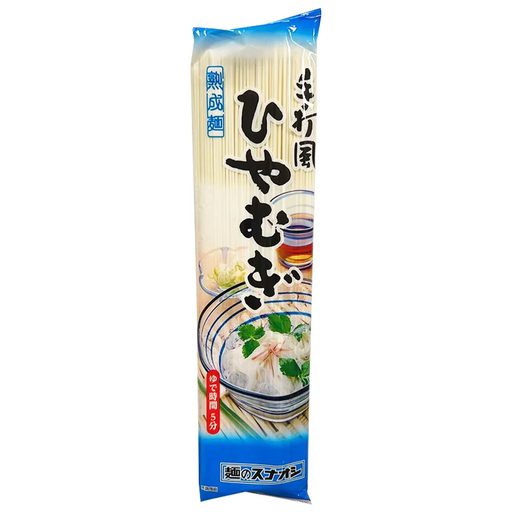
Why This Fits Their Persona: A manageable 200g pack suits UK shoppers trying Hiyamugi for the first time or preparing occasional Japanese-style meals at home.
The product clearly identifies the noodle style, cooking requirement, Japanese origin and wheat allergen information rather than relying only on generic noodle wording.
200g quantity; suitable for soup, cold noodle dishes and stir-fries; ingredients include wheat flour, water, salt and alkaline water.
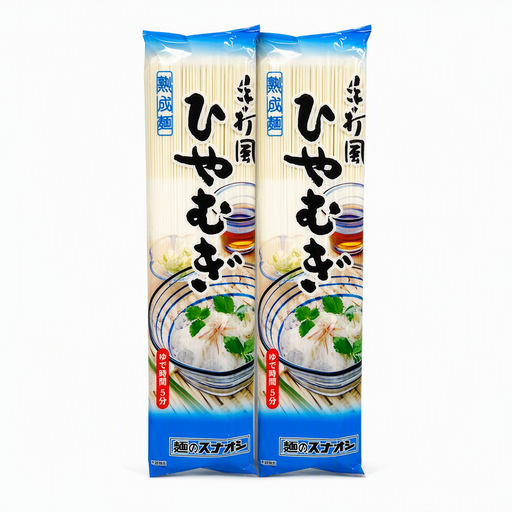
Why This Fits Their Persona: The two-pack is practical for households that cook Japanese food regularly and want a reserve in the cupboard.
Buying two separate 200g packs helps preserve unopened storage while giving more flexibility than opening one oversized bag.
400g total; made in Japan; firm, springy texture; clearly stated storage and allergen guidance.
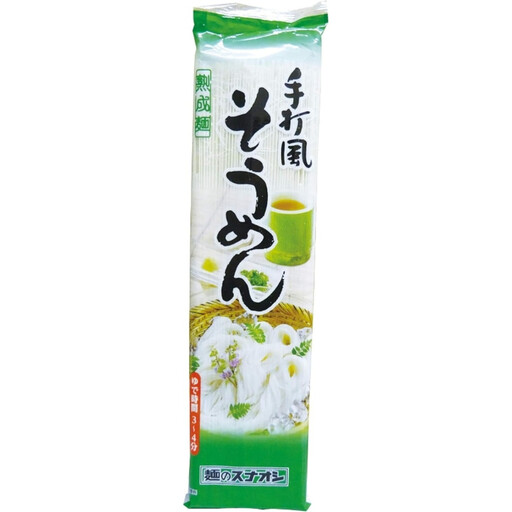
Why This Fits Their Persona: Cooks specifically wanting a finer Japanese noodle for lighter soups, chilled dishes or quick weekday meals may prefer somen over Hiyamugi.
Its fine texture and stated 2–3 minute cooking time make it a more suitable choice when speed and delicacy matter more than Hiyamugi’s thicker bite.
Cooks in approximately 2–3 minutes; suitable for hot pots, salads, soups and stir-fries; manufactured in Japan.
Avoid overcrowding a small pan, as this can lower the water temperature and encourage uneven cooking. Use the packet instructions as the final reference.
For a quick weekday bowl, combine Hiyamugi with miso or shoyu-style stock, spring onions, mushrooms and shredded chicken. For a cold dish, rinse the cooked noodles and serve with cucumber, carrot, edamame and a soy-based dipping sauce. To make Japanese stir-fry noodles, toss drained Hiyamugi with cabbage, peppers, egg or tofu and a small amount of sesame oil.
Remember that the noodles already contain salt, so taste the finished dish before adding extra soy sauce or seasoning.
We have compiled a complete, real-time list of products that fully satisfy these strict selection criteria and UK safety regulations.
Yes. After boiling, drain and rinse them under cold running water to stop cooking and remove surface starch. They can then be served with dipping sauce, salad vegetables or a light dressing.
The product guidance recommends approximately 7–8 minutes, although the exact result depends on water volume and preferred firmness. Check the packet and taste a strand before draining.
Reseal the packet tightly or place the noodles in an airtight container. Keep them in a cool, dry cupboard away from moisture and strong smells. The product guidance recommends using opened noodles within one month for preferred freshness and texture.