What to check before buying
Start with the recipe and the seasoning you want, then check the product format, pack weight and label.
| Priority | What to check | Your needs |
|---|
| Salt |
Check whether the block is salted or unsalted and read its salt value per 100g. Anchor lists 1.7g per 100g for its salted block and 0.02g for its unsalted block. |
I want to season each part of the roast separately, or account for the salt already in the butter. |
| Format |
Match the recipe’s specified ingredient to a block, spreadable product or ghee. Check the exact ingredients before substituting one format for another. |
If I am cooking with butter rather than spreading it on bread, I need the format my recipe calls for. |
| Quantity |
Check the required weight in grams and the pack’s net weight. Clarify what ‘4 pint’ is intended to describe before calculating how many packs to buy. |
I want enough for the planned dishes without treating a liquid-volume measure as a butter pack weight. |
| Ingredients and nutrition |
Read the exact pack’s milk allergen declaration and saturated-fat value per 100g. Do not use ‘unsalted’ as a substitute for either check. |
Someone in my household needs to check for milk, or I want to compare the saturated-fat information and planned portions. |
Brand and retailer ranges
These ranges show the formats available to compare; a brand name alone does not tell you whether a particular pack fits your recipe.
Lurpak
Lurpak’s UK range includes slightly salted and unsalted 200g blocks alongside spreadable, lighter, plant-based and flavoured products.
- The range distinguishes block butter from products intended for other uses.
- Check the exact ingredients and recipe requirements rather than treating its formats as interchangeable.
Anchor
Anchor offers salted and unsalted 200g blocks as well as spreadable products in its UK range.
- Its block labels distinguish the salt content: 1.7g per 100g for the salted block and 0.02g for the unsalted block.
- Anchor’s spreadable and blocks have different stated fat values; check the particular product rather than choosing by brand alone.
Kerrygold
Kerrygold’s UK range includes salted and unsalted 200g butter, a 500g butter pack, spreadable butter and a tub format.
- Kerrygold describes its unsalted butter as suitable for cooking and baking.
- That description does not establish how it performs against another brand in a roast recipe.
Tesco
Tesco’s UK butter listings include own-label and other brands, with block choices shown in 200g and 250g packs.
- The listed pack weights give shoppers a way to plan the quantity needed for several roast dishes.
- Check the exact item label for its format, ingredients and nutrition information.
Joybuy product options
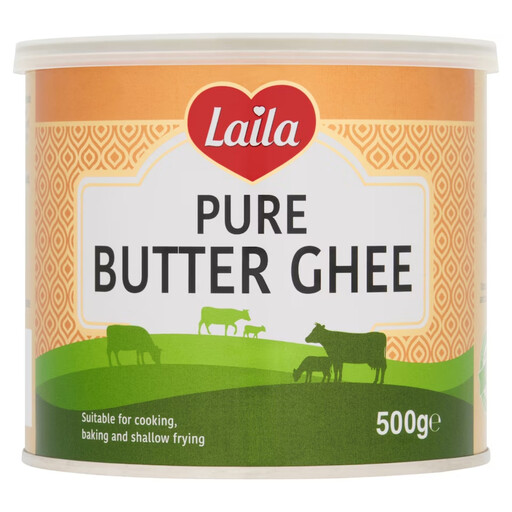
This option is a 500g butter ghee for roast preparation, not a salted or unsalted block. Check whether your recipe calls for ghee or allows that substitution.
 No image available
Laila Pure Butter Ghee 500G
Consider this 500g pack if your roast recipe calls for ghee or permits it as a cooking fat. The product listing describes use for roasting meats, but do not assume it replaces block butter in every recipe. Check the exact ingredients for milk and establish the weight you need before buying.
Joybuy
Questions about roast butter
Should I buy salted or unsalted butter for a Sunday roast?
Choose an unsalted block if you want to control seasoning across the meal; choose a salted block if you will account for its salt in the other dishes. Anchor lists 1.7g salt per 100g for its salted block and 0.02g per 100g for its unsalted block.
Can I use spreadable butter instead of a block for roast cooking?
Do not assume the two formats are interchangeable. Check what the recipe specifies and read the exact product’s ingredients: UK ranges distinguish blocks from spreadable, lighter and plant-based products.
How can I check butter for milk allergens?
Read the ingredients on the exact pack. GOV.UK says milk is an allergen that must be clearly labelled in the ingredients list when it is present in prepacked food.
Does unsalted butter contain less saturated fat?
Not in the two Anchor blocks compared here: both the salted and unsalted versions list 52g saturates per 100g. Check saturated fat on the particular pack independently of its salt content.
Can I freeze leftover butter for another roast?
Anchor says its butter and spreadables can be frozen. It advises defrosting them in the fridge or using a microwave’s defrost or low setting in 15-second intervals; follow the instructions on your particular pack if they differ.


