
24/7 Customer Support

Free returns

Same-day & Next-day Delivery

Quality Guaranteed

Unlock Your Welcome Offers: FREE Delivery | Up to 80% OFF | Free 30-day JoyPlus trial
Download the APP
As a Joybuy Product Recommendation Officer, my role is to help you navigate the crowded market of sun care. A good sunscreen spray offers a wonderfully convenient way to apply protection, but not all sprays are created equal. Many promise a flawless, invisible finish, only to leave you feeling sticky, while others make bold claims about all-day protection that don't hold up during a typical British summer day out, let alone a holiday abroad.
Before you add a new spray to your basket, it's worth understanding the common pitfalls. Many shoppers are caught out by marketing hype, leading to wasted money and, more importantly, inadequate sun protection.
To make an informed choice, focus on these core parameters. They are the non-negotiable details that determine whether a sunscreen spray is truly effective and pleasant to use.
True sun safety comes from shielding your skin from both types of harmful UV radiation.
The feel of a sunscreen on your skin can make all the difference between a product you love and one you dread using.
Not every sunscreen is right for every person or situation. Consider who will be using it and for what purpose.
Based on these practical criteria, here are a few options that align with different user needs, helping you avoid common purchasing mistakes.
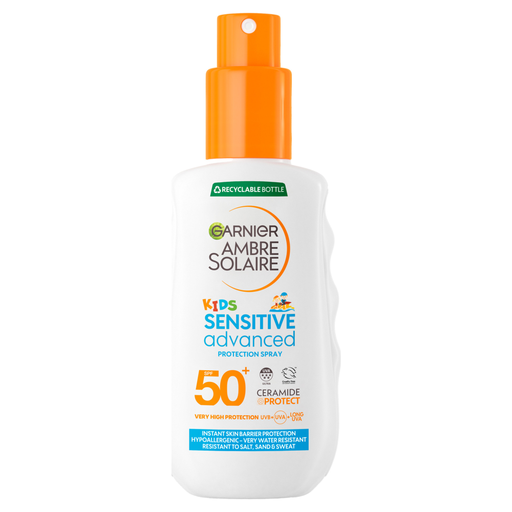
Why This Fits Their Persona: This is a practical choice for families needing reliable, high-level protection for everyone, especially children. Its hypoallergenic and fragrance-free formula is designed for delicate skin, making it a go-to family sun cream for beach days or park outings.
It sidesteps the "once-a-day" myth by being very water, sand and sweat resistant, acknowledging that protection needs to hold up to activity and requires reapplication. Its focus on sensitive skin avoids the irritation some high-performance sprays can cause.
Offers maximum 5-star UVA protection alongside SPF 50+. The formula is tested under paediatric control, providing confidence for use as a sun spray for kids.
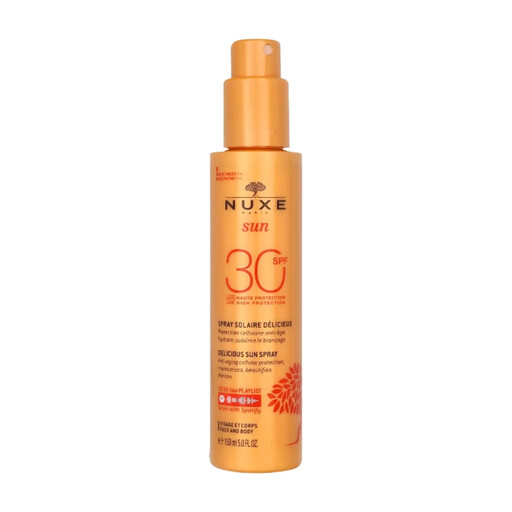
Why This Fits Their Persona: For those who want sun protection that feels luxurious and enhances their holiday glow. This spray combines reliable SPF 30 with a formula designed to promote a natural-looking tan, all while feeling weightless on the skin.
It delivers on the "invisible finish" promise with an ultra-light, melting texture that absorbs instantly, avoiding the greasy film that plagues many sprays. It offers a tangible benefit—tan enhancement—rather than vague marketing claims.
The formula includes Carob powder extract, which naturally activates the skin's tanning process. It also features a pleasant fragrance and a cap-free pump system, making it convenient for travel.
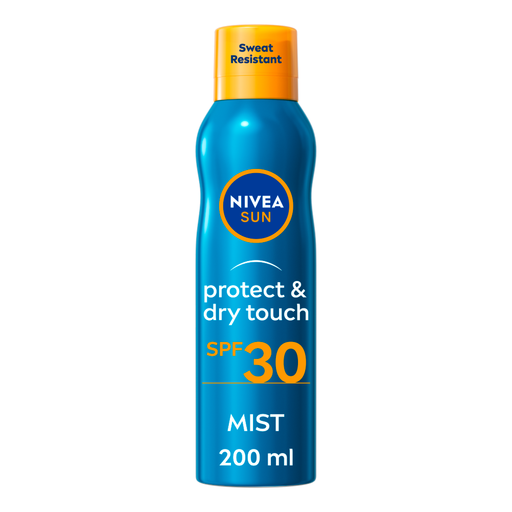
Why This Fits Their Persona: Perfect for runners, cyclists and anyone active outdoors. This spray is designed for performance, offering a sweat and extra water-resistant formula that feels refreshing upon application and doesn't get in the way of your workout.
This is a true dry touch sunscreen that is genuinely invisible on the skin. Its high resistance to sweat makes it a reliable choice for sports, directly countering the "apply once" myth by being formulated for conditions that demand reapplication.
The aerosol can be sprayed from any angle, making it easy to cover your back and legs without assistance. The cooling sun mist provides an immediate refreshing sensation during exercise.
We have compiled a complete, real-time list of products that fully satisfy these strict selection criteria and UK safety regulations.
A common mistake is not applying enough. For a spray, the guidance is to apply generously and evenly until a visible sheen appears on the skin, then rub it in. Don't just mist it from a distance. For an average adult, a full body application requires approximately 35ml of product, so be mindful of how quickly you are using a can or bottle. Always reapply every two hours and more frequently after swimming or sweating.
It is not recommended to spray sunscreen directly onto your face. This can lead to inhalation of the product and uneven coverage and it's easy to get it in your eyes. The correct method is to spray a generous amount into the palm of your hands and then apply it evenly to your face, avoiding the immediate eye area.
This is a common misconception. The increase in protection is not linear. SPF 30 blocks approximately 97% of UVB rays, while SPF 50 blocks about 98%. While SPF 50 does offer a higher level of protection, the difference is marginal. The most important factor for effective protection is applying a sufficient amount of sunscreen and reapplying it regularly.