
24/7 Customer Support

Free returns

Same-day & Next-day Delivery

Quality Guaranteed

Unlock Your Welcome Offers: FREE Delivery | Up to 80% OFF | Free 30-day JoyPlus trial
Download the APP
Choosing superfood dog food can feel straightforward until you compare ingredient lists, feeding claims and pack sizes. Terms such as “natural”, “grain-free” and “hypoallergenic” may sound reassuring, but they do not automatically tell you whether a recipe suits your dog or provides a complete daily diet.
The most useful approach is to look past the front-of-pack language and check the product’s statutory name, nutritional information, life-stage suitability and feeding instructions.
By Joybuy Product Recommendation Officer
Superfoods such as blueberries, spinach, seaweed, spirulina, quinoa or chia seeds can appear in dog food, but usually in relatively small quantities. Their presence does not by itself make a product suitable as a main meal.
For everyday feeding, look for the wording “complete pet food” or “complete dog food” for the correct life stage. A complementary food, topper or treat should not replace a balanced diet unless advised otherwise.
Grain-free dog food replaces cereals with ingredients such as potato, sweet potato, peas or beans. This may be useful for owners who are avoiding particular ingredients, but grain-free is not a universal quality measure. A recipe can be grain-free while still being unsuitable for an individual dog.
Also check manufacturing notes. For example, some grain-free recipes may be made on a line that also handles grain. Dogs with diagnosed dietary sensitivities may need a carefully controlled diet recommended by a veterinary professional rather than a retail “hypoallergenic dog food” label alone.
Wet and dry food cannot be compared directly using protein or meat percentages alone. Wet dog food contains substantially more water, while dry dog food is concentrated and easier to store.
A wet recipe showing 10–12% protein may provide a similar dry-matter proportion to a dry recipe showing around 23–30%. Look at the moisture figure and the complete feeding instructions before deciding that one recipe is automatically richer.
The first check is whether the food is intended for:
Puppy food should provide feeding guidance based on age and expected adult weight. Senior dog food may have a different fat level or nutrient profile. Do not assume an adult recipe is suitable for a growing puppy simply because it contains added vitamins and minerals.
If you are comparing salmon dog food, chicken dog food or lamb dog food, check how clearly the source is described. “Meat and animal derivatives” is a broader category than a named meat ingredient.
For dogs with suspected sensitivities, a limited or single-protein recipe can make ingredient checking simpler. However, “hypoallergenic” is not a guarantee that every dog will tolerate the food. Check for additional animal ingredients, oils and flavourings, and ask your vet for guidance where symptoms persist.
Compare protein, fat, crude fibre, crude ash and moisture, but interpret them in context. A higher protein percentage is not automatically the right choice for every dog.
Feeding guides are starting points, not fixed prescriptions. Portion size depends on weight, age, breed, activity level and body condition. Treats also contribute to daily energy intake. Weighing portions is particularly useful for small dogs, where a modest extra serving can make a noticeable difference.
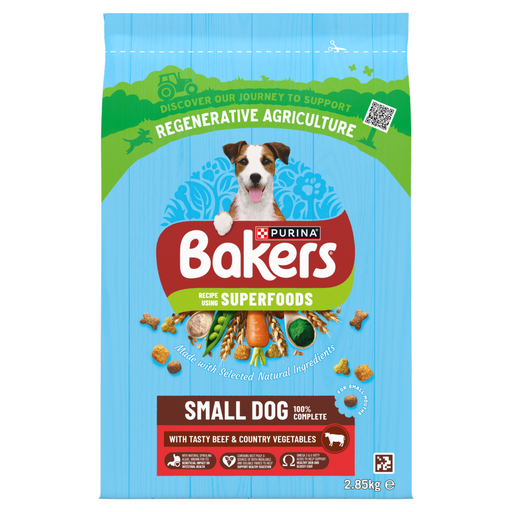
Why This Fits Their Persona: A practical dry food format for owners seeking a larger pack for an adult small dog, with feeding guidance for dogs weighing 1–10kg.
The label identifies it as complete food for adult small dogs and states the recipe’s 25% protein and 12% fat analytical values, rather than relying only on front-of-pack superfood wording.
Small kibble pieces, 2.85kg pack size and stated feeding ranges for toy and small dogs.
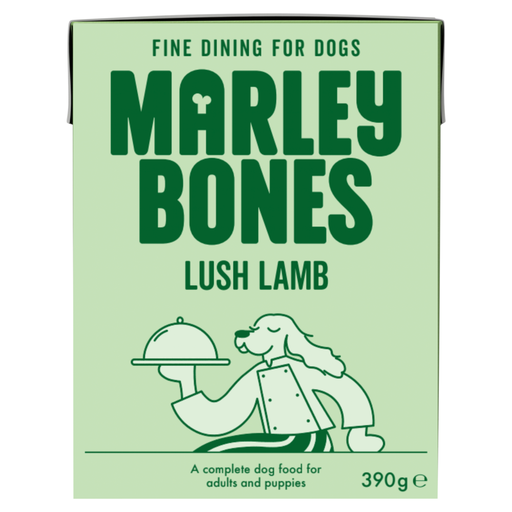
Why This Fits Their Persona: A portioned wet meal for owners who value named ingredients, convenient serving and a softer texture for adult dogs or puppies from two months.
The composition lists 60% lamb and gives the percentages of quinoa, chia, hemp and linseed, making the ingredient story easier to assess.
Gently steam-cooked pouch format; refrigerate opened portions and use within two days.
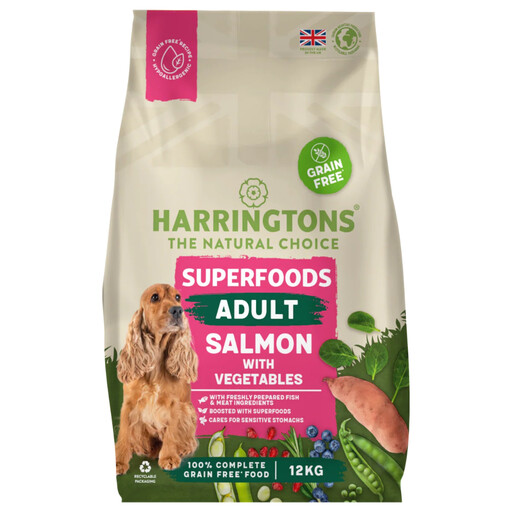
Why This Fits Their Persona: A larger dry food pack for owners feeding a medium, large or multi-dog household and looking for a grain-free salmon recipe.
It is labelled as complete food and provides portions from 70g for smaller dogs to 500g+ for dogs over 40kg. The product information also notes that the recipe is processed on a line handling grain.
12kg quantity, 23% protein, 12% fat and a listed blend including rosemary, spinach, pomegranate and blueberries.
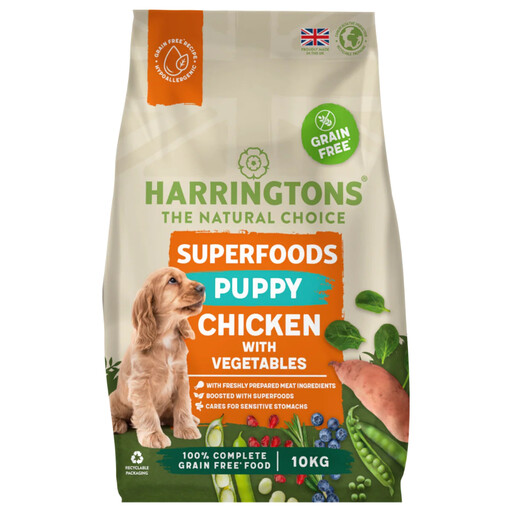
Why This Fits Their Persona: Designed for owners managing the higher feeding needs of a growing puppy, with smaller kibble and age-based feeding guidance.
The product is specifically described as complete dry puppy food, with 30% protein, 14% fat and feeding instructions based on expected adult body weight.
10kg pack, chicken as the named primary meat ingredient and a listed botanical blend with added taurine and seaweed.
Introduce a new recipe gradually over several days, mixing increasing amounts with the existing food. Monitor appetite, stools, weight and general tolerance. Always provide fresh drinking water.
If your dog has ongoing digestive problems, suspected allergies, a diagnosed condition or special nutritional needs, speak to a veterinary professional before choosing a sensitive stomach dog food or making a major diet change.
We have compiled a complete, real-time list of products that fully satisfy these strict selection criteria and UK safety regulations.
It can be, provided the label states complete pet food for your dog’s life stage. Superfood ingredients alone do not confirm nutritional balance, so check the statutory designation and analytical constituents.
Dry food generally requires smaller serving weights and is available in larger bags, while wet food contains more moisture and is often supplied in portion-sized packs. Compare the daily feeding cost rather than the price per pack. Store dry food sealed in a cool, dry place and refrigerate unused wet food according to the label.
Not always. Choose puppy food with growth-specific guidance and senior dog food labelled for older dogs where appropriate. An all-life-stage recipe may cover both, but you should still follow its feeding table and adjust portions as your dog develops.