
24/7 Customer Support

Free returns

Same-day & Next-day Delivery

Quality Guaranteed

Unlock Your Welcome Offers: FREE Delivery | Up to 80% OFF | Free 30-day JoyPlus trial
Download the APP
Choosing health and wellness supplements online can be more complicated than it appears. Shelves are crowded with daily multivitamins, age-specific formulas, Omega-3 supplements and targeted products, while bold packaging can make similar products seem very different.
For UK shoppers and carers, the sensible approach is to compare the label, intended user and daily serving rather than relying on phrases such as “advanced”, “complete” or “maximum support”. A suitable supplement should fit an actual dietary requirement or routine without creating unnecessary duplication.
A product containing dozens of vitamins, minerals and botanical ingredients is not automatically more appropriate. Some nutrients may already be supplied by food or another supplement. Taking several overlapping formulas can also lead to excessive intake.
For example, combining daily multivitamins with separate calcium and vitamin D tablets, iron or high-strength fish oil may not be suitable for everyone. Check the full nutrient panel and ask a pharmacist or GP for guidance if you take regular medicines or have a medical condition.
Compare the cost per daily serving, not simply the tablet count. An 84-tablet pack may provide 28 servings if the directions say to take three tablets per day. A smaller pack with one tablet daily may last longer than its packaging suggests.
Also check whether a product contains one tablet or a combination of a tablet and capsule. This matters for people who have difficulty swallowing or who are already managing several medicines.
Fish oil, soya, milk, gluten and gelatine appear in some supplements. Children, teenagers, pregnant women and older adults may also require different formulations. A product designed for adult women should not automatically be given to a teenager or older relative.
Read the current packaging before purchase, particularly if you are looking for teenage boys' supplements, breastfeeding supplements, or vitamins for women over 70 and vitamins for men over 70.
The label should show the amount of each nutrient per recommended daily serving, often alongside the UK or EU Nutrient Reference Value (NRV). Compare like for like: vitamin D may be listed in micrograms and IU, while calcium and magnesium are generally shown in milligrams.
Look for a clear recommended intake and do not exceed it. A supplement is intended to complement a varied diet, not replace ordinary meals.
Calculate how long the pack lasts:
This is particularly important when buying for a carer-managed routine or comparing Vitabiotics vitamins with alternative brands.
Check whether the formulation includes fish, soya, gelatine, iodine, iron or vitamin K. People taking anticoagulants, those under medical supervision and anyone with allergies should seek advice before using relevant products.
For bone health supplements, compare calcium, vitamin D and magnesium quantities rather than relying only on front-of-pack wording. For cranberry tablets for urinary tract support, remember that a supplement is not a treatment for urinary symptoms; seek medical advice for pain, fever, blood in urine or persistent symptoms.
The following products suit different shopping profiles. Always confirm the product label, ingredients, warnings and directions supplied with your order, as formulations and packaging can change.

Why This Fits Their Persona: A straightforward option for adults comparing core bone nutrients without adding a broad multivitamin to the same routine.
The label clearly states a two-tablet daily serving, helping shoppers calculate the actual pack duration and nutrient intake.
Provides calcium, magnesium, vitamin D3, zinc and trace minerals; the listed formula is suitable for vegans.
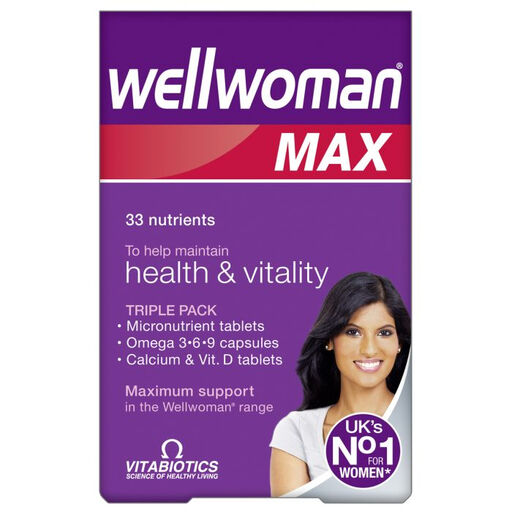
Why This Fits Their Persona: Suits adult women seeking a broad formula that combines vitamins, minerals and additional ingredients in a planned daily serving.
Its 84-tablet pack is specified as a 28-day supply at three tablets per day, making the ongoing cost easier to assess.
The listed formula includes iron, folic acid, vitamin D, magnesium and vitamin B12, with soya, fish, milk and gluten identified as allergens.

Why This Fits Their Persona: Designed specifically for breastfeeding women who prefer a defined postnatal formula rather than a general multivitamin.
The directions distinguish the breastfeeding serving and warn against taking it alongside another multivitamin and mineral product.
Combines nutrient tablets with an Omega-3 capsule containing DHA; fish and soya are listed allergens.

Why This Fits Their Persona: A practical choice for full or partial denture wearers who want a defined soaking routine alongside their oral-care products.
The instructions specify warm, not boiling, water, a three-minute soak, brushing and thorough rinsing before wearing.
The product is listed for full and partial dentures, including metal components; it is for soaking only and must not be swallowed.
They can be useful where a person has a specific dietary need, an age-appropriate routine or advice from a healthcare professional. They are not a replacement for a varied diet. Compare nutrient quantities, serving cost, allergens and warnings before ordering.
It depends on the combined nutrient totals. Check calcium, vitamin D, magnesium, iron and other overlapping ingredients. If you take medication, are pregnant or breastfeeding, or have a diagnosed condition, speak to a pharmacist or GP before combining products.
Use them only as directed on the packaging. For Steradent Active Fresh, rinse the denture, dissolve one tablet in warm water, soak for the stated time, then brush and rinse the denture thoroughly. Do not ingest the solution or use the tablet directly in the mouth.
We have compiled a complete, real-time list of products that fully satisfy these strict selection criteria and UK safety regulations.