Dark-scene atmosphere seekers
You care most about separating shadow detail from bright lights while exploring dim environments. RTINGS identifies high contrast as helpful for showing deep blacks beside bright objects.


For survival horror, put dark-scene contrast and a meaningful HDR specification ahead of refresh rate alone. A 27-inch QHD OLED suits a smaller 16:9 setup; a 32-inch 4K screen needs suitable output hardware, while a 21:9 ultrawide depends on game and platform support. Check the exact input modes, desk space and OLED panel-care guidance before choosing.
You care most about separating shadow detail from bright lights while exploring dim environments. RTINGS identifies high contrast as helpful for showing deep blacks beside bright objects.
You also play games involving quick aiming or evasive movement, so motion handling matters alongside dark-scene presentation.
You want a larger 4K image or a wider view and can check whether your desk, hardware and preferred games suit that format.
Start with contrast and HDR performance for dark scenes, then decide how much motion capability and screen width your games and equipment can use.
| Concern | What to check | Who this matters to |
|---|---|---|
| Dark-scene contrast and HDR | Check the exact model’s VESA DisplayHDR or DisplayHDR True Black certification and its stated brightness conditions; an HDR label alone is not a performance measure. | When exploring dim rooms, I want shadows to remain distinguishable beside bright lights; around 45% of consumers put dark-scene contrast and HDR first. |
| Motion and control | Check the refresh rate available through your chosen input and whether your PC or console can supply the intended mode. Do not mistake a rated pixel response time for input lag. | For rapid turns and evasive movement, I want action to remain easy to follow; roughly 28% of consumers make motion handling their primary concern. |
| Resolution and screen format | Measure desk space and confirm the native resolution, aspect ratio and support for that format in your games and source device. | I would choose extra 4K detail or a wider image only if my setup can use it; about 27% of consumers prioritise resolution and screen format. |
VESA distinguishes a general HDR claim from its DisplayHDR performance certifications. A label alone cannot tell you how well a monitor handles dark areas and highlights.
Check the exact model and certification tier, then consider its panel type and the brightness conditions behind its specifications.
The resolution and refresh rate you want must work through your source device, cable and monitor input. A wider image also depends on support in the game and platform.
Compare the monitor’s per-port modes with your GPU or console output, and check your most-played games for 21:9 or 32:9 support where relevant.
Brightness figures can describe different test conditions, so the largest figure alone is a poor basis for comparing HDR presentation.
Read the conditions attached to each figure and consider the lighting where you play.
ASUS describes the care features on its PG32UCDM as measures intended to reduce burn-in risk, not remove it.
Read the exact monitor’s panel-care instructions and warranty terms, particularly if it will show static desktop elements or game displays for long periods.
Its PG32UCDM is a 32-inch 4K QD-OLED option for a conventional 16:9 setup.
Dell UK lists both a 32-inch 4K 16:9 QD-OLED model and a 34-inch 21:9 QD-OLED model.
The 27GS95QE-B offers a 27-inch QHD OLED format for buyers who do not specifically need 4K.
The EX271UZ is a 27-inch 4K QD-OLED option for a smaller 16:9 screen.
These OLED monitor choices range from smaller QHD screens to much wider formats. For survival horror, match the screen to your desk and games rather than treating width or refresh rate alone as a measure of dark-scene quality.
 No image available
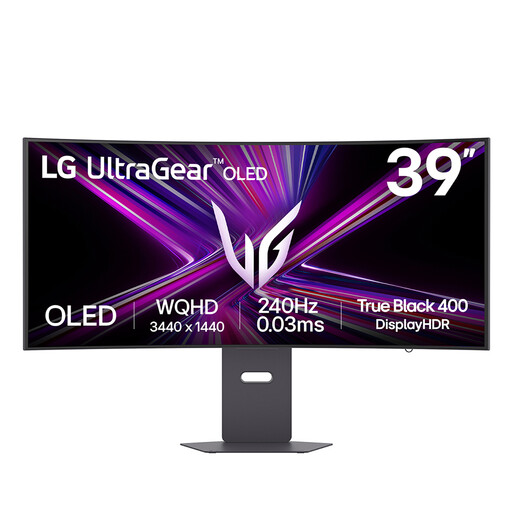
Consider this larger OLED screen if a wide view is part of your survival-horror setup. Check desk space and 21:9 support in your games and source device, and follow the screen-protection guidance for prolonged use.
 No image available
This 34-inch OLED is worth considering if you want a wider gaming view. Confirm 21:9 support in your usual games and source device, and follow the screen-protection guidance.
 No image available
Choose this especially wide format only if your desk and preferred games suit 32:9. Its title lists a 240Hz refresh rate and 0.03ms response time; check the required input mode and handle the panel as directed.
 No image available
This 2560 × 1440 screen suits a more conventional format for dark-scene and fast-action play. Its title lists a 0.03ms response time; if certified HDR performance is important to you, check the exact model’s VESA certification and tier before buying.
 No image available
Consider this 27-inch OLED if you prefer a conventional QHD screen for horror games and faster action. Its title lists a 0.03ms response time; check the exact VESA HDR certification if that is central to your choice.
No: accepting an HDR signal does not establish a particular HDR-performance level. VESA recommends checking for its DisplayHDR or DisplayHDR True Black certification; also look at the exact tier, panel type and brightness conditions.
Choose 4K if you value its extra native detail and your PC or console supports the resolution and refresh mode you intend to use. QHD is another option if you prefer a smaller screen or a less demanding resolution; check the mode available through your chosen port.
You need to match the connection to your source device and intended resolution, refresh rate and HDR mode. LG, ASUS and BenQ list HDMI 2.1 on some of the models discussed here, but the monitor’s per-port specifications and your GPU or console output determine which modes you can use.
Report the problem to the seller and keep your order record. GOV.UK states that consumer rights protect purchases of goods made remotely or in person; check its guidance on faulty goods when considering the next step.