
24/7 Customer Support

Free returns

Same-day & Next-day Delivery

Quality Guaranteed

Unlock Your Welcome Offers: FREE Delivery | Up to 80% OFF | Free 30-day JoyPlus trial
Download the APP
Making sushi at home can be affordable and enjoyable, but the rice determines whether rolls hold together or fall apart on the plate. The same applies to onigiri, donburi and Japanese-style rice bowls. Marketing language such as “restaurant quality” or “premium” does not always tell you what matters in the kitchen.
This guide from the Joybuy Product Recommendation Officer focuses on practical buying checks, suitable pack sizes and reliable options for UK households, caterers and food businesses.
Long-grain rice, basmati and many standard supermarket rice varieties remain separate and fluffy after cooking. That is useful for pilau or fried rice, but less suitable for sushi rolls and rice balls.
Look for short-grain, round-grain or Japonica rice. These varieties generally develop the cohesive texture needed to shape nigiri, maki and onigiri. However, the label should still be checked carefully: “sticky” alone does not guarantee that the product is intended for sushi.
The phrase Japanese sushi rice may describe a cooking style, grain type or recipe suitability rather than the country of cultivation. Some products in this category are produced in Japan, while others are sourced from countries such as Thailand, Vietnam or Italy.
For an informed purchase, check the country of origin, ingredient list and cooking directions. A product can still be suitable for sushi without being grown in Japan, but the origin may affect flavour, texture and price.
A sushi rice 10kg bag can be practical for restaurants, caterers or families that cook rice frequently. It may be less suitable for occasional home use if it cannot be protected from humidity, pests and odours.
Once opened, transfer rice to a clean, airtight container where possible. Store it in a cool, dry place away from direct sunlight and heat. A sushi rice 1kg pack is often easier to manage for occasional sushi nights, while 5kg offers a middle ground for regular cooking.
The most important specification is short-grain or round-grain rice with enough cohesion after cooking. For sushi, the cooked grains should hold together when pressed, while retaining a tender bite rather than becoming wet or mushy.
Descriptions referring to a glossy appearance, gentle stickiness or a texture that holds its shape can be useful, but they are not substitutes for following the product’s cooking instructions. Rice for sushi rolls and rice for onigiri usually require similar characteristics, although onigiri may benefit from slightly more cohesion.
Water ratios vary between products. Examples in this range include approximately 1:1.1 rice to water and 1:1.2, depending on the variety and cooking method. Treat the packaging instructions as the starting point rather than applying one universal formula.
A dependable preparation process is:
Avoid vigorous stirring, which can break the grains and create a paste-like texture.
For a short ingredient list, look for 100% rice or a clearly stated short-grain rice ingredient. Products listed below specify no known allergens or no major allergens, but always check the current packaging if allergies are a concern.
Pack size should match usage:
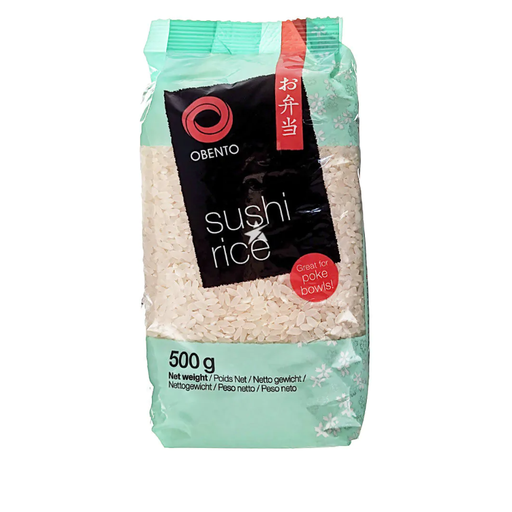
Why This Fits Their Persona: The 500g pack allows first-time sushi makers and smaller UK households to try short-grain rice without committing to a large quantity.
The product identifies itself as premium short-grain sushi rice and provides a 1:1.1 rice-to-water ratio, helping buyers avoid relying on vague “sticky rice” descriptions.
500g net quantity; suitable for sushi and onigiri; instructions include rinsing, resting and seasoning.
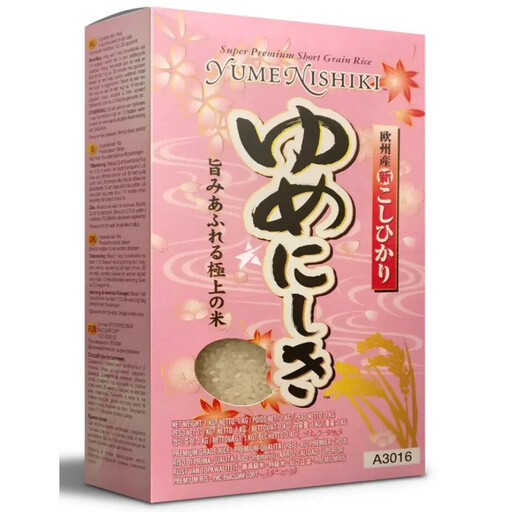
Why This Fits Their Persona: A 1kg option for cooks who want a short, round grain for sushi, onigiri, donburi and everyday Japanese dishes.
The listing states the ingredient as 100% super premium short-grain rice and gives a specific 1:1.2 water ratio, optional soaking and resting guidance.
1kg format; suitable for several Japanese dishes; listed country of origin is Italy.
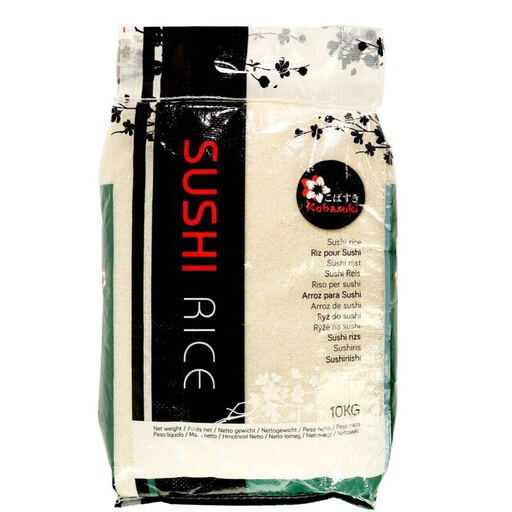
Why This Fits Their Persona: The 10kg bag is designed for restaurants, catering operations, large families and frequent preparation of sushi, rice bowls and Japanese dishes.
The product clearly states its 10kg quantity, storage requirements and a 1:1.2 water ratio, making it easier for professional kitchens to plan purchasing and preparation.
Round-grain rice; naturally gluten-free and suitable for vegans according to the listing; bulk format for high-volume use.
We have compiled a complete, real-time list of products that fully satisfy these strict selection criteria and UK safety regulations.
Sushi rice is a raw ingredient and must be washed and cooked thoroughly before eating. Follow the pack instructions for your saucepan or rice cooker, as water ratios and cooking times differ.
Once prepared, season the rice in a non-metallic bowl if the instructions recommend it, then use it while warm enough to shape but not steaming hot. Any leftover cooked rice should be cooled and refrigerated promptly. Follow the storage and consumption guidance on the packaging, and avoid using rice that has been left at room temperature for an extended period.
Not always. Sushi rice is generally short-grain or round-grain rice prepared with vinegar seasoning, but not every short-grain product is marketed for sushi. Check that the product specifically states suitability for sushi, onigiri or Japanese dishes.
A 1kg sushi rice pack is suitable for occasional home cooking and small families. Choose 5kg for regular sushi nights, family meals or small catering orders. A 9kg or 10kg pack is more appropriate for restaurants, caterers and households that cook rice frequently.
Yes. Short-grain rice can also be used for onigiri, donburi, rice bowls and some Japanese-style side dishes. Its cohesive texture makes it different from long-grain rice, so it may not be suitable where separate, fluffy grains are required.