
24/7 Customer Support

Free returns

Same-day & Next-day Delivery

Quality Guaranteed

Unlock Your Welcome Offers: FREE Delivery | Up to 80% OFF | Free 30-day JoyPlus trial
Download the APP
As a Joybuy Product Recommendation Officer, my role is to help you navigate the crowded online marketplace. When it comes to versatile ingredients like sweet potato noodles, the choice can be overwhelming. Many UK home cooks find themselves with a packet of noodles that either turns to mush in their hot pot or remains stubbornly tough in a stir-fry. This guide will help you understand the key differences and avoid common purchasing mistakes.
Before you add a pack to your basket, let's look at the frequent pitfalls that lead to disappointing meals and wasted money.
To ensure you get the right noodles for your recipe, focus on these three core parameters.
The shape is not just for aesthetics; it dictates how the noodle performs in a dish.
The ingredient list is the most reliable indicator of a noodle's final texture and quality.
Sweet potato noodles come in different formats, each suited to a different level of convenience and culinary use.
Instead of a generic list, we've matched specific products to the UK home cooks who will appreciate them most.
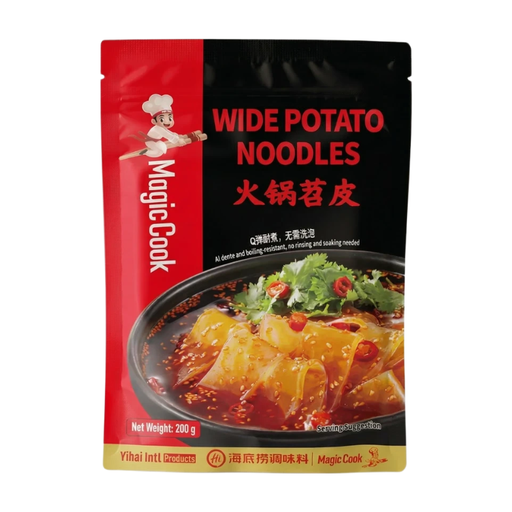
Why This Fits Their Persona: This user hosts hot pot nights and needs a reliable noodle that can simmer in the broth without disintegrating. These wide noodles are specifically designed for that purpose, ensuring a great experience for everyone at the table.
It directly solves the "texture trap." The product description highlights that these noodles remain soft yet springy and don't fall apart even after long cooking, avoiding the mushy noodle problem.
Purpose-built for hot pot with a resilient, chewy texture. The wide, even shape is ideal for absorbing broth flavours.
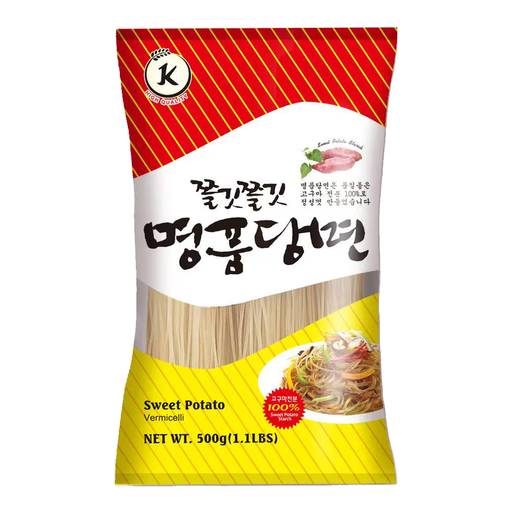
Why This Fits Their Persona: This person wants to recreate an authentic Korean Japchae at home. They need the correct Korean glass noodles (dangmyeon) that have the right elasticity and won't clump into a sticky mess when stir-fried.
It avoids the "one-size-fits-all" myth. The product is explicitly labelled as authentic Korean-style dangmyeon, perfect for Japchae, removing the guesswork of choosing the right noodle type.
Made from 100% sweet potato starch for a clean, chewy texture. It cooks to be transparent and flexible, ideal for stir-frying.

Why This Fits Their Persona: Perfect for a student, a busy professional or anyone needing a quick, flavourful lunch. This user values convenience above all and wants a satisfying meal without the effort of sourcing multiple ingredients.
This product sidesteps the "misleading preparation times" trap entirely. It's a genuine instant meal, delivering a hot, tasty bowl of noodles in 5 minutes with just boiling water, as promised.
A complete meal kit with noodles, a rich hot and sour soup base and dried vegetables. It offers a complex, layered flavour with minimal effort.
We have compiled a complete, real-time list of products that fully satisfy these strict selection criteria and UK safety regulations.
For most dried varieties, yes. Soaking is a crucial step that is often overlooked. Submerging the noodles in warm water for 20-30 minutes before boiling allows them to rehydrate evenly. This ensures they cook through properly and achieve their characteristic springy, chewy texture without a hard centre. Always check the specific package instructions, as finer vermicelli may require less soaking time.
Sweet potato noodles are a popular choice for those on specific diets because they are naturally gluten-free. They are made from starch, so they are primarily a source of carbohydrates. Compared to some wheat-based pastas, they can have a lower glycaemic index. However, whether they are "healthier" depends entirely on your personal dietary needs and goals. It is always advisable to check the nutritional information on the label.
Clumping is usually caused by excess starch or overcooking. To prevent this, rinse your noodles under cold running water immediately after you drain them from the boiling water. This shocks the noodles, stops the cooking process and washes away the surface starch that causes stickiness. If you are making a stir-fry like japchae, tossing the rinsed noodles with a small amount of sesame oil is an excellent way to keep the strands separate and add flavour.