
24/7 Customer Support

Free returns

Same-day & Next-day Delivery

Quality Guaranteed

Unlock Your Welcome Offers: FREE Delivery | Up to 80% OFF | Free 30-day JoyPlus trial
Download the APP
If you're looking to replace a dim, yellowish halogen bulb in your car, you have likely come across the T10 W5W LED bulb. This small but versatile bulb is a popular choice for drivers wanting a simple, effective upgrade. However, the market is filled with options, and choosing the right one can feel complicated, especially with concerns about brightness, fitment and dashboard error messages.
This guide is designed to cut through the clutter. We will walk you through the key considerations for selecting a reliable LED upgrade, from understanding compatibility to choosing the right colour for the job. We will also share some of our top recommendations to help you find a suitable replacement for your sidelights, interior lights or licence plate illumination.
Before you make a purchase, keeping a few key factors in mind will ensure you get a bulb that not only fits but also performs as expected.
Many modern vehicles use a Controller Area Network (Canbus) system to monitor the vehicle's functions, including the lighting. Because LED bulbs consume significantly less power than traditional halogen bulbs, the Canbus system can mistakenly interpret this low power draw as a burnt-out bulb, triggering a warning light on your dashboard.
To avoid this, look for bulbs specifically described as Canbus error free LED. These bulbs have built-in resistors that increase their power consumption to a level the vehicle's computer recognises as normal, preventing false errors. This is one of the most important features for a hassle-free, plug-and-play upgrade on most cars manufactured in the last 15 years.
The performance of an LED bulb is defined by its brightness (measured in lumens) and its colour temperature (measured in Kelvin). A standard halogen W5W bulb produces around 50 lumens and has a warm, yellowish colour of about 3200K.
In contrast, a super bright T10 LED can produce 400 lumens or more. For colour, a 6000K or 6500K rating delivers a crisp, modern Xenon White light. This is a popular choice for LED sidelight bulbs and licence plate light LED applications, as it improves visibility and gives the vehicle a more contemporary look. Amber or red bulbs are also available for specific uses, such as indicators or high-level brake lights. Always check UK regulations to ensure the colour you choose is road legal for its intended exterior position.
You will see these bulbs referred to by several names: T10, W5W, 501 and 194. For practical purposes, these all refer to the same small, wedge-base bulb and are interchangeable. The T10 designation refers to the 10mm width of the wedge base. Whether you are replacing car interior lights or exterior bulbs, confirming that your vehicle uses this fitment is the first step. Most vehicle handbooks will list the required bulb types.
Based on their features and specifications, here are a few options that stand out for drivers seeking a reliable upgrade.
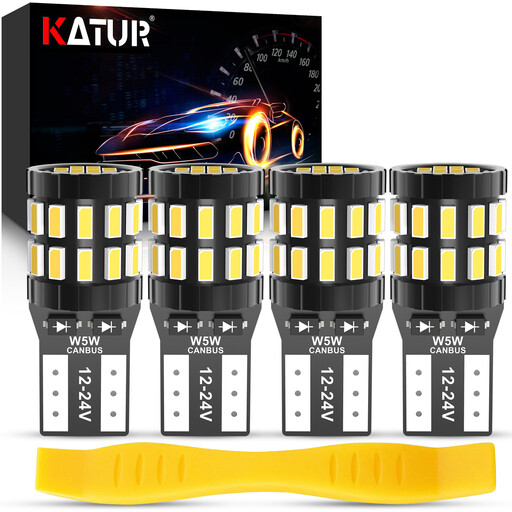
Why It Stands Out: These bulbs are designed for a significant brightness increase over stock halogens. Each bulb is equipped with 30 individual 3014 SMD LED chipsets, arranged to provide a 360-degree field of light, which helps to eliminate the dark spots often seen with lesser-quality LED replacements. The 6000K colour temperature produces a clean, white light that is well-suited for modernising a vehicle's appearance.
Pros:
Who is it for?: Drivers seeking a bright, modern white light for their sidelights, number plate lights or for illuminating car interiors like map lights and boot lights.
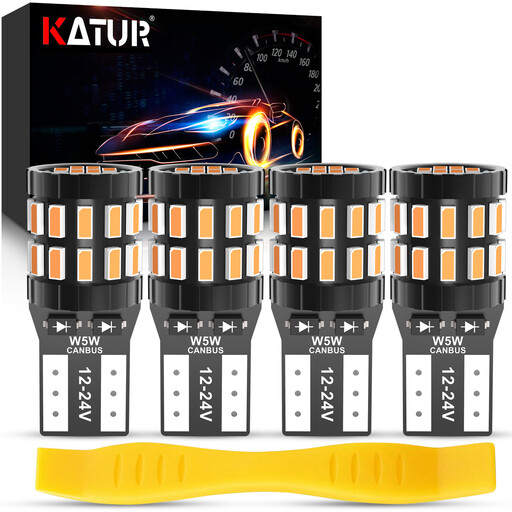
Why It Stands Out: This bulb shares the same high-output construction as its white counterpart but produces a rich amber/yellow light. This makes it a direct replacement for indicator or side marker bulbs where this colour is required by law. The 360-degree illumination ensures that the light fills the entire lamp housing, providing clear and consistent signalling.
Pros:
Who is it for?: Car owners needing to replace or upgrade their T10-fitment side indicators or marker lights with a bright, long-lasting and correctly coloured LED.
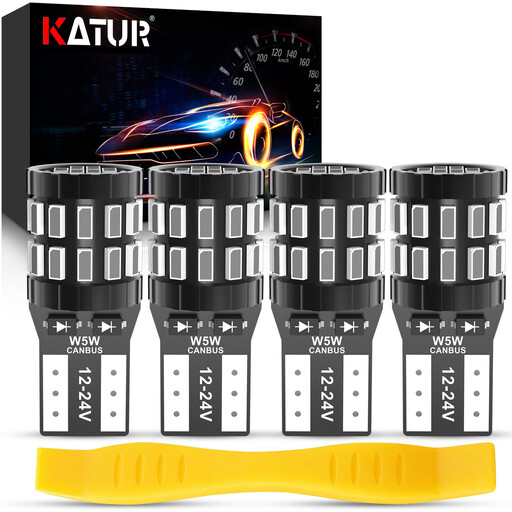
Why It Stands Out: Offering a deep, brilliant red light, these bulbs are intended for specific applications where red is necessary. This could include centre high-mount stop lights (third brake lights) or rear tail light assemblies that use a T10 bulb. The instant on/off nature of LED technology can also provide a marginal improvement in braking reaction time for drivers behind you compared to the slow fade-in of a halogen bulb.
Pros:
Who is it for?: Individuals looking to upgrade specific red lights on their vehicle, such as a high-level brake light or for custom interior lighting projects.
If these bulbs aren't quite what you need or if you're searching for a different type of lighting upgrade, such as dedicated vehicle LED door lamp projectors, there are many other solutions available.
Explore our full range of automotive LED lighting to find the perfect fit for your car.
These terms are often used interchangeably and, in almost all cases, refer to the same bulb. They all share the same 10mm wedge-style base. T10 is a Japanese naming standard referring to the base size, W5W is the official ECE (Economic Commission for Europe) designation for a 5-watt wedge bulb and 194 and 501 are common industry part numbers. If your car requires one, the others will fit.
This is a common concern with LED upgrades. Bulbs that are advertised as Canbus error free are specifically designed to prevent this. They include circuitry that mimics the electrical load of a standard halogen bulb, satisfying the car's monitoring system. While they work for the vast majority of modern cars, some highly sensitive vehicle systems may still require an additional external resistor.
The legality depends entirely on the colour and where the bulb is used.
Using colours like blue, green or purple on the exterior of your vehicle is not road legal and will result in an MOT failure. Always use the correct colour for the application and check the latest DVSA guidelines if you are unsure.