
24/7 Customer Support

Free returns

Same-day & Next-day Delivery

Quality Guaranteed

Unlock Your Welcome Offers: FREE Delivery | Up to 80% OFF | Free 30-day JoyPlus trial
Download the APP
Choosing between table lamps and night lights is not simply a matter of picking a colour or shape. The right product needs to suit the room, provide an appropriate level of brightness and remain practical after the novelty wears off. UK shoppers also need to consider plug compatibility, heat, charging arrangements and whether a decorative design is suitable around children or moisture.
Whether you are furnishing a rented flat, preparing a nursery or looking for decorative bedroom lighting, watch out for these common buying traps.
A lamp may look appealing in product photography but provide too little light for reading, dressing or moving safely through a hallway. Conversely, a bright exposed LED can feel harsh beside a bed. Check the lumen output, not just the wattage. Watts indicate energy consumption; lumens indicate visible brightness.
A colour-changing table lamp can add atmosphere, but some products cycle automatically without offering a fixed colour, brightness control or timer. This may be inconvenient in a bedroom or nursery. Look for touch controls, memory settings, a remote control or a clearly stated operating mode.
Fabric shades can collect dust, salt lamps may be sensitive to moisture and bubble lamps require careful handling around water and electrical connections. A lamp that needs specialist cleaning or has an unstable base may become impractical in a busy household. Review the materials, dimensions and care instructions before ordering.
For a bedside or baby night light, a low-lumen output can provide orientation without dominating the room. The motion sensor night light described below offers 20 lm, which is suited to gentle pathway illumination rather than general room lighting.
For a table lamp used at a desk or reading chair, look for adjustable brightness. A touch dimmable night light or dimmable table lamp allows the setting to be changed for different tasks. Colour temperature also affects atmosphere:
Decide whether the lamp will remain near a socket or move around the home. A rechargeable bedside lamp can be useful on a chest of drawers, dining table or shelf where trailing cables would be inconvenient. Check charging time, operating time and whether the product can be used while charging if these details matter to you.
Mains-powered products should include suitable instructions and a compatible UK connection or adaptor. Do not use a lamp near a sink or bath unless it is specifically designed and rated for that location. A night light with motion detection should also state its activation conditions, detection distance and whether it has a constant-on mode.
Measure the available surface before buying. A compact lamp may suit a narrow bedside table, while a tall design needs sufficient clearance from curtains and other combustible materials. Look for a stable base and keep cables away from walkways.
Natural materials can vary in appearance. The pink Himalayan salt lamp listed below is made from 90% natural salt and 10% acacia wood, weighs approximately 4kg and measures H15 × W13 × L0cm according to its product information. Its weight may help it remain stable, but the lamp should still be placed on a flat, secure surface and kept dry.
For children’s rooms, a baby night light should be positioned out of reach and away from bedding. “Baby” in a product title does not automatically mean that an item is a toy or suitable inside a cot. Follow the manufacturer’s placement and charging instructions.
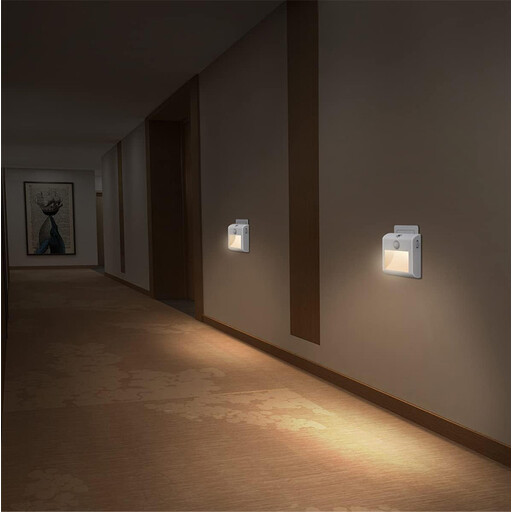
Why This Fits Their Persona: The two-pack allows renters and first-time buyers to cover a bedroom, landing or bathroom without buying separate products immediately.
It provides stated brightness, motion activation and a constant-light mode rather than relying only on decorative styling.
1W LED power consumption; 20lm output; stepless touch dimming with memory; 3–5m motion range.
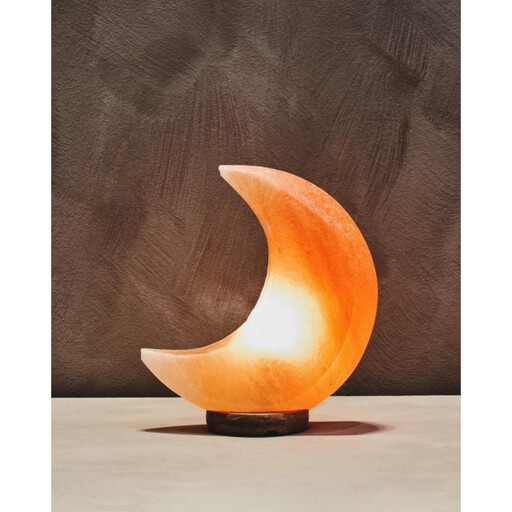
Why This Fits Their Persona: Its crescent moon form and pink-toned glow suit shoppers prioritising a distinctive decorative feature for a bedroom, reading nook or living room.
The product information clearly states its materials, weight, dimensions and dry-cloth care requirements, helping buyers assess upkeep before purchase.
Natural salt and acacia wood construction; fully assembled; solid 4kg format.
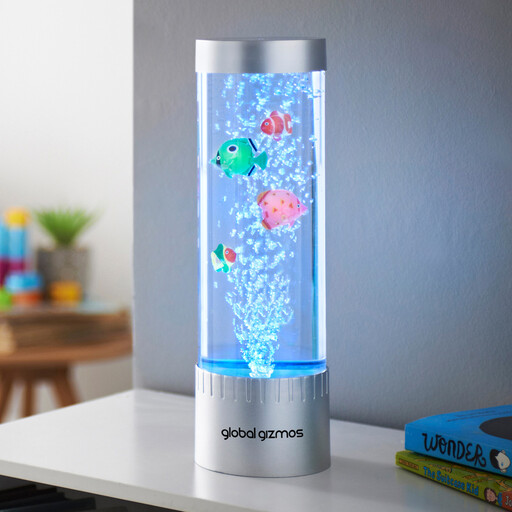
Why This Fits Their Persona: The moving bubbles and colour-changing LEDs are suited to sensory rooms, children’s bedrooms, workplaces and spaces where visual interest matters.
Its product details specify the 12V adaptor, 1.8m lead, dimensions and ABS/PETG construction, so placement and handling can be planned in advance.
32cm height; four plastic fish; 12 colour-changing LEDs; steady bubble effect.
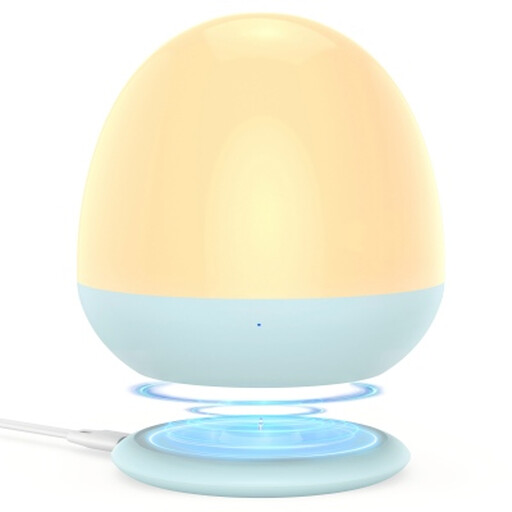
Why This Fits Their Persona: Touch control, timer functionality and a charging pad make it practical for feeding, changing or moving between nearby surfaces at night.
The listed timer and wired or wireless charging options address common complaints about fixed cables and lights left on unnecessarily.
ABS and PC construction; touch control; timer setting; stable charging pad.
We have compiled a complete, real-time list of products that fully satisfy these strict selection criteria and UK safety regulations.
The cost of running a mains lamp depends on its wattage, daily usage and electricity tariff. A simple calculation is:
Wattage ÷ 1,000 × hours used × electricity price = running cost
For example, a 1W LED used for four hours consumes 0.004kWh. Check your current tariff for the precise cost rather than relying on a general estimate. Rechargeable lamps may reduce cable clutter, but their battery capacity and charging frequency affect convenience.
Keep lamps on clear, dry surfaces. Wipe shades and housings with a soft, dry cloth unless the instructions allow another method. Do not cover ventilation areas, immerse electrical products or leave adaptors where they can be pulled by children or pets.
Some are, particularly models with low brightness or dimming. A conventional table lamp may be more suitable for reading or general bedside use, while a dedicated night light is usually smaller and designed for orientation. Check lumen output and whether the lowest setting is comfortable in a dark room.
Place it where movement is likely, such as near a hallway, stair approach or bathroom entrance, while keeping the sensor unobstructed. Confirm the detection range and ambient-light threshold. Avoid positioning it where passing cars or pets could trigger it repeatedly.
Salt lamps should generally be kept away from moisture unless the product instructions specifically state otherwise. Condensation can affect natural salt surfaces and electrical components. For bathrooms, choose a product designed for the environment and follow its installation and safety guidance.