
24/7 Customer Support

Free returns

Same-day & Next-day Delivery

Quality Guaranteed

Unlock Your Welcome Offers: FREE Delivery | Up to 80% OFF | Free 30-day JoyPlus trial
Download the APP
Navigating the world of table tennis equipment can be surprisingly complex, especially when it comes to the humble ball. With terms like '3-star', '40+' and 'seamed ABS' frequently used, it’s easy to feel unsure about which ball is right for your game. Whether you're stocking up a school sports cupboard, preparing for a club tournament or just having a friendly match in the garage, the ball you choose has a significant impact on play.
This guide is designed to clarify the differences between various types of table tennis balls. We will break down the key features to look for and provide objective advice to help you select the most suitable option for your needs, from casual practice to competitive play.
Before looking at specific products, understanding a few key concepts will help you make a more informed decision.
The star rating is a general quality indicator used by manufacturers. While not a universally standardised system across all brands, it provides a useful guideline.
For many years, table tennis balls were made from celluloid. However, the industry has transitioned to polymer-based, or 'plastic', balls. These are referred to as 40+ plastic table tennis balls, indicating they have a diameter slightly larger than 40mm. This change was made for safety and performance reasons. Modern ABS plastic balls generally offer better roundness and durability, though they play with slightly less spin and speed than their celluloid predecessors, a factor that top-level players have now adjusted to.
If you play in sanctioned leagues or tournaments, using ITTF approved table tennis balls is mandatory. The International Table Tennis Federation (ITTF) has a rigorous approval process that ensures balls meet strict specifications for weight, size, roundness and bounce. For serious players, training with the same type of ball used in competition is crucial for developing a consistent feel for your shots.
Here are our recommendations, selected to cover a range of needs from high-volume training to official match play.
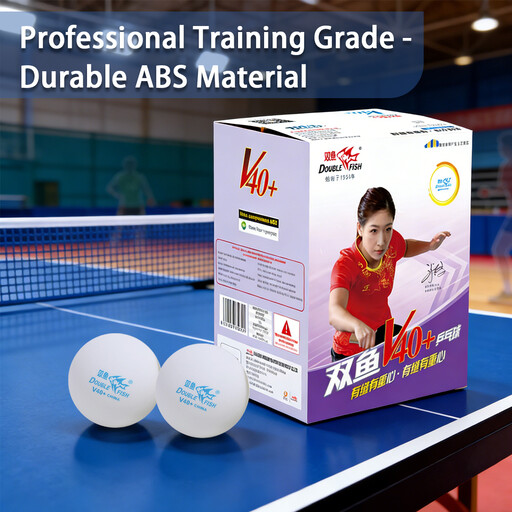
Why It Stands Out: This bulk pack is the workhorse for any serious training environment. These Double Fish V40+ balls are constructed from a durable, seamed ABS polymer designed to withstand countless hours of practice. The focus here is on longevity and consistency, providing a reliable ball for developing skills without the expense of competition-grade equipment.
Pros:
Who is it for? Table tennis clubs, school teams, training academies and individual players who engage in high-intensity, regular practice sessions.
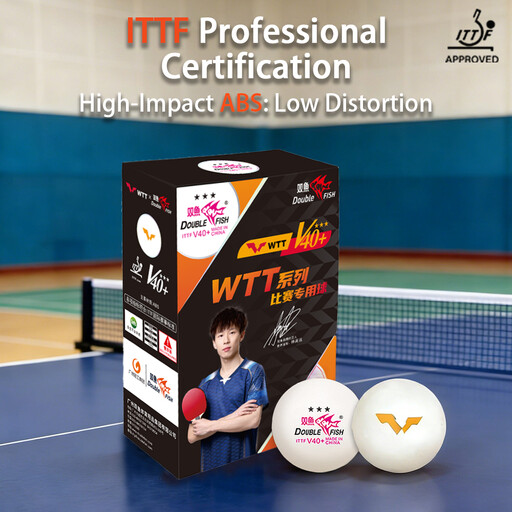
Why It Stands Out: When performance is paramount, a certified ball is essential. These are professional ping pong balls in every sense. Holding both ITTF Professional Certification and WTT Tournament-Level Certification, they are the official choice for international events. Crafted from high-impact ABS with advanced manufacturing techniques, they offer the stability and precision required at the highest levels of the sport.
Pros:
Who is it for? Serious tournament players, competitive club members and anyone seeking the authentic feel and performance of a professional match ball.
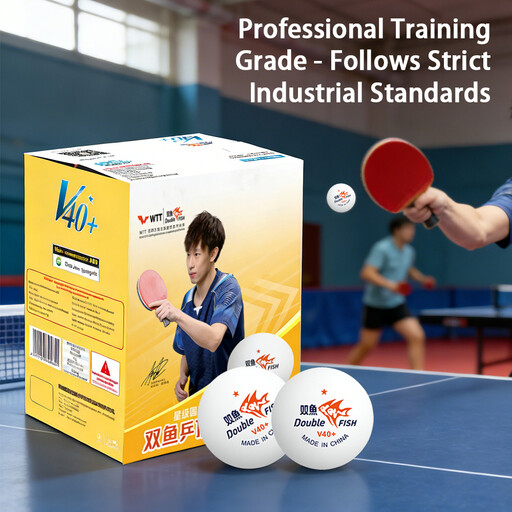
Why It Stands Out: This option strikes a balance between the affordability of training balls and the enhanced consistency of higher-rated balls. The 1-star rating indicates a higher selection standard than no-star balls, offering a more uniform bounce and roundness. Made from impact-resistant ABS, they are durable enough for daily drills but also consistent enough for lower-level competitive matches or serious practice.
Pros:
Who is it for? Developing players, school clubs and recreational leagues that require a dependable ball for both training and informal matches.
If you are equipping a home gym or a multi-sport facility, your needs may extend beyond the table tennis table. To complement your athletic setup, you can explore our wider selection of fitness equipment.
The primary difference lies in quality control and performance consistency. 3-star table tennis balls undergo more stringent checks for roundness, weight and hardness to ensure a uniform and predictable bounce suitable for competition. 1-star balls are excellent for training, offering good durability and performance at a lower cost, but may have minor variations that make them less suitable for high-level match play.
The switch from celluloid to 40+ plastic table tennis balls was driven by the ITTF for several reasons. Plastic is more stable and safer to manufacture and transport than the highly flammable celluloid. The new material also resulted in a slightly larger ball that travels with marginally less speed and spin, leading to longer, more spectator-friendly rallies at the professional level.
To maximise the lifespan of your balls, store them in a cool, dry place away from direct sunlight, as high temperatures can cause them to deform. Clean them periodically with a soft, dry cloth to remove dust and oils. Avoid stepping on them or subjecting them to excessive impacts against hard surfaces other than the table and racket.