
24/7 Customer Support

Free returns

Same-day & Next-day Delivery

Quality Guaranteed

Unlock Your Welcome Offers: FREE Delivery | Up to 80% OFF | Free 30-day JoyPlus trial
Download the APP
Selecting the right table tennis racket can feel like a complex task. With a vast array of materials, ratings and designs on the market, it is easy to feel overwhelmed. Whether you are introducing your child to the sport, enjoying a casual game with friends or competing in a local league, the racket you choose has a significant impact on your performance and enjoyment.
This guide is designed to cut through the clutter. We will walk you through the key factors to consider when making your choice and present a curated selection of rackets suited for different skill levels and playing styles. Our goal is to provide clear, practical information to help you find a racket that feels like a natural extension of your arm.
Before looking at specific models, understanding a few core concepts will help you make a more informed decision.
The blade is the solid core of the racket, and its material composition largely dictates the racket's speed and control.
beginner table tennis bat, as it helps players develop proper technique and shot accuracy.carbon fibre table tennis racket incorporates layers of carbon composite alongside wood. This combination creates a blade that is lighter, stiffer and more powerful. It also enlarges the "sweet spot"—the optimal area for hitting the ball—which provides more consistency on off-centre shots. These are generally favoured by intermediate and advanced players seeking more speed and offensive capability.While there are a few ways to hold a racket, the most common style globally is the shakehand table tennis paddle grip. As the name suggests, you hold the handle as if you were shaking someone's hand. This grip is highly versatile, allowing for strong offensive strokes on both the forehand and backhand sides, making it a popular and effective choice for players at every level. All the rackets we recommend feature this ergonomic grip style.
Many manufacturers use a star rating system to give a general indication of a racket's performance characteristics. While not a universal standard, it serves as a useful guideline:
children's table tennis racket often falls into this category.professional table tennis racket in this range will typically feature advanced materials like carbon fibre and high-performance rubbers to maximise speed and spin potential.Based on their construction, features and intended user, here are our recommendations from the Double Fish table tennis racket collection.
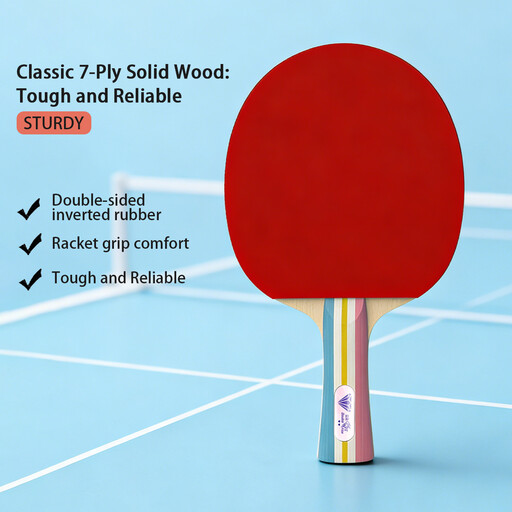
Why It Stands Out: This racket is engineered specifically for the developing player. Its classic 7-ply solid wood blade provides the control and feedback necessary for learning fundamental strokes. The design features an expanded sweet spot, which offers greater forgiveness on mishits and helps build confidence by improving accuracy.
Pros:
Who is it for: This is an ideal starting point for children and absolute beginners. It provides the necessary tools for foundational training and helps new players get a proper feel for the game.
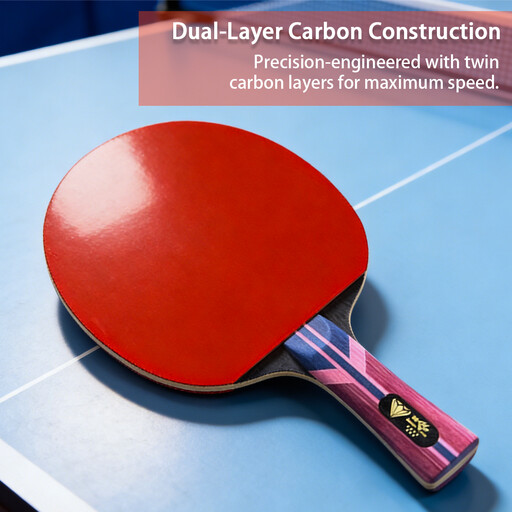
Why It Stands Out: This racket represents a significant step up in performance. The blade features a dual-layer high-modulus carbon construction, engineered to deliver explosive power and speed. Paired with competitive-grade high-tension rubber, it allows for a much faster ball release, making it well-suited for an aggressive, offensive playing style.
Pros:
Who is it for: Aimed at elite club players and aspiring professionals who have mastered the fundamentals and require a racket that can generate game-ending power and precision.
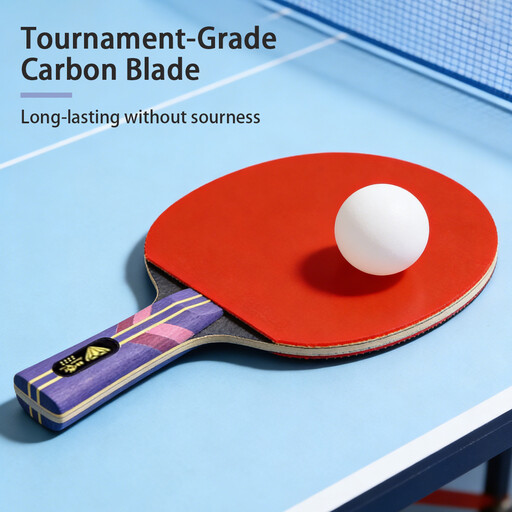
Why It Stands Out: Built to tournament-grade specifications, this racket is all about high-frequency competitive performance. Its advanced tournament-grade carbon blade is complemented by shock-absorbing balance technology, which helps to eliminate vibration and reduce hand fatigue during long, demanding matches. The high-rigidity frame ensures stability for both powerful attacks and solid defensive blocks.
Pros:
Who is it for: Designed for competitive, semi-professional and professional athletes who need a reliable, high-performance racket that offers an exceptional balance of power, stability and comfort.
A powerful and controlled game of table tennis doesn't just come from the racket—it also comes from the player. A strong grip and stable wrist are fundamental to executing precise shots and generating spin. If you are looking to improve your wrist and forearm strength for a more commanding game, explore our selection of hand exercisers.
What is the difference between a table tennis racket and a bat? There is no functional difference; the terms are used interchangeably. In the United Kingdom and much of Asia, the term table tennis bat is more common. In the United States, "paddle" is often preferred, while "racket" is used globally in official contexts.
How do I choose a table tennis racket for a beginner? For a beginner table tennis bat, prioritise control over speed. Look for a racket with an all-wood blade and a lower star rating (e.g., 1-3 stars). This will help you develop proper form and consistency before moving on to a faster, more powerful racket.
What is a shakehand grip? The shakehand table tennis paddle grip is the most widely used grip in the sport. You hold the handle as though you are shaking hands, with your index finger resting on the bottom edge of the rubber on one side. It is considered highly versatile as it allows for a good balance of forehand and backhand play without major grip changes.