
24/7 Customer Support

Free returns

Same-day & Next-day Delivery

Quality Guaranteed

Unlock Your Welcome Offers: FREE Delivery | Up to 80% OFF | Free 30-day JoyPlus trial
Download the APP
Buying table tennis rackets and bat sets can appear straightforward, but product descriptions often focus on star ratings, carbon layers or “professional” wording without explaining whether the bat suits your actual playing level. A racket designed for an advanced attacker may feel too fast for a child, while a basic wooden bat may limit progress once you begin practising spin.
This guide breaks down the practical details that matter, highlights common buying traps and matches suitable options to different UK households, players and playing situations.
Star ratings are useful as a quick guide, but they are not a replacement for checking the blade, rubber and handle. A higher-rated racket may use a stiffer carbon construction and high-tension rubber, which can make the ball leave the surface quickly. That can be useful for experienced players, but difficult for someone learning basic returns.
For a beginner table tennis bat, control, grip comfort and manageable speed are usually more important than selecting the highest rating available.
A carbon table tennis racket can provide a rigid feel, a larger effective hitting area and quick energy transfer. However, stiffness can reduce the softer feedback that helps a new player understand how the ball contacts the rubber. Carbon-reinforced designs are generally more suitable for advancing players who already have consistent technique.
For casual family games or school practice, a wooden table tennis bat may provide a more forgiving and familiar feel.
Some table tennis racket sets contain two bats and balls, while others also include a portable net and carry case. If you plan to play on a dining table, office table or holiday surface, a table tennis racket set with balls may not be enough unless it includes a net.
Check the number of bats, ball quantity, net compatibility, carry case and intended playing environment before ordering.
The blade is the foundation of the racket. Common options include:
A training table tennis racket should match your current technique rather than an aspirational playing level. If your shots regularly go long, a very fast blade may make the issue harder to manage.
Rubber affects grip, bounce and the amount of spin you can create. High-elastic rubber can help return energy to the ball, while higher-friction surfaces support spin-based strokes. A high-elasticity rubber table tennis bat may suit general practice and quick attacking play, but it still requires suitable technique.
Look for securely attached, even rubber on both sides. Avoid products where the description does not clearly identify the playing surfaces or where the rubber appears poorly finished around the edges.
Most UK recreational players use a shakehand table tennis racket, held in a similar manner to shaking hands. Flared or concave handles can help the racket sit securely in the palm.
A penhold table tennis racket has a different handle and is held between the thumb and index finger. It is a specific choice for players familiar with that grip, rather than a general upgrade for beginners.
Also consider sweat absorption, edge protection and handle width. Children may find a smaller, lighter handle easier to control, but the product description should still provide enough information to judge suitability.
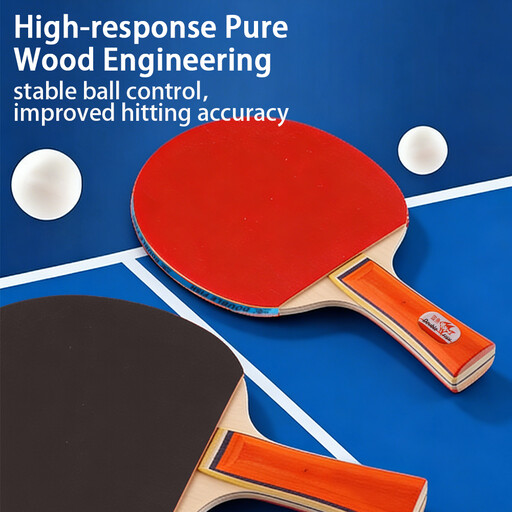
Why This Fits Their Persona: A practical two-player option for first-time users, family games and casual practice at home or in a community hall.
It clearly provides two rackets and three balls, avoiding the common mistake of buying a single paddle for shared play.
All-wood construction, high-elasticity rubber and thickened edge guards are specified for everyday training use.
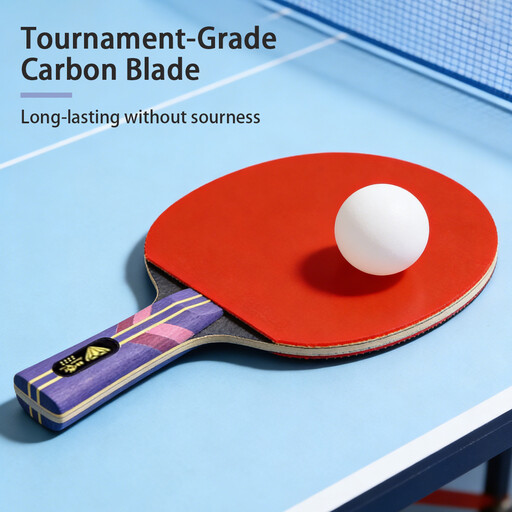
Why This Fits Their Persona: A shakehand model for serious players who want carbon construction, a competition-focused surface and a secure ergonomic grip.
The listing identifies dual-layer carbon lamination, high-tension rubber and full-perimeter impact protection instead of relying only on a star label.
Carbon blade construction, anti-slip fibre-wrapped grip and edge protection are listed as core features.
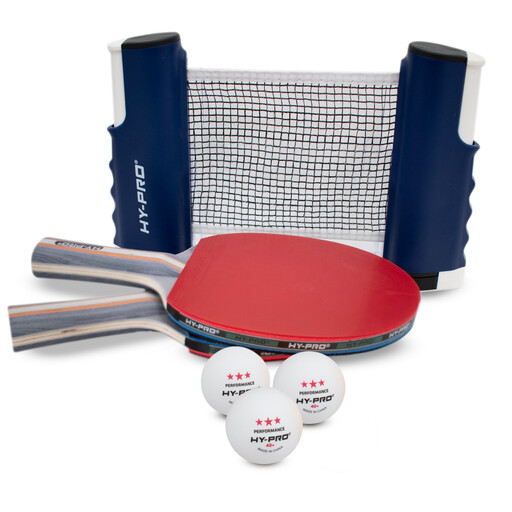
Why This Fits Their Persona: Suitable for offices, families, holidays and households that need a portable table tennis bat set with quick setup.
It includes a net and carry case, so buyers do not need to source the key setup components separately.
The set contains two wood-and-rubber bats, three balls, a synthetic net and a portable carry case.
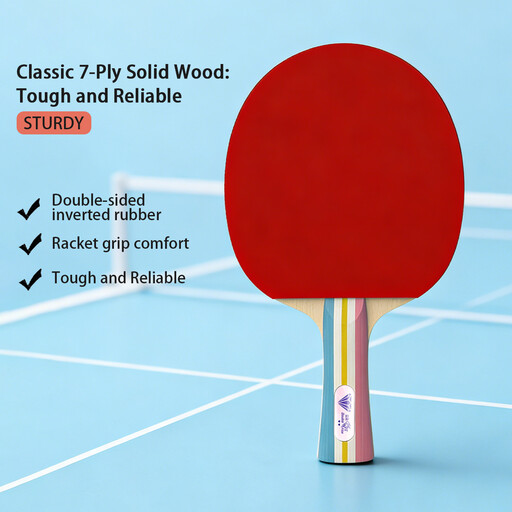
Why This Fits Their Persona: Designed around a lightweight, beginner-friendly format for children and young players learning basic forehand and backhand movements.
Its product information specifies a seven-ply solid wood blade, expanded sweet spot and non-slip, sweat-absorbing handle.
The shakehand grip and double-sided inverted rubber support quick attacks and loop practice.
We have compiled a complete, real-time list of products that fully satisfy these strict selection criteria and UK safety regulations.
Good maintenance can help preserve the rubber and blade:
Children should play in an open area clear of furniture and breakable objects. Adult supervision is sensible, particularly where bats and balls could be swung or thrown near other people.
Many portable sets can be used outdoors for occasional games, but standard indoor bats and balls may deteriorate more quickly in damp conditions, direct sunlight or strong temperature changes. Choose a level, stable table and store the equipment indoors after play.
Lifespan depends on playing frequency, storage and impact. Occasional family-use bats may remain usable for a long period when kept dry and protected. Frequent training gradually wears the rubber, especially around the edges. Replace a bat when the surface becomes visibly damaged, loses grip or no longer provides predictable contact.
Usually not. A professional table tennis racket may be faster, stiffer and less forgiving than a beginner table tennis bat. Beginners should prioritise a comfortable shakehand grip, controllable rubber and a balanced wooden blade. Upgrade to carbon or higher-tension construction when your technique and playing goals justify it.