
24/7 Customer Support

Free returns

Same-day & Next-day Delivery

Quality Guaranteed

Unlock Your Welcome Offers: FREE Delivery | Up to 80% OFF | Free 30-day JoyPlus trial
Download the APP
For any serious table tennis player, coach or club manager in the UK, effective training sessions are built on repetition, consistency and efficiency. However, the practical realities of high-intensity practice can be a significant drain on time and energy. Constantly interrupting drills to collect hundreds of balls or dealing with inconsistent bounces from low-quality equipment can hinder progress.
This guide is designed to help you select the right table tennis training equipment to overcome these challenges. We will focus on durable, high-performance gear that optimises your practice sessions, allowing you to focus on what truly matters: improving your game.
Selecting the right equipment goes beyond just the bat and table. For clubs and dedicated players, the supporting gear is just as crucial. Here are a few key considerations to guide your purchasing decisions.
The quality of your training balls directly impacts skill development. For intensive drills, you need balls that offer a predictable and stable bounce. Look for balls made from a seamed ABS polymer, a material known for its durability and consistent performance. While star ratings can be a guide, for high-volume multi-ball drills, no-star or 1-star Double Fish training balls offer excellent value. Purchasing bulk table tennis balls is the most cost-effective approach for table tennis club equipment, ensuring you always have a ready supply for robot training and drills without breaking the bank.
One of the biggest time sinks in any training hall is cleanup. Bending down to retrieve hundreds of balls is not only tedious but can also lead to back strain. A dedicated ping pong ball collector is an essential piece of ping pong practice gear. Look for models with a telescopic handle for adjustable height, a lightweight construction for easy manoeuvrability and a large-capacity net. A quality table tennis ball picker upper can cut your cleanup time dramatically, keeping the momentum of the session going.
Club and academy environments are demanding. Equipment must be able to withstand daily, high-intensity use. This means choosing products constructed from robust materials. For ball collectors, this means rust-resistant stainless steel handles and high-strength mesh. For balls, it means an impact-resistant composition that maintains its roundness and balance after thousands of hits. Investing in durable equipment from the outset reduces long-term replacement costs and ensures your training is never compromised by gear failure.
Based on the criteria of durability, performance and overall value for intensive training environments, here are our recommendations.
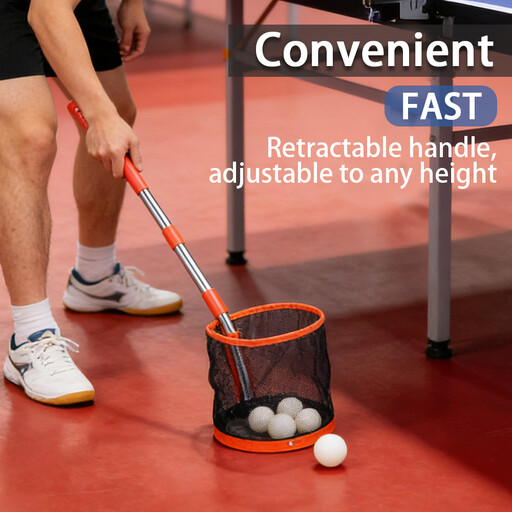
Why It Stands Out
This ball collector is engineered to solve the most common frustration in a training hall: inefficient cleanup. Its standout feature is the rust-resistant stainless steel telescopic handle, which allows users of any height to collect balls without bending over. Paired with a large-capacity, three-dimensional mesh pocket, it streamlines the process of gathering balls, allowing for more time spent on actual play.
Pros
Who is it for? This is an ideal tool for coaches running multi-ball drills, club managers looking to maintain an efficient training environment and serious players who want to maximise their solo practice time.
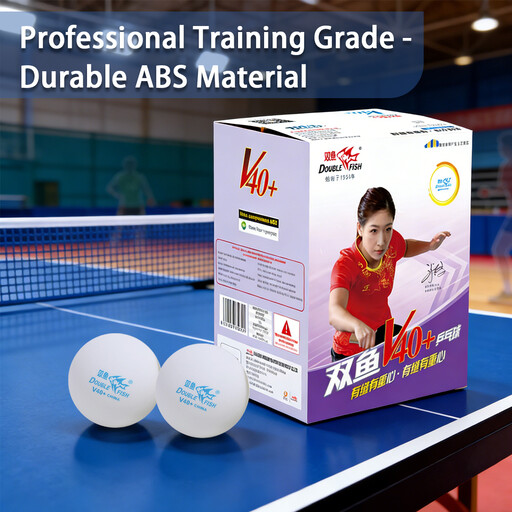
Why It Stands Out
These are the workhorse balls for any serious training setup. Constructed from a seamed ABS polymer, they are specifically engineered for durability. According to the brand's specifications, the wear-resistant process can extend their lifespan by up to 30% compared to standard balls, making them a superb choice for high-volume practice. The precise weighting ensures a stable rebound, eliminating the erratic bounces that can disrupt a player's rhythm.
Pros
bulk table tennis balls in a box of 100, they offer great performance for a cost-effective price, perfect for stocking a club or academy.Who is it for? Clubs, academies and players who rely on robot training or frequent multi-ball drills and require a large quantity of durable, consistent balls.
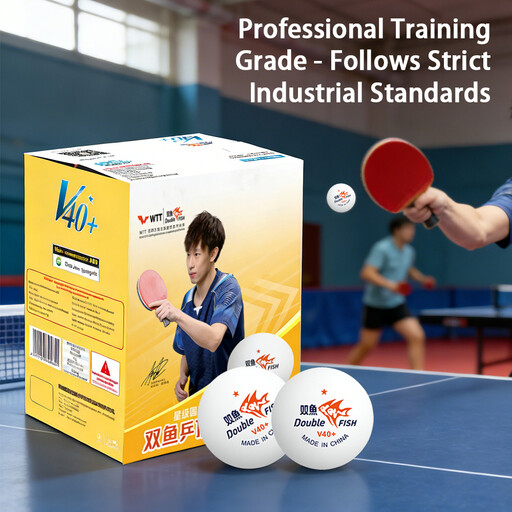
Why It Stands Out
For players looking to bridge the gap between drills and competitive play, the Double Fish V40+ 1-Star ball is an excellent choice. It offers a higher level of precision than a standard no-star ball, thanks to its high-density material and engineering that focuses on perfect roundness and a stable centre of gravity. This results in a ball that feels closer to a match-grade ball, allowing for more accurate practice of spin and placement.
Pros
Who is it for? Intermediate to advanced players and coaches who want a training ball that offers a higher degree of precision for drills focusing on spin, speed and shot accuracy.
If our recommendations don't quite match what you're looking for or if you're interested in exploring a wider variety of equipment, feel free to explore our full range of sports balls. You will find a broader selection to suit different needs and budgets.
What is the difference between 1-star and no-star training balls? No-star balls are primarily designed for high-volume, multi-ball drills where durability and cost-effectiveness are the main priorities. 1-star balls offer a higher degree of roundness and balance, providing a more consistent and predictable bounce that better simulates match conditions, making them suitable for more refined practice.
Is a table tennis ball picker upper worth it? For any serious training environment, a ping pong ball collector is a significant time and energy saver. It minimises downtime between drills and helps prevent back strain from repeatedly bending over, allowing players and coaches to maintain focus and intensity throughout the session.
How many balls do I need for a table tennis club? This depends on the club's size and the frequency of training. As a general guideline, a small to medium-sized club should aim to have 200-500 bulk table tennis balls on hand. This quantity ensures there are always enough balls for multi-ball drills, robot training and general play, while also accounting for loss and breakage.