
24/7 Customer Support

Free returns

Same-day & Next-day Delivery

Quality Guaranteed

Unlock Your Welcome Offers: FREE Delivery | Up to 80% OFF | Free 30-day JoyPlus trial
Download the APP
A compact fridge seems like a simple purchase. Whether for university halls, a home office or to handle drinks overflow, you just need something small that keeps things cold. Yet, many UK shoppers find their new appliance is either surprisingly noisy, barely chills anything or simply isn't fit for purpose. The market is filled with models that look the part but fail on the fundamentals.
As the Joybuy Product Recommendation Officer, my role is to help you see past the marketing gloss and focus on what truly matters. Before you buy, be aware of these common pitfalls that lead to buyer's remorse.
To ensure you get a reliable and practical appliance, focus on these core parameters. They are the true indicators of performance and suitability for your space.
This is the single most important factor.
With energy prices being a key concern, the efficiency of an appliance that runs 24/7 is crucial. Look for the official UK energy label, which rates products from A (most efficient) to G (least efficient). An energy efficient mini fridge will have a better rating (e.g., E is common and acceptable for this category) and a lower annual energy consumption (kWh) figure. For example, some modern 46L mini fridge models consume as little as 0.35 kWh per day, keeping running costs to a minimum.
Always measure your intended space twice. Check the external height, width and depth against your available gap, remembering to leave at least 5cm of clearance at the back and sides for ventilation. For a quiet office fridge or bedroom unit, look for a noise rating of 41 dB or lower. This is comparable to a quiet library and should not be disruptive.
Instead of a generic list, we have matched specific models to the people they are designed for.

Why This Fits Their Persona: This is a proper, reliable fridge for life in halls. It's large enough for essentials like milk, snacks and drinks, but compact enough for a small room. The reversible door is a huge advantage for fitting it into awkward layouts common in student accommodation.
It uses a compressor for consistent, food-safe cooling, not a weak thermoelectric system. The 41 dB noise level is genuinely quiet for a bedroom and the internal layout with a removable shelf makes the 46L capacity practical.
Reliable cooling performance and an E-rated energy efficiency class to keep electricity costs down. The reversible door offers excellent placement flexibility.
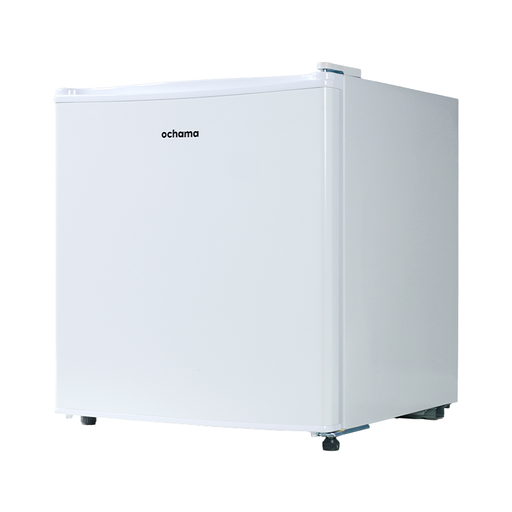
Why This Fits Their Persona: Its minimalist white design and small footprint of less than 0.21㎡ make it a discreet addition to any office space. It's perfect for keeping lunch, yoghurts and a few drinks perfectly chilled without taking over the room.
This is a true quiet office fridge, operating at just ≤41dB. It also boasts extremely low energy use (0.35 kWh/day), so it won't add noticeably to the office electricity bill. The 7-speed thermostat ensures precise cooling from 2-8°C.
Exceptional energy efficiency and a user-friendly interior with an adjustable glass shelf and door racks for organised storage.
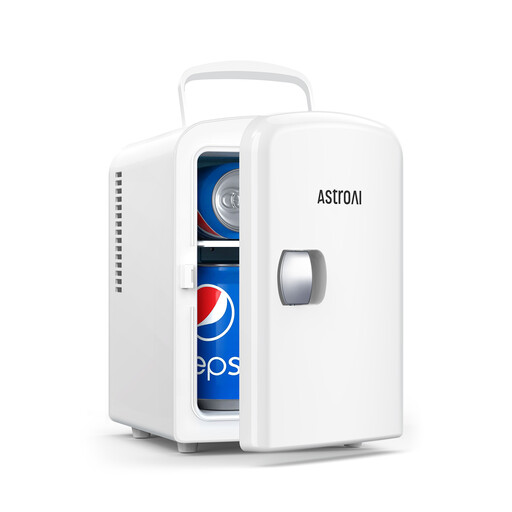
Why This Fits Their Persona: For those needing to keep serums, face masks and creams cool to prolong their shelf life and provide a soothing application, this is ideal. Its tiny footprint fits perfectly on a dressing table or bathroom counter, and it's light enough to move around easily.
This is a case where a thermoelectric cooler is the right choice. It's honestly marketed for its purpose—light cooling and warming—not for storing groceries. It excels at its specific job without over-promising.
Includes both AC (home) and DC (car) power cables for ultimate portability. It also has a warming function, which can be useful for things like wax strips or face towels.
We have compiled a complete, real-time list of products that fully satisfy these strict selection criteria and UK safety regulations.
The running cost depends on its energy efficiency. A model like the ochama 46L fridge uses around 0.35 kWh per day. Based on an average UK electricity rate of 25p per kWh (rates vary), this would cost approximately 8.75p per day, or just over ?30 for an entire year of continuous use. Always check the kWh/annum figure on the energy label for the most accurate estimate.
Yes, this is critical for any compressor-based fridge. During transport, the oil and refrigerant gas inside the compressor can be shaken up. You must let the fridge stand upright in its final position for at least 4 hours before plugging it in. This allows the fluids to settle, preventing damage to the compressor when you switch it on.
You can, but with two considerations. First, check the noise level—a rating of 41 dB or less is advisable for a bedroom. Second, avoid placing it directly on a thick carpet, as this can block ventilation grilles underneath the unit, causing it to overheat. It is better to place the fridge on a small, flat board or a hard-floor mat to ensure adequate airflow.