Offline-route planners
You expect to travel through weak-signal areas or arrive without dependable Wi-Fi. Downloading and checking your map areas before departure matters more than relying on a live connection throughout the trip.


Choose a compact rugged tablet if you will often check directions around an exposed campsite; choose a larger screen if a passenger will mainly review maps and booking details, or you will use it after parking. Download maps before travelling, whether you choose Wi-Fi or cellular connectivity: Google Maps says offline driving guidance requires the whole route to be within the downloaded area. GOV.UK says a driver must not hold and use a tablet while driving, and a mounted device must not obstruct the view of the road.
You expect to travel through weak-signal areas or arrive without dependable Wi-Fi. Downloading and checking your map areas before departure matters more than relying on a live connection throughout the trip.
You will check directions outside the vehicle or around an exposed campsite. Consider screen visibility and the exact conditions behind any stated water, dust or drop protection.
You will compare routes and campsite details as a passenger or after parking. A larger reading area may matter more to you than a compact rugged design, provided the tablet can be stored and positioned safely.
For a UK road trip, settle how the tablet will be used in the vehicle before choosing its connectivity, outdoor protection and screen size.
| Concern | What to check | Who this matters to |
|---|---|---|
| Safe in-car use | Check that a holder fits the tablet without blocking the road view; set the route before moving or let a passenger operate it. GOV.UK says a driver must not hold and use a tablet while driving and must remain in full control. | If I am responsible for navigation in the car, I want directions ready without handling a screen or obscuring the road. Around 36% of consumers put safe in-car use first. |
| Directions without signal | Check the exact Wi-Fi or cellular variant and download the full route area. Google Maps says offline driving guidance requires the whole route to be inside that area; live traffic and alternative routes are unavailable offline. | When a campsite approach has unreliable coverage, I need directions I can still follow rather than a connection I hope will return. Keeping route access is the primary concern for around 29% of consumers. |
| Outdoor use | Compare stated screen brightness and read the conditions for any water, dust or drop rating, including whether the quoted drop protection requires a cover. | I may need to read a map outside the car in bright or wet conditions, so handling the tablet there matters more to me than a larger display. Around 21% of consumers prioritise outdoor readability and resilience. |
| Screen size and bulk | Compare the display size with the space available to store or safely position the tablet; do not assume a larger screen will fit your intended holder. | As a passenger, I want room to inspect a route and campsite details, but I still need to put the tablet away between stops. Reading space without excess bulk comes first for around 14% of consumers. |
A holder does not remove the risk of distraction. GOV.UK says a device must not block the driver’s view of the road and traffic ahead, and the driver must remain in full control.
Choose the route before setting off, use voice guidance where appropriate and let a passenger make changes to the screen.
Wi-Fi and cellular versions are not interchangeable: Apple, for example, lists 5G/LTE for its Wi-Fi + Cellular iPad versions, not its Wi-Fi-only version.
Check the exact variant. If downloaded maps and a phone hotspot meet your needs, independent cellular access may be unnecessary.
Google Maps says offline driving guidance works when the entire route is within the downloaded area. It does not provide live traffic or alternative routes offline, and downloads need updating before they expire.
Download the journey area before departure, include the campsite approach and test the route while offline.
Samsung’s stated IP68 conditions for the Galaxy Tab Active5 5G concern specified freshwater testing; Samsung does not advise beach or pool use. Its quoted drop protection also requires the protective cover.
Read the conditions for the exact model and use the specified cover when relying on its drop-protection claim.
The iPad 11-inch (A16) is a reference point for passenger route review when an approximately 11-inch screen and a choice of connectivity versions matter.
The Galaxy Tab Active5 5G offers a compact, protection-focused option; the Galaxy Tab S10 FE line offers a larger screen with different outdoor-use claims.
The Tab Plus Gen 2 and Tab M10 5G illustrate different Android choices for passenger planning: a larger display or independent cellular connectivity.
These tablets offer different screen sizes and Wi-Fi or cellular configurations for reviewing routes as a passenger or after parking. Check map-app compatibility, holder fit and the exact connectivity you need before relying on one for a trip.
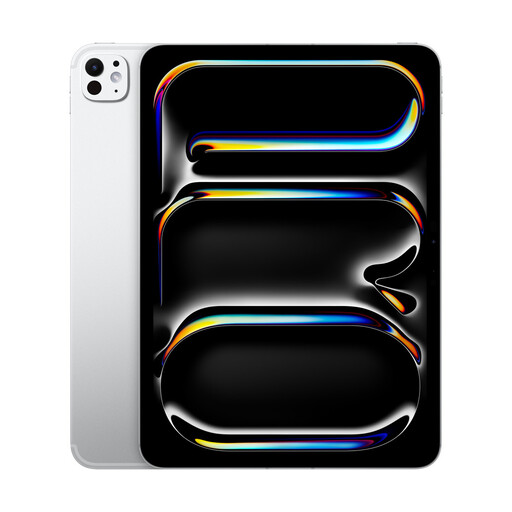 No image available
Consider this 13-inch model for reviewing maps and campsite details as a passenger or after parking, rather than assuming it will fit unobtrusively in a vehicle.
The listed configuration is Wi-Fi + Cellular with 1TB storage. Check holder fit and mobile-plan compatibility for this exact model. Google Maps says iPad offline driving guidance requires the whole route to be within the downloaded area.
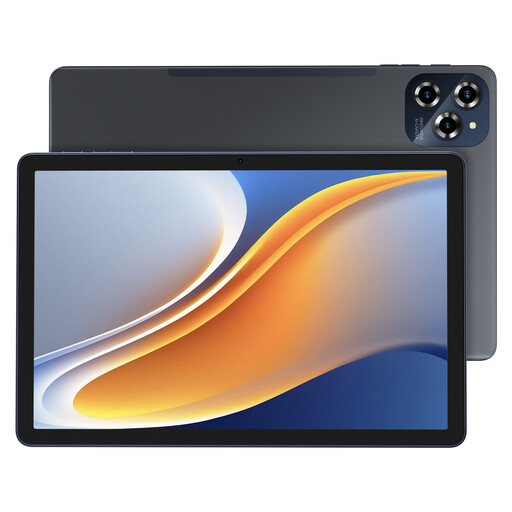 No image available
Its listed screen size and 4G LTE configuration make it worth considering for passenger route review where mobile coverage is available.
The product name lists an 11-inch display and 256GB storage. Confirm that your mapping app supports the offline route you need, and check UK mobile-network compatibility and holder fit before travelling.
No image available
Consider this 11-inch Wi-Fi model if you can prepare directions in advance and mainly review them as a passenger or after parking.
It has 256GB storage and is the Wi-Fi version, not the cellular version. Google Maps supports offline driving guidance on iPad when the complete route is downloaded; live data away from Wi-Fi would require a suitable hotspot.
 No image available
The 12.7-inch screen is an option for reviewing routes and campsite information as a passenger or after parking; assess the space it needs before considering an in-car holder.
The product name lists a 2K display, dual-SIM 4G LTE, GPS, 256GB storage and an included stylus. Confirm UK network compatibility and offline-map app support for your intended journey.
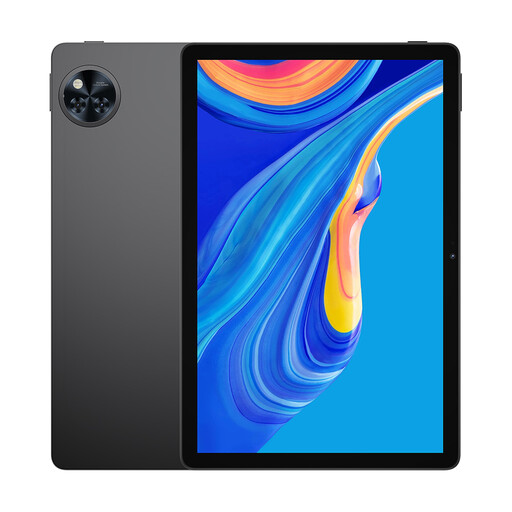 No image available
Consider its 11-inch screen for reviewing campsite information as a passenger or after parking.
The product name lists a 90Hz IPS screen and 256GB storage. Check that your chosen mapping app can download the required route, and confirm holder fit before using it in a vehicle.
No. GOV.UK says it is illegal to hold and use a tablet or another device that can send or receive data while driving, including when stopped at traffic lights or queuing. A hands-free device must not block your view of the road and traffic ahead, and you must remain in full control.
Not if downloaded maps and access to Wi-Fi or a suitable phone hotspot meet your needs. Choose a cellular variant when you want the tablet to access mobile data independently where coverage is available, and check the exact model and compatible plan; Apple, for example, lists 5G/LTE for its Wi-Fi + Cellular iPad versions.
Yes, for driving guidance when the entire route lies within the downloaded map area. Google Maps says live traffic and alternative routes are unavailable offline, so check the route area and update the download before it expires.