Frequent mobile letter drafters
If you draft and revise documents in short gaps between appointments, consider how the keyboard works on the surfaces you normally use and how much the complete setup adds to your bag.


For short writing sessions between visits, choose a tablet with a compatible physical keyboard only after confirming that it can open, edit and send the documents your organisation requires. A Windows detachable suits a desktop-only workflow; an 11-inch iPad Air offers a smaller tablet-first option when its apps meet your needs, while a larger Android tablet gives you more screen space to consider if you regularly review attachments. Check the full keyboard setup and your organisation’s rules for client information before buying.
If you draft and revise documents in short gaps between appointments, consider how the keyboard works on the surfaces you normally use and how much the complete setup adds to your bag.
If your organisation requires particular Windows software, a browser portal or a document-approval process, confirm those requirements before choosing a mobile-app workflow.
If you regularly read attachments alongside a draft, a larger Android tablet and compatible keyboard may be worth considering, provided the resulting setup fits the places where you work.
Check your required document workflow before deciding between Windows, iPadOS and Android; then compare the keyboard and carrying setup you would actually use between visits.
Consider it when: your work requires Windows applications rather than a tablet app or browser alternative.
Allow for: a compatible keyboard and the space needed to set up the keyboard and kickstand.
Consider it when: iPad-compatible apps cover your letter-writing and employer workflow, and frequent carrying matters.
Allow for: a separately purchased compatible keyboard; mobile apps should not be assumed to replace desktop-only software.
Consider it when: your required apps work on Android and you regularly need room to view attachments while drafting.
Allow for: a larger tablet-and-keyboard setup, particularly on small tables.
| Concern | What to check | Who this matters to |
|---|---|---|
| Comfortable drafting | Check the keyboard’s exact tablet compatibility, layout and writing angle; look for pointer control if you use it to edit documents. | If I repeatedly correct names, addresses and formatting, I want a physical keyboard that works where I stop to write. Around 31% of consumers put comfortable drafting first. |
| Carrying between visits | Compare the size and weight of the tablet with its keyboard attached, not just the tablet on its own. | When I have only a short gap between appointments, I need a setup I am willing to carry and open quickly. Portability comes first for around 25% of consumers. |
| Document workflow | Confirm required templates, editing features, storage, sign-in and any desktop-only applications with your organisation. | I cannot finish a letter on the move if the device cannot use my required files or work systems. Around 25% of consumers prioritise workflow compatibility. |
| Client information | Check your organisation’s personal-device, storage and screen-lock rules before opening client-related files away from the office. | If a letter contains client information, I need to know whether and where I am permitted to work on it. Safeguarding that information is the primary concern for around 19% of consumers. |
Apple’s Magic Keyboard and Microsoft’s Surface Pro keyboard are separate accessories. Samsung states that the Galaxy Tab S10 FE series does not include a travel adaptor.
Check the contents of the exact tablet bundle, the compatible keyboard model and the power adaptor you will need.
Word is available on iPad and Android tablets, but that does not establish compatibility with an employer’s templates, sign-in process or desktop-only tools.
Ask your organisation to confirm the document features, storage, browser access and authentication your role requires.
A 12.7- or 13.1-inch screen gives a larger document view than an 11-inch screen, but the tablet and keyboard also take up more room.
Compare the complete setups against your usual bag and working space, especially if you mostly write short letters.
People nearby may be able to see a document opened between visits. GOV.UK remote-working guidance calls for attention to the risks of the working environment.
Follow your organisation’s device and data-handling rules, lock the screen and avoid displaying client information where others can overlook it.
Surface Pro is a Windows detachable option for work that needs Windows applications alongside tablet-style carrying.
The 11-inch iPad Air is a tablet-first option when your organisation’s work can be completed in iPad-compatible apps.
The Galaxy Tab S10 FE+ offers an Android route with a 13.1-inch display for people who want a larger document view.
The Idea Tab Pro is a larger Android tablet option for drafting alongside attachment review.
These compact Android tablets are options to consider if your priority is carrying a keyboard-equipped setup between visits. Confirm the keyboard details and your organisation’s document requirements for the exact device before relying on either for client work.
 No image available
Consider this 10.1-inch option for short drafting sessions if its keyboard and your required document apps suit the way you work.
The product name lists 256GB storage and a 5000 mAh battery. Confirm the supplied Android version, keyboard layout and pointer controls, as well as the Word features and employer sign-in you need.
 No image available
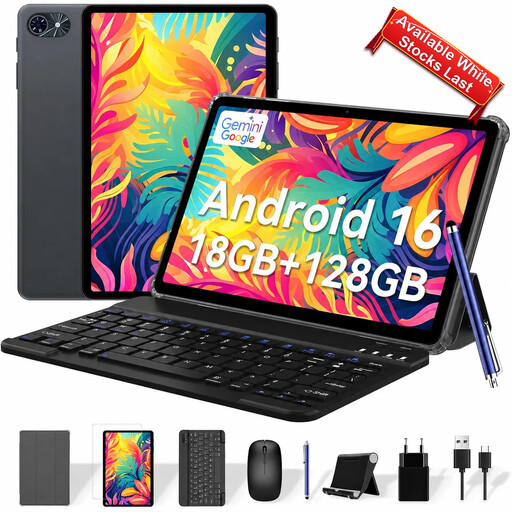
This 10-inch model is another compact option to assess for letters written between appointments, subject to its keyboard and work-app compatibility.
The product name lists Android 16, 128GB storage and a 6000 mAh battery. Check the exact keyboard bundle, layout and pointer controls, then confirm your required document features and employer sign-in.
A physical keyboard is worth considering if you regularly draft, revise or format letters, although a brief edit may not require one. Check that the keyboard fits the exact tablet model, has the layout you want and works on the surfaces you use between visits.
Microsoft provides Word for iPad and Android tablets, but the mobile app must still meet your particular work requirements. Confirm the necessary editing features, licence, document templates and sign-in arrangements with your organisation before choosing a non-Windows device.
Check the exact bundle rather than assuming either accessory is included. Apple sells the Magic Keyboard separately, Microsoft describes the Surface Pro keyboard as optional, and Samsung states that the Galaxy Tab S10 FE series does not include a travel adaptor.
Use a personal tablet for client-related files only if your organisation permits that arrangement and its required safeguards are in place. Confirm its device, storage and sign-in rules before opening files; GOV.UK remote-working guidance also advises considering the risks of the surrounding environment.
An approximately 11-inch tablet is a sensible starting point if you mainly draft short letters and carry the device throughout the day. Consider a 12.7- or 13.1-inch display if attachment review needs more room, but compare the tablet with its keyboard attached before deciding.