Keyboard-first interview editors
If you spend library sessions correcting, reorganising and formatting long notes, assess the keyboard position and document apps before paying for pen features.


For sustained interview-note editing, choose a tablet around 11 inches with a keyboard setup that works for your documents before deciding whether you need a pen. An iPad Air suits an existing iPadOS workflow, a Galaxy Tab S10 FE offers microSD expansion on Android, and a Lenovo Tab Plus lets you add writing accessories selectively; check the complete setup and your file-handling requirements before buying.
If you spend library sessions correcting, reorganising and formatting long notes, assess the keyboard position and document apps before paying for pen features.
If you mark up PDFs or handwritten drafts before producing a typed copy, check the exact pen and annotation-app combination. Apple and Samsung both describe pen routes for their relevant tablet lines.
If you edit periodically rather than throughout the day, decide which accessories you will use. Lenovo lists a pen and UK-English keyboard as optional additions to its Tab Plus configuration.
Start with the way you edit most often: sustained typing, handwritten mark-up or an occasional setup with fewer accessories. Then check the exact keyboard or pen bundle and whether your required document and storage apps work on the tablet.
| Concern | What to check | Who this matters to |
|---|---|---|
| Sustained typing | Check keyboard compatibility, UK-English layout where needed, and your document and cloud apps. | When I spend a session correcting and restructuring a transcript, I need a workable typing position and access to the right files; around 38% of consumers put typing and document workflow first. |
| Handwritten mark-up | Check the precise pen model, bundle contents and annotation-app functions you need. | If I circle quotations or add margin notes before typing a clean copy, pen input becomes my priority; for around 31% of consumers, annotation is the primary need. |
| Initial setup cost | Compare complete setups, including the keyboard, pen if needed, case and compatible charger. | For occasional editing, I would rather add only the accessories I will use; roughly 31% of consumers prioritise keeping the initial setup cost down. |
A keyboard or pen can change what you need to buy before you can edit comfortably. Apple lists compatible Pencil models separately, while Lenovo lists its Tab Pen Plus and UK-English keyboard as additions.
Compare the exact tablet, keyboard, pen if you will use one, case and charging equipment as a complete setup.
More display space may be useful for working with documents, but the tablet and keyboard still need to fit where you intend to type and be convenient to carry.
Compare the dimensions of the full typing setup with your bag and usual desk space; consider a larger screen if you regularly need documents side by side.
Apple lists a USB-C charging cable in the iPad Air box, and Samsung says the Galaxy Tab S10 FE does not include a travel adapter.
Check the exact package contents and whether a charger you already own is suitable before choosing an adapter.
The choice of hardware does not settle where sensitive notes are stored, how they synchronise or who can access them.
Before buying, check your required document app, offline and cloud workflow, and any employer, client or research-organisation rules for interview data.
The 11-inch iPad Air is an iPadOS route for editors who want a portable screen and the option of a compatible keyboard or pen.
The Galaxy Tab S10 FE is an Android option for editing on a 10.9-inch screen when expandable storage matters.
The Tab Plus is an Android route for editors considering an 11.5-inch screen and accessories chosen separately.
These tablets offer compact keyboard-led setups and an 11-inch iPad Air route for editing interview notes. Check each listing’s accessories and your required apps before deciding which fits your library workflow.
 No image available
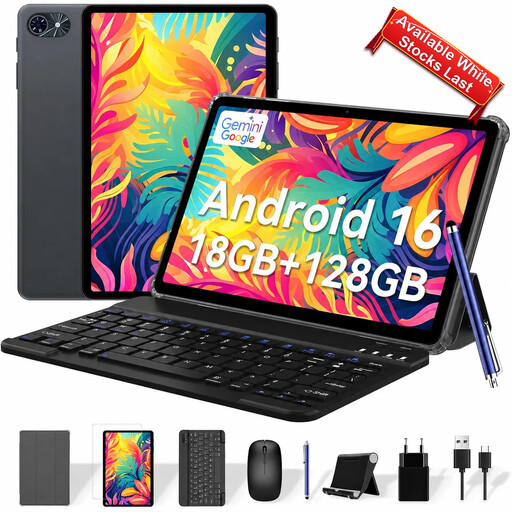
Consider this compact setup if you expect to type corrections and also mark up notes by hand. The product title lists a 10.1-inch display, 256 GB storage, TF-card expansion up to 2 TB, and a keyboard, mouse and stylus. Confirm the exact bundle and keyboard layout, the installed Android version, and compatibility with your document and storage apps.
 No image available
Consider this 10-inch option if typing corrections and keeping local copies of files are your main needs. Its product title lists 128 GB storage, TF-card expansion up to 2 TB and a keyboard. Confirm the keyboard’s inclusion and layout, the exact memory configuration, and whether your required apps work as intended; check pen compatibility separately if you need annotation.
 No image available
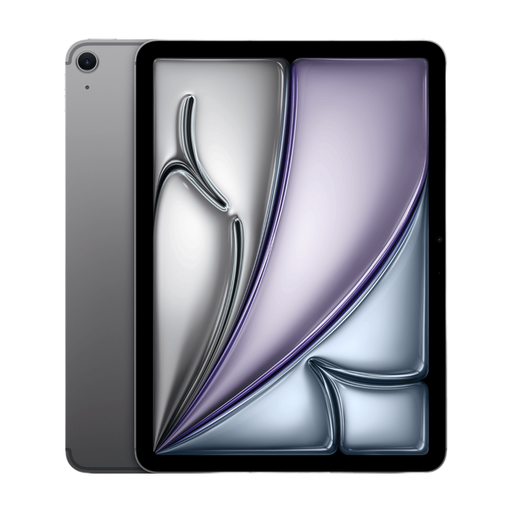
Consider this iPad Air if your interview-note workflow uses iPadOS and you want an approximately 11-inch screen to carry between locations. This listing identifies the Wi-Fi 128 GB Space Grey variant; Apple specifies a 464 g weight for the 11-inch Wi-Fi range. The keyboard and Apple Pencil are separate purchases, so confirm an exact-model keyboard and your required app compatibility before buying.
No, not if your work is mainly typed corrections. A pen is worth considering when you regularly annotate PDFs or handwritten drafts; Apple lists compatible Pencil models separately for iPad Air, and Lenovo lists its Tab Pen Plus as an addition. Check the exact pen and app combination before buying.
Check the particular package rather than assuming it includes a wall adapter. Apple lists a USB-C cable in the iPad Air box, while Samsung says the Galaxy Tab S10 FE does not include a travel adapter. If you plan to use an existing charger, check that it is suitable for the tablet.
Only if its apps and file workflow meet the requirements that apply to your interview material. Check where notes will be stored or synchronised, whether you need offline access, and any rules set by your employer, client or research organisation before choosing a tablet.
Back up the files you need and erase personal data before handing it over for reuse or recycling. GOV.UK says waste electrical products can be taken to a local household waste recycling centre; if lithium batteries are removable, it advises ideally taping their terminals to reduce fire risk.