Who this guide can help

First-time or returning home internet users

People rebuilding confidence for communication, information access and routine home online tasks who need a manageable interface and a realistic support plan. UK Government digital-inclusion policy and Age UK both identify access, suitable devices and tailored support as relevant needs.

Family members setting up a device for someone else

Helpers choosing a device for a relative or friend where simplified setup, approved contacts, accessibility settings and repeatable support matter as much as the hardware. Age UK and AbilityNet highlight the value of support tailored to the individual.

Users who need easier reading or input at home

People whose confidence is affected by small text, difficult touch gestures, limited hand mobility, fatigue or the need for a stable physical keyboard and mouse. AbilityNet, Apple and Google document a range of accessibility and input options.

What to prioritise before buying

Tablet with a simplified setup

Choose it when: Video calls, messages, reading and a short list of familiar apps or websites are the main tasks, and a trusted helper can complete setup.

Consider: Long forms can be tiring on touch input, and an external keyboard, stand or alternative input arrangement may be needed.

Laptop or Chromebook

Choose it when: The person expects to write emails, upload documents, use several browser tabs or complete longer online forms.

Consider: The user will need to manage charging, opening the laptop, account access and a trackpad or mouse.

Fixed desktop setup

Choose it when: The device will stay in one place and a larger monitor, full-size keyboard, mouse and adaptable desk position are useful.

Consider: It needs a suitable permanent space and does not offer the flexibility of a portable device.

Priority What to check Your needs
Support after setup Check whether key apps or bookmarks can be kept easy to find, accessibility settings can be adjusted, and someone can help with follow-up questions. I want a device arranged around a few familiar tasks, with help available when something changes or goes wrong.
Readable and manageable controls Try text-size, zoom, magnification, screen-reader or dictation settings. Check whether touch, keyboard, mouse or another input method is comfortable. Small text, crowded pages or difficult gestures should not make routine online tasks exhausting.
Typing and forms Test a short form, email and document upload. Check keyboard size, cursor visibility, focus highlighting and available screen space. I need a practical way to write, review information and move between fields without relying only on an on-screen keyboard.
Home connection Confirm Wi-Fi works where the device will normally be used, and check the broadband arrangement before ordering a device. I need reliable home access for calls, information and online forms. Ofcom describes a connection as the foundational step for digital inclusion.

Buying pitfalls to avoid

  • Choosing only by the simplest-looking interface

    A device may seem straightforward at first but become difficult when the user needs to type, upload a document, recover a password or use an unfamiliar website. Ofcom’s qualitative research on digital disadvantage identifies accessibility issues and low confidence across everyday online services.

    List three real tasks before buying, such as reading information, making a video call and completing a short form. Try those tasks on the same type of device rather than judging by the number of visible controls.

    A keyboard, stand, mouse or further support may be needed if the original setup does not suit the person’s forms and typing tasks.

  • Treating the device purchase as the whole solution

    A device without a usable connection or continuing support can remain unused. UK Government, Age UK, AbilityNet and Ofcom materials link device access with skills, confidence and trusted help.

    Confirm the home connection, decide who can provide follow-up help and identify a support channel before ordering. If eligible, compare broadband social tariffs as part of the household plan.

    Broadband and follow-up support can create recurring costs or time commitments.

  • Assuming a touchscreen is automatically easier

    Touch gestures suit some people but are difficult for others. AbilityNet highlights adapted keyboards, mice and alternative input equipment, while Apple documents touch and external-keyboard options for iPad.

    Where possible, test touch, a physical keyboard and a mouse or trackpad. Choose accessories for a specific task or comfort need rather than adding them by default.

    A keyboard, stylus, stand or alternative input device may be useful for the final setup.

  • Buying an unclear-market charger bundle without checking support and returns

    An unfamiliar seller or unsuitable power arrangement can make support and returns more difficult for a low-confidence user or their helper. Mains-powered equipment supplied in Great Britain is subject to electrical-safety obligations.

    Use a clearly identified business seller, check the UK or GB power arrangement and return process before payment, and keep the order confirmation and product documentation.

    Return postage, replacement accessories or an unsuitable plug arrangement can add practical inconvenience.

Relevant brand references

Apple

An iPad route for buyers seeking built-in accessibility settings and the option to simplify the interface for people with cognitive, vision, hearing, speech or mobility-related needs.

  • Apple documents screen reading, text enlargement, zoom, display adjustments, voice control, external-keyboard control and accessibility configuration on iPad.
  • Apple says Assistive Access offers a more focused interface that a trusted supporter can personalise.
  • Touch-based input and optional accessories should still be assessed against the individual’s tasks and comfort.

Google Chromebook

A ChromeOS laptop route for browser-centred home tasks where a physical keyboard and ChromeOS accessibility options are useful.

  • Google documents text-to-speech, dictation, display-size changes, magnification, on-screen keyboard, sticky keys, cursor controls and focus highlighting in ChromeOS.
  • The user still needs to manage charging, a physical keyboard and a trackpad or mouse.
  • Check that required websites and services work in the browser before choosing this route.

GrandPad

A specialist tablet service for older users who need a restricted, family-supported communication device rather than a fully open general-purpose computer.

  • AbilityNet describes one-touch communication controls, a trusted contact network, family customisation and UK leasing availability.
  • AbilityNet reports that 24/7 support is part of the offering.
  • Restricted browser or app access may be less suitable for someone who needs broad access to online forms and information services.

Joybuy product options

Joybuy product options for the laptop and tablet routes in this guide, including models intended for browser-based tasks, physical typing and home communication.

Acer Chromebook Plus 514 CB514-5H laptop

Acer Chromebook Plus 514 CB514-5H, 14-inch WUXGA

A laptop option for regular forms, emails and browser-based home tasks where a physical keyboard is useful.

Stated specifications include a 14-inch 1920 × 1200 WUXGA IPS display, Intel Core 5 120U, 8GB RAM, 512GB SSD, Wi-Fi 6E and a QHD camera.

ChromeOS is not compatible with traditional Windows or macOS desktop-native software. Check the UK or GB plug, charging documentation and return process before buying.

Joybuy

Acer Chromebook Plus 514 CB514-5H laptop

Acer Chromebook Plus 514 CB514-5H, Core i3, 14-inch WUXGA

This Chromebook suits longer forms, email writing and browser-based tasks at home where a physical keyboard and anti-glare display are preferred.

Stated specifications include an Intel Core i3-1315U, 8GB RAM, 256GB SSD, 14-inch 1920 × 1200 anti-glare display, backlit keyboard, Wi-Fi 6 and webcam.

ChromeOS is not compatible with traditional Windows or macOS desktop-native software. Check the delivered configuration, UK or GB power arrangement and return process before buying.

Joybuy
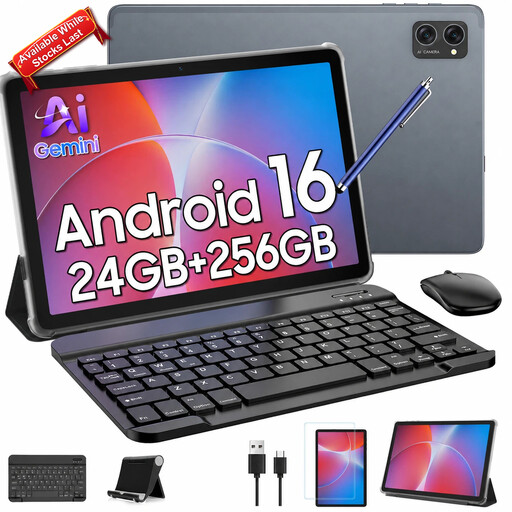
TABWEE T20 tablet with keyboard and mouse

TABWEE T20 10.1-inch Tablet with Keyboard and Mouse

A tablet route for reading, video calls and occasional written tasks, with a removable keyboard and mouse included in the stated bundle.

Stated specifications include a 10.1-inch display, 256GB ROM, 5000mAh battery, dual-band Wi-Fi, front camera, stand, stylus and anti-glare screen protector.

Check the installed Android version, the keyboard and mouse layout, and the UK or GB charger arrangement before buying.

Joybuy

TECLAST ArtPad Pro 12.7-inch tablet

TECLAST ArtPad Pro 12.7-inch 2K Tablet

A larger tablet option for home reading and written tasks where portability is still wanted alongside a physical keyboard.

Stated specifications include a 12.7-inch 2K display, Helio G99 processor, 256GB storage, 10,000mAh battery, Android 15, Wi-Fi, stylus, case and keyboard.

Check that the delivered bundle includes the keyboard, that its layout is suitable, and that the charger is intended for use in Great Britain.

Joybuy
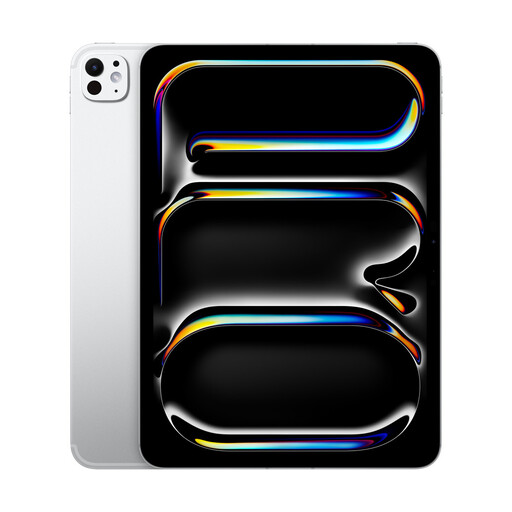
Apple iPad Pro 13-inch M5 Wi-Fi tablet

Apple iPad Pro 13-inch M5 Wi‑Fi, 512GB

A tablet option for a small, repeatable set of communication and information tasks, particularly where a trusted helper can personalise iPad accessibility settings.

Stated specifications include a 13-inch display, Wi-Fi, 512GB storage and front and rear cameras. Apple documents accessibility settings and Assistive Access for iPad.

Apple Pencil Pro and Magic Keyboard are compatible but sold separately. For frequent long forms or uploads, check whether an external keyboard is needed and confirm the charging arrangement for Great Britain.

Joybuy

Frequently asked questions

Should a first home device be bought before arranging internet access?

No. Confirm that the home can obtain a suitable connection and that the person can use it where the device will normally sit. Ofcom describes connection as foundational for digital inclusion, while affordability, skills and confidence also affect whether the connection is useful. If cost is a concern, check whether the household qualifies for a broadband social tariff.

Is a tablet suitable for online forms and official websites?

A tablet can suit short or occasional forms when the user is comfortable with touch input and the relevant website works well on the device. For repeated long forms, document uploads or sustained typing, test the exact task first and consider an external keyboard or a laptop or desktop setup. Accessibility settings can help, but they do not guarantee that every third-party site is easy to use.

What setup should be completed before handing over the device?

Set up the home connection, record account-recovery details securely, adjust text size or required accessibility features, place essential apps or bookmarks where they are easy to find, and practise priority tasks. Arrange follow-up help too: AbilityNet says training works best when it is spread over time and focused on individual tasks and challenges.

What should a UK buyer check about returns when purchasing online?

For a qualifying purchase from a business online, by phone or by mail order, consumers generally have a 14-day cancellation period after delivery without giving a reason, subject to applicable exclusions. Check the seller’s return instructions, whether return postage is payable and any condition requirements before ordering. GOV.UK and Citizens Advice distinguish these statutory rights from voluntary retailer policies.

What electrical-safety check matters for a desktop, monitor or charger used in Great Britain?

Confirm that mains-powered equipment is intended for the Great Britain market and that the product and plug information is clear. Great Britain’s Electrical Equipment (Safety) Regulations place safety obligations on businesses placing relevant equipment on the market, and non-UK plugs have specific requirements when supplied with a compatible conversion plug.