Choose a compact tablet if you regularly carry it to cafés and mostly read ebooks, websites or short archive extracts. If scanned books and historic maps take up more of your reading time, compare larger screens instead, allowing for the extra bag and table space they need. Check pen, storage and app compatibility against your own research routine before choosing.
Who each format suits
Portable café researchers
If you often walk or travel to a café and mainly read ebooks, local-history websites and short archive extracts, a compact tablet may be easier to carry and hold. Apple’s iPad mini specifications offer one example to compare; the smaller page view is the trade-off.
PDF and historic-map readers
If your sources are scanned books, image-heavy PDFs or maps, look closely at screen area and page detail. Lenovo’s Tab Plus Gen 2 and Apple’s iPad Air specifications provide larger-screen examples, though physical handling still matters at a small café table.
Annotators and offline archivists
If you mark up documents or download material before leaving home, check your note-taking apps, pen arrangement and storage options together. Samsung’s Galaxy Tab S10 FE is one example with microSD support; that specification alone does not establish whether your preferred workflow will work.
What matters when choosing
Start with the pages you actually read and how you carry the tablet. Then check whether your notes, downloaded files and essential services will work on the exact model.
| Concern | What to check | Who this matters to |
|---|
| Scans and maps |
Compare screen size and resolution using one of your own PDFs; consider stated brightness and screen coating for your usual seating. |
When I read a full-page scan or historic map, I want to see labels without constant zooming and can accept a larger tablet. Around 40% of consumers put readable pages first. |
| Carrying comfort |
Compare the exact model’s weight and dimensions, including any case, and decide whether you read in your hands or on a table. |
If I bring a tablet on frequent café trips, I would rather carry a smaller device even if dense pages need more zooming. Portability comes first for around 30% of consumers. |
| Notes and offline files |
Check pen compatibility and contents, storage options and the apps used for your downloaded sources. |
I want my saved documents and handwritten notes ready when I sit down, so the research workflow matters more than the smallest footprint. Around 20% of consumers prioritise those needs. |
| Services and setup |
Confirm that essential archive, library and note-taking services work on the operating system; check required accessories. |
If my usual archive or library service will not work, a tablet’s other specifications will not solve the problem. App access and a usable setup lead the choice for around 10% of consumers. |
Buying pitfalls
-
Choosing by screen diagonal alone
A larger display gives a scan or map more room, but the tablet may be less comfortable to carry or hold; a compact screen reverses that trade-off.
Open a typical PDF or map at your normal reading distance, then compare page visibility with how you would handle the device in a café.
-
Assuming the accessories are in the box
A tablet on its own may not provide the pen, typing or charging arrangement you plan to use. Samsung says its Galaxy Tab S10 FE series does not include a travel adapter.
Check the exact model’s box contents and whether your intended pen, case, keyboard or charger is compatible and included.
-
Checking the screen but not the apps
Display specifications cannot tell you whether a required local archive, library or note-taking service will work on the device’s operating system.
List your essential services and confirm each one on the exact platform before choosing, particularly if considering a Fire tablet.
-
Treating café Wi-Fi as a trusted connection
The National Cyber Security Centre warns that attackers on the same public or insecure network may be able to intercept or modify data.
Download material beforehand where practical, keep the tablet updated and avoid unnecessary sensitive account activity on unfamiliar public Wi-Fi.
Brands to consider
Apple
An iPadOS route worth considering if compact carrying and reading are priorities.
- Apple specifies an 8.3-inch, anti-reflective display and a 293 g weight for the Wi-Fi iPad mini.
- The smaller screen leaves less room for a full scanned page or detailed map without zooming.
Samsung
An Android route for readers weighing a mid-size display against note-taking and downloaded-file needs.
- Samsung specifies a 10.9-inch display and microSD support up to 2 TB for the Galaxy Tab S10 FE.
- Check the exact connectivity variant and box contents; Samsung says the S10 FE series does not include a travel adapter.
Lenovo
A larger-screen Android option to examine if scanned pages and maps dominate your reading.
- Lenovo lists a 12.1-inch, 2560 × 1600 display with 800 nits stated brightness for the Tab Plus Gen 2.
- Check its weight, case and handling before choosing it for frequent café trips.
Amazon
A Fire tablet route for reading and browsing, provided your essential services work on Fire OS.
- Amazon lists an 11-inch, 2000 × 1200 display for the Fire Max 11.
- Check archive, library and note-taking apps, along with the exact storage and lock-screen-ad variant.
Joybuy tablet choices
These tablets offer different starting points for café reading, from a compact iPad mini to larger tablets and an E Ink note-taking device. Compare each one with your usual documents and required apps rather than treating the formats as interchangeable.
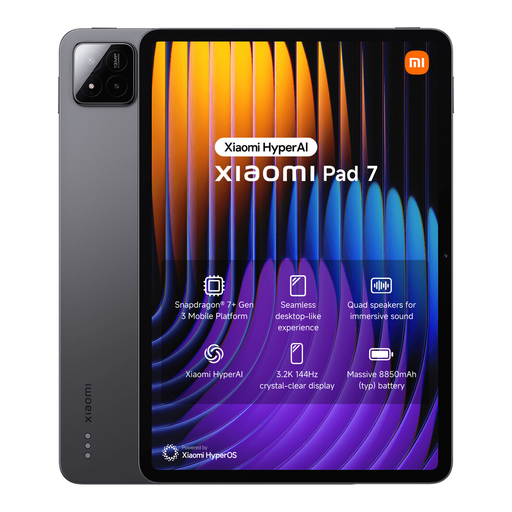 Image unavailable
Xiaomi Pad 7 Grey, 8GB RAM, 128GB, with Focus Pen
Consider this variant if handwritten notes are part of your local-history reading. Its title specifies 8GB RAM, 128GB storage and an included Focus Pen; confirm the exact bundle and how comfortably it fits your usual café setup.
View on Joybuy
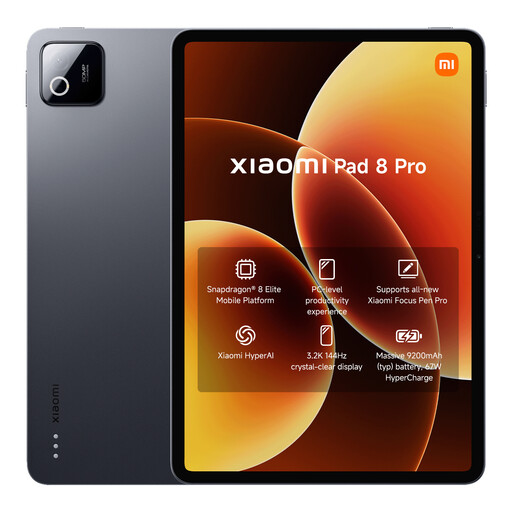 Image unavailable
Xiaomi Pad 8 Pro Grey, 12G RAM, 512G ROM
If you keep many local-history files on the device, compare this storage variant with the size of your collection. The title identifies 12G RAM and 512G ROM; check its physical handling and any note-taking accessories you require.
View on Joybuy
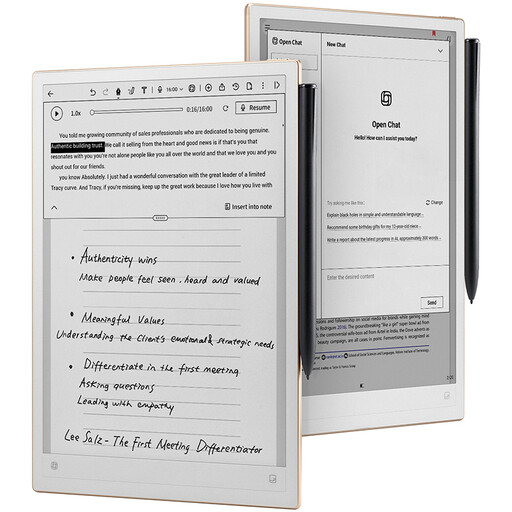 Image unavailable
iFLYTEK AINOTE 2 10.65-inch E Ink tablet with case
Consider an E Ink device if reading and written notes are central to your café visits, but check your essential archive and library apps before choosing it. The title specifies a 10.65-inch E Ink screen and 4.2mm thickness; assess the screen in the lighting you normally use.
View on Joybuy
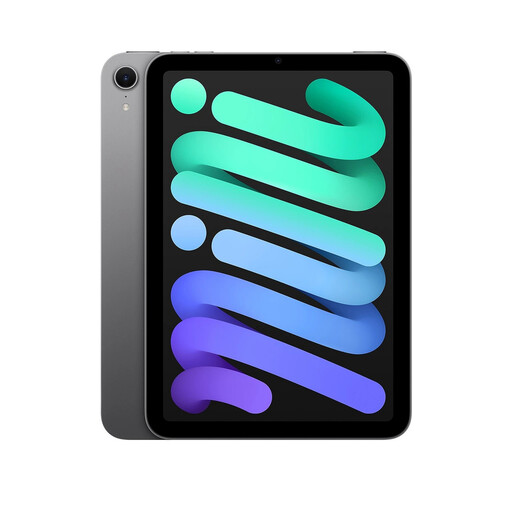 Image unavailable
Apple iPad mini 7 (A17 Pro), 512GB, Space Grey
For frequent café trips, compare this compact model with a larger tablet using one of your own scans. Apple specifies an 8.3-inch display for the iPad mini; this variant’s title identifies 512GB storage, while the smaller page view may require more zooming on maps.
View on Joybuy
 Image unavailable
TABWEE T20 10.1-inch, 256GB, keyboard, mouse and stylus bundle
If you want to read and make notes at a café table, check whether this bundle suits your required apps and working space. Its title lists a 10.1-inch display, 256GB ROM and TF-card support up to 2TB; confirm the software version and exact accessories before buying.
View on Joybuy
Common questions
What tablet size works for local-history PDFs in a café?
Choose a compact format if carrying and handheld reading matter most, or compare roughly 11–12-inch screens if full-page scans and maps are your main sources. A larger tablet needs more bag and table space, so try a representative PDF at your normal reading distance.
Do I need cellular connectivity for café research?
Not necessarily: downloading your sources beforehand can reduce the need for a connection while you read. If access away from Wi-Fi is essential, check the exact tablet’s cellular variant and the mobile-data arrangement you would use.
Should I sign in to archive accounts on café Wi-Fi?
Treat unfamiliar public Wi-Fi with caution rather than assuming it is trusted. The National Cyber Security Centre warns of interception or modification risks on public or insecure networks; keep software updated and avoid unnecessary sensitive account activity there.
What if a tablet bought in the UK is faulty?
For a UK purchase, GOV.UK explains that goods must be as described, of satisfactory quality and fit for purpose under consumer law. Keep your order details and contact the retailer about a fault or a tablet that materially differs from its description; this is separate from a change-of-mind return.


