Revisers with limited desk space
If your tablet must sit beside a notebook, calculator or printed questions, its physical footprint matters as much as its screen size. Think about whether you usually work through one question at a time.


For practice questions on a small desk, choose a compact tablet if it needs to sit beside paper; choose a roughly 11-inch screen if you need more room to read documents or enter answers onscreen. Check the physical dimensions before deciding, and pay for pen support only if you regularly write workings or annotate PDFs. A tablet bought for revision should not be assumed to be permitted in a formal exam.
If your tablet must sit beside a notebook, calculator or printed questions, its physical footprint matters as much as its screen size. Think about whether you usually work through one question at a time.
For calculations, diagrams and PDF corrections, check compatible pen support and the contents of the particular tablet bundle before choosing a writing setup.
If you mainly use browser-based questions, PDFs and revision videos, compare the features you will actually use before choosing extra performance or accessories.
Start with the space available beside your other materials, then decide whether handwriting or onscreen answering changes the size and accessories you need.
| Concern | What to check | Who this matters to |
|---|---|---|
| Desk space | Compare body dimensions, not just screen diagonals; leave space for any paper you use alongside the tablet. | If I work with printed questions or a calculator, I need the tablet to fit without crowding them out. Around 36% of consumers put desk space first. |
| Handwriting | Check pen compatibility and whether the pen is included in the exact bundle. | Writing calculations or marking corrections by hand makes a workable pen setup important to me; around 29% of consumers prioritise handwriting. |
| Study setup | Compare the specified storage and the accessories you would use, including any case, keyboard or charger. | If my practice is mainly browser questions and PDFs, I want to avoid extras I will not use. Around 21% of consumers make that their primary concern. |
| Assessment use | Ask the exam centre about the particular assessment and any approved access arrangement before relying on a tablet. | If I need a device for an assessment rather than revision alone, permission is the deciding issue; around 14% of consumers prioritise that question. |
A larger display leaves less room for paper and stationery. Apple UK lists the iPad mini at 195.4 × 134.8 mm and the iPad (A16) at 248.6 × 179.5 mm; those measurements apply to those models, not every tablet with a similar screen size.
Measure your clear workspace and allow room for the materials you use beside the screen.
A compatible tablet may still need a separately supplied pen. Apple UK lists Pencil support for its iPad mini and iPad (A16), but does not list a Pencil in either tablet’s box contents.
Check the exact model, compatible pen and bundle contents before deciding on a handwriting setup.
Ofqual’s 2026 guidance for students in England says not to take electronic devices into an exam, even when switched off. An individual access arrangement is not established by owning a tablet.
Follow the instructions for your assessment and ask your school or exams officer about any approved arrangement.
Apple’s iPad mini and 11-inch iPad lines offer different screen sizes for iPadOS practice and optional Pencil input.
The Galaxy Tab S10 FE is a 10.9-inch Android option to examine if pen input is part of your practice routine.
Lenovo lists an 11-inch Tab M11 configuration with a pen for practice questions, PDFs and basic notes.
These tablets offer compact and larger-screen choices for working through practice questions. Match the screen and any writing accessories to the space you have, rather than treating a larger display as an automatic advantage.
 No image available
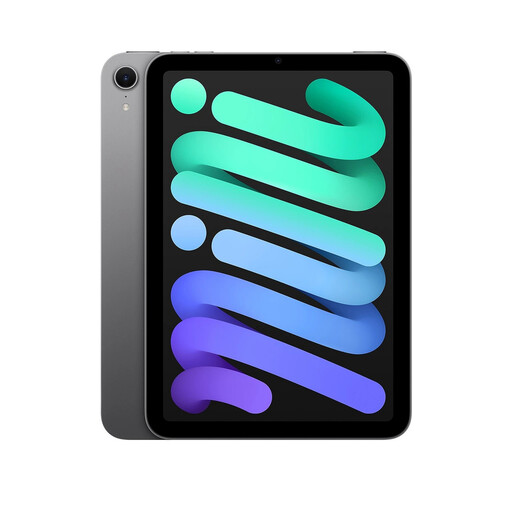
Consider this compact option if your tablet needs to sit beside printed questions. The listed variant has 512GB storage; check the compatible pen and what comes with the bundle if you plan to handwrite answers.
 No image available
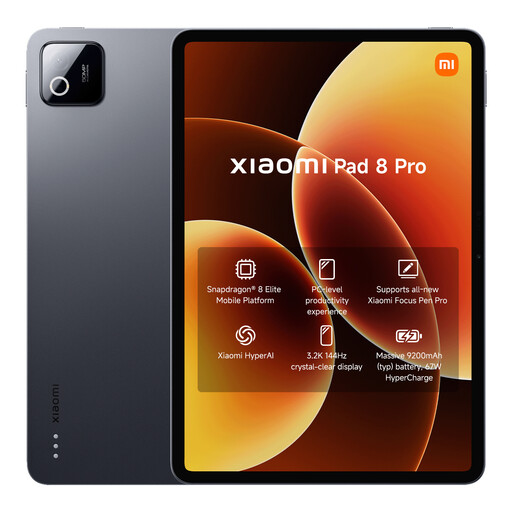
Consider this for practice questions when you can give the screen more desk space. The listed variant has 12G RAM and 512G ROM; check the physical dimensions and pen bundle before choosing it for a narrow workspace.
 No image available
Its 11-inch screen is a choice for reading questions and entering answers onscreen when your desk has room for a larger tablet. This is the Wi-Fi, 128GB variant; confirm the compatible Pencil and bundle contents if annotation matters to you.
 No image available
Consider this for onscreen practice if a larger tablet fits alongside your other study materials. The listed Wi-Fi variant has 8G RAM and 128GB storage; check physical dimensions, stylus compatibility and bundle contents before buying for handwriting.
 No image available
This 11-inch variant suits a desk where screen space matters more than keeping the tablet compact. It has Wi-Fi, 256GB storage and Standard Glass; check the physical footprint and compatible accessories if you plan to write or type answers.
Yes, if you usually read one question at a time and need room for paper beside the tablet. Apple UK lists the iPad mini at 195.4 × 134.8 mm; compare the dimensions of the exact model you are considering with your clear desk space.
Not necessarily: touch or typing may suit questions that do not call for handwritten workings. If you regularly draw diagrams, work through calculations or mark PDFs, check the exact tablet’s pen compatibility and whether the pen is included.
Do not assume you can. Ofqual’s 2026 student guidance for exams in England says not to take an electronic device into an exam, even switched off; follow your exam centre’s instructions for the specific assessment.
It may be possible under an individually approved arrangement, but owning a tablet does not establish permission. Ofqual describes tablets as a form of assistive technology and notes that arrangements are usually tailored to a student’s normal way of working; ask your school or exams officer about the requirements for your assessment.