Comic artists with a compatible iPad
If you draw thumbnails, panel layouts and ink directly on your iPad, decide whether pressure-controlled lines and Pencil controls matter to your workflow. Check the exact iPad model before choosing a pen.


Start with the tablet you own: its exact model determines which Apple Pencil or Samsung S Pen you can use. For pressure-controlled comic lines, consider a compatible pressure-sensitive pen; Apple Pencil (USB-C) is a different choice for sketching and panel layouts where pressure control is not essential. A connected pen display offers more drawing area only if your desk has room and your computer supports the required connection.
If you draw thumbnails, panel layouts and ink directly on your iPad, decide whether pressure-controlled lines and Pencil controls matter to your workflow. Check the exact iPad model before choosing a pen.
If you own a supported Galaxy Tab S9 or S10 FE or FE+ model, the specified replacement S Pen offers pressure and tilt input without changing tablets. Match the pen to your exact Tab model.
If you draw beside a computer, a connected 13–14-inch pen display gives you another way to work directly on screen. Measure your available desk space and check the computer connection before choosing one.
Check device compatibility first, then decide whether pressure control is essential for your lines. If you are considering a pen display instead of a stylus for an existing tablet, check its footprint and connection requirements as part of the same decision.
| Concern | What to check | Who this matters to |
|---|---|---|
| Tablet compatibility | Match the full tablet model and generation to the pen maker's compatibility list. | If I am keeping my current tablet, the pen has to work with that exact model before its drawing features matter. Around 36% of consumers put avoiding an incompatible purchase first. |
| Line control | Check pressure sensitivity on the exact pen, plus any drawing-app support needed for tilt or shortcuts. | When inking panels, I may need line weight to respond to pen pressure rather than relying on fixed-width strokes. For around 29% of consumers, that control is the primary concern. |
| Desk space | Measure usable width and depth; for a connected display, check its cable route and computer port. | I need room for the drawing surface and the other materials I keep beside it, so a larger display must fit without crowding my work. Keeping the setup manageable comes first for around 21% of consumers. |
| Additional equipment | Check whether the chosen route also needs a compatible computer connection, cable, converter kit or stand. | I want to know which equipment I will need before choosing a pen or display, rather than finding that the setup depends on another accessory. Around 14% of consumers make that their main concern. |
Apple Pencil models support selected iPads, while Samsung specifies the replacement S Pen discussed here for named Galaxy Tab FE models.
Check your tablet's full model and generation against the manufacturer's compatibility information before ordering.
USB-C describes how this Pencil pairs and charges; it does not establish pressure sensitivity or compatibility with every USB-C tablet. Apple's comparison information does not list pressure sensitivity for Apple Pencil (USB-C).
If pressure-controlled line variation is central to your inking, check a pressure-sensitive pen compatible with your iPad instead.
A connected display occupies desk space and depends on a suitable host connection. Wacom's single-cable setup requires a compatible video-capable connection, while Huion also specifies USB-C and DisplayPort requirements for one-cable use.
Measure the space available alongside your computer and check ports, cables and any stand or converter-kit requirements before choosing a display.
The Health and Safety Executive notes that poorly designed display-screen workstations can contribute to pain, fatigue and eye strain.
Arrange the drawing surface and reference material within comfortable reach, and vary your activity during longer sessions.
Apple Pencil is an iPad-specific route; the right model depends on your exact iPad.
The specified replacement S Pen is a route for owners of supported Galaxy Tab S9 and S10 FE or FE+ models.
Wacom One 14 is a computer-connected pen display to consider when a larger on-screen drawing area fits your desk.
Kamvas 13 is a connected pen-display option for buyers assessing drawing area against desk space.
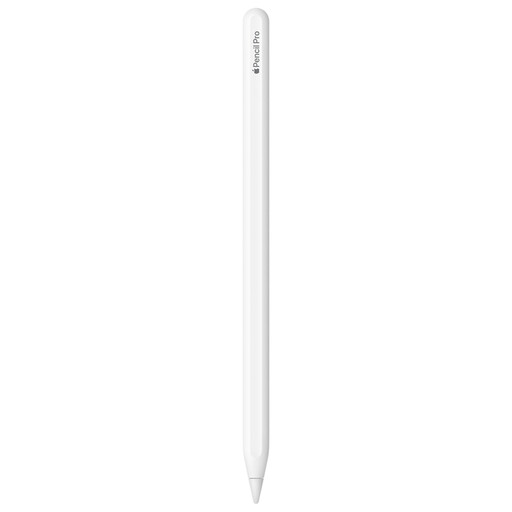
This Apple Pencil Pro option is for readers considering pressure-sensitive drawing on a compatible iPad, rather than a connected pen display. Match your exact iPad model before buying.
 No image available
Consider this pen for pressure-controlled comic line work if your exact iPad supports Apple Pencil Pro.
Apple specifies pressure sensitivity, squeeze and barrel-roll controls, and magnetic pairing and charging. Check the compatible iPad and drawing app for the advanced functions you intend to use.
No: check the full tablet model against the specific pen's compatibility list. Apple lists supported iPads by Pencil model, and Samsung specifies the replacement S Pen discussed here for Galaxy Tab S9 and S10 FE or FE+ models.
It can suit sketching and panel layouts on a compatible iPad, but it is not the choice to assume for pressure-controlled line variation. Apple specifies low latency and tilt sensitivity for Apple Pencil (USB-C), while its comparison information does not list pressure sensitivity for that model.
It can if the display leaves enough usable space for your computer and other materials. Huion lists the researched Kamvas 13 at 366.5 × 217.4 × 11.8 mm; also check the host connection, as Wacom and Huion specify particular video-capable connections for their one-cable setups.
Set up the drawing surface and reference material so you can use them comfortably, and vary your activity. The Health and Safety Executive notes that poorly designed display-screen workstations can contribute to pain, fatigue and eye strain.