Card designers with an existing tablet
If you already use an iPad or an S Pen-capable Galaxy device for lettering, sketches or revisions, identify its exact model before choosing a pen. A familiar brand name alone does not establish compatibility.


Start with the device you use to design cards: a pen must match its exact tablet model before drawing controls matter. For an existing iPad or S Pen-capable Galaxy device, check the compatible pen and the features your drawing app uses; a computer-based pen tablet or separate drawing tablet changes the shared-desk setup rather than simply adding a stylus.
If you already use an iPad or an S Pen-capable Galaxy device for lettering, sketches or revisions, identify its exact model before choosing a pen. A familiar brand name alone does not establish compatibility.
For variable-weight outlines, brush lettering or shading, look for pressure or tilt input on the particular pen, then check whether your tablet and card-design app use those controls.
If you put your equipment away between sessions, consider how the pen is stored and charged. A separate pen tablet also needs room for its connection and working position when you set up again.
Choose a device workflow before comparing pen controls: an accessory for an existing tablet and a separate drawing setup solve different problems at a shared desk.
Choose it when: Your exact iPad appears in Apple's compatibility guidance and you want to draw directly on that device.
Trade-off: Pencil generations support different iPads and controls. Apple documents pressure input for Apple Pencil (1st and 2nd generations) and Apple Pencil Pro; check the chosen app before relying on shortcuts or hover.
Choose it when: Your Galaxy device supports S Pen features and you want a pen Samsung positions for drawing and writing.
Trade-off: Samsung limits compatibility to supported Galaxy S Ultra, Galaxy Note, tablets and computers; it is not a general accessory for every Android tablet.
Choose it when: Your card artwork is made in a computer-based creative workflow, or you want a separate standalone drawing device.
Trade-off: A computer-based pen tablet adds equipment to the desk, while Wacom pens must be matched to compatible Wacom hardware rather than an existing iPad or Galaxy tablet.
| Concern | What to check | Who this matters to |
|---|---|---|
| Device compatibility | Match the full tablet model and software version to the exact pen. For Apple Pencil (1st generation) with iPad (A16) or iPad (10th generation), check the pairing and charging adapter requirement. | If I am keeping my current tablet, I need a pen that will work with its precise model before considering drawing features. Around 33% of consumers put compatibility first. |
| Drawing control | Check pressure and tilt support on the exact pen, then confirm how your drawing app handles the controls you plan to use. | For brush lettering or shaded motifs, I want input that lets me vary marks in my chosen app. Around 27% of consumers primarily seek that creative control. |
| Shared-desk workflow | Check pen storage and charging, plus the desk space and connection needed if you choose a separate pen tablet. | When I clear a shared desk between short design sessions, I want to put my tools away and set them up again without disrupting the work. Around 20% of consumers make that workflow their main concern. |
| Additional kit and upkeep | Check whether your setup needs an adapter, charging cable, replacement tips or a separate computer and input tablet. | If I am adding a pen to equipment I own, I want to know which other items the complete setup requires. Around 20% of consumers prioritise keeping those requirements straightforward. |
Apple Pencil compatibility depends on the iPad model and Pencil generation; Samsung also limits the S Pen Creator Edition to devices supporting S Pen features. A magnetic edge or familiar connector is not a compatibility check.
Find your tablet's complete model name and compare it with the maker's guidance for the exact pen. Check whether pairing and charging require an adapter.
Pressure, tilt and shortcut controls differ by pen, device and app. For example, Apple says double-tap works in supported apps, while barrel roll may work in select third-party apps.
Check the card-design or illustration apps you use for the one or two interactions that matter to your lettering or artwork.
Wacom Intuos Pro is a separate input tablet that connects by USB or Bluetooth. It changes how you arrange your workspace rather than adding a pen to an existing iPad or Galaxy tablet.
Choose a computer-based pen tablet only if that workflow suits your creative software; consider a standalone drawing tablet if you want a separate device without the computer-based setup.
A computer-based pen tablet also needs a compatible computer, connection and desk space each time you set it up.
UK Office for Product Safety and Standards guidance says electrical products marked with the crossed-out wheelie-bin symbol should be collected separately from household rubbish.
When replacing an electronic pen or disposing of a removable battery, use an appropriate electrical-waste or battery collection route.
These brands represent different hardware routes; their pens are not interchangeable across the devices discussed here.
Apple Pencil models serve compatible iPads, with the supported iPad models and input controls varying by Pencil generation.
Samsung positions the S Pen Creator Edition for drawing and writing with Galaxy devices that support S Pen features.
Wacom offers pens alongside computer-based pen tablets, pen displays and standalone drawing devices.
These choices include two pens for compatible iPads and a separate Android drawing tablet supplied with a stylus. Decide whether you are adding to your existing device or choosing a new drawing setup before comparing them.
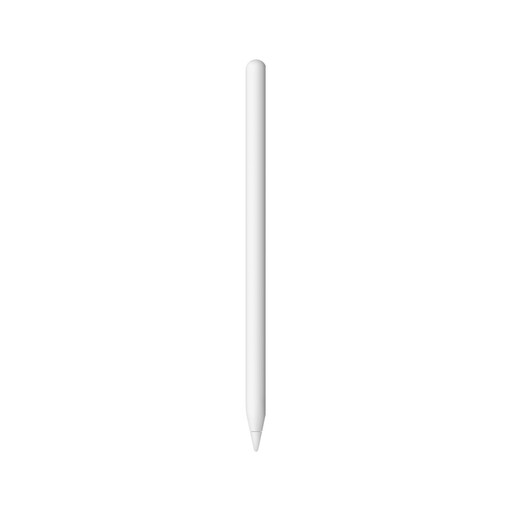 No image available
Consider this pen for drawing and lettering on an iPad compatible with Apple Pencil (2nd Generation). Apple documents pressure-responsive drawing for this generation; confirm that your drawing app uses it.
Check your exact iPad model before purchase. If hover matters to your workflow, confirm support on both the iPad and the app.
 No image available
Consider this as a separate drawing tablet rather than a stylus for equipment you already own. The product name specifies a 12.7-inch 2K display, Android 15, an included stylus and 4096-level pressure sensitivity for T-Pen drawing.
Check whether your intended card-design app uses T-Pen pressure input and whether the tablet's size and weight suit moving between shared desks.
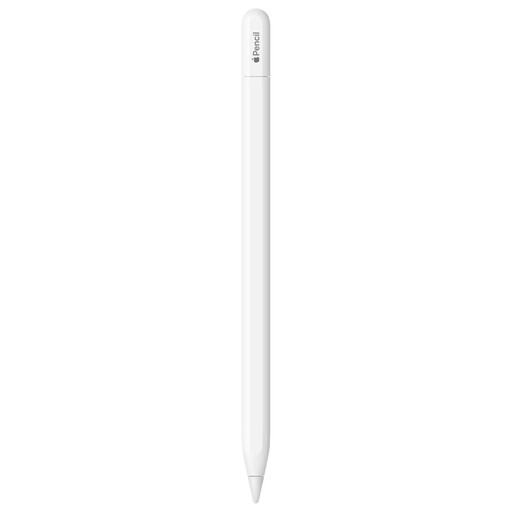 No image available
Consider this for sketching on a compatible iPad when tilt input suits the tools you use. Apple describes magnetic storage and USB-C charging for this model.
Check the exact iPad model and app features. If pressure-responsive line variation is essential, choose a pen with documented pressure input rather than assuming this model provides it.
Match your tablet's full model name to the compatibility guidance for the exact pen. Apple lists compatible iPads by Pencil generation, while Samsung limits the S Pen Creator Edition to Galaxy devices and computers that support S Pen features.
Not every card design needs it: pressure input is most relevant when you want responsive lettering, line weight or shading. Apple documents firmer presses changing marks with Apple Pencil (1st and 2nd generations) and Apple Pencil Pro; check how your chosen drawing app uses that input.
Choose a charging arrangement you can accommodate when you put your workspace away. Apple Pencil Pro charges magnetically on a compatible iPad, while Apple Pencil (USB-C) charges via a USB-C connection; Samsung describes magnetic attachment for the Creator Edition, which is a storage feature rather than a charging claim.
Do not treat a Wacom pen as a general replacement for either device. Wacom specifies compatible hardware for its pens, including particular Cintiq Pro and Movink devices for Pro Pen 3, so check the pen and Wacom device together.
Use an appropriate electrical-waste collection route rather than putting a marked electrical product in household rubbish. UK Office for Product Safety and Standards guidance says products bearing the crossed-out wheelie-bin symbol should be collected separately.