Reading-first reviewers
If you mainly view vocabulary lists, PDFs, web flashcards or e-books while seated, focus on readable text and a viewing angle that does not require you to hold the tablet.


For reading vocabulary lists at a kitchen table, start with a screen you find comfortable to read and a stable way to prop the tablet up. If you regularly write answers or annotate lists, consider a compatible stylus as well, but check the exact pen, accessories and study apps before choosing a tablet.
If you mainly view vocabulary lists, PDFs, web flashcards or e-books while seated, focus on readable text and a viewing angle that does not require you to hold the tablet.
If you write translations, circle mistakes or annotate lists, check which pen works with the exact tablet and whether it comes with the configuration you choose.
If your lists are already in particular apps or accounts, confirm that the tablet can run the required apps and work with the accessories you intend to use.
Decide whether you will only read or also write answers, then check how the tablet will stand on the table and whether your required apps work on it.
| Concern | What to check | Who this matters to |
|---|---|---|
| Reading and tabletop viewing | Check that text is comfortable to read at your usual viewing distance and that the tablet has a suitable stand or case. | If I scan word lists beside my notes, I want the text visible without holding the screen. Around 36% of consumers put reading comfort and tabletop viewing first. |
| Handwritten practice | Confirm pen compatibility, what comes with the exact configuration and whether your study app accepts handwriting. | When I write translations or mark errors, I need a pen workflow that works with my lists. Handwritten practice is the primary concern for around 36% of consumers. |
| A workable reading setup | Check the required apps, storage choice and any accessories needed for your usual way of studying. | If I only read lists and tap through flashcards, I do not want to choose features I will not use. Around 28% of consumers primarily want a straightforward reading setup. |
Apple lists compatible Pencil models for iPad (A16), but the Pencil is a separate accessory. The first-generation Pencil also requires an adapter for pairing and charging with that iPad.
Check the exact pen and any required adapter. For a Samsung configuration, confirm the contents of the specific package rather than relying on the tablet family name.
A screen specification cannot tell you whether your vocabulary, school or cloud-storage app will work on the tablet.
Check the exact app, its operating-system requirements, sign-in method and any offline features you need before ordering.
Storage, advertising options and supplied accessories can differ between configurations bearing the same tablet name.
Compare the exact model, storage and included case, stand, pen and charger.
London Fire Brigade warns that damaged batteries and unsuitable charging equipment can present a fire risk.
Use the supplied charger or a genuine replacement from a trusted supplier, keep charging equipment uncovered and stop using a battery that is swollen or damaged.
The iPad (A16) is worth considering if your study apps and accessories are already part of an Apple setup, or you want optional handwriting.
The Galaxy Tab S10 FE is an Android option for learners who expect to annotate lists or write answers.
The Tab Plus suits consideration when the tablet will usually stay on the kitchen table.
The Fire HD 10 is a reading-first option if the particular apps you need work on Fire OS.
These tablets offer different approaches to reading lists or writing answers at a table. Check your required apps and how you will prop up the exact model before deciding.
 No image available
Consider this tablet for viewing lists, but check your vocabulary app and how you will support the screen at the table.
The product name specifies 8GB RAM, 128GB storage and Wi-Fi. If you plan to write on it, confirm the compatible pen and whether it comes with your chosen configuration.
 No image available
The larger screen and listed stylus may appeal if you want room to view lists and write answers at the table.
The product name specifies a 12.7-inch 2K display, Android 15, 256GB storage and an included stylus pen. Check your required apps and whether you will need a separate stand.
 No image available
This configuration is worth checking if you want to type or write answers as well as read lists.
The product name specifies a 10.1-inch display, 256GB storage, keyboard, mouse and stylus. Confirm the supplied Android version, your app requirements and whether the package includes a suitable stand.
 No image available
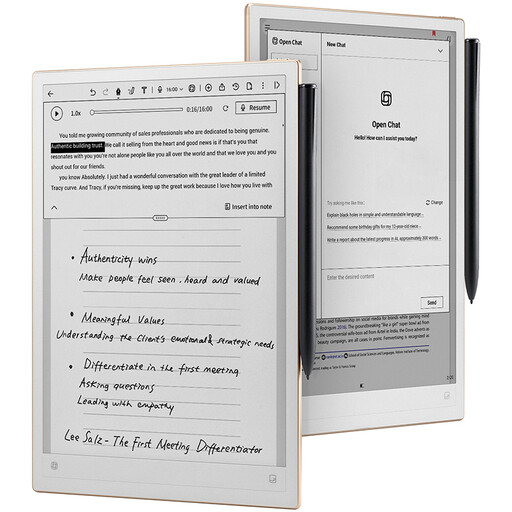
Consider this E Ink model if your vocabulary material suits document reading and handwritten notes rather than relying on an unconfirmed app.
The product name specifies a 10.65-inch E Ink tablet. Check app compatibility and a tabletop stand; its listing states that it has no reading light, so the table needs adequate ambient light.
 No image available
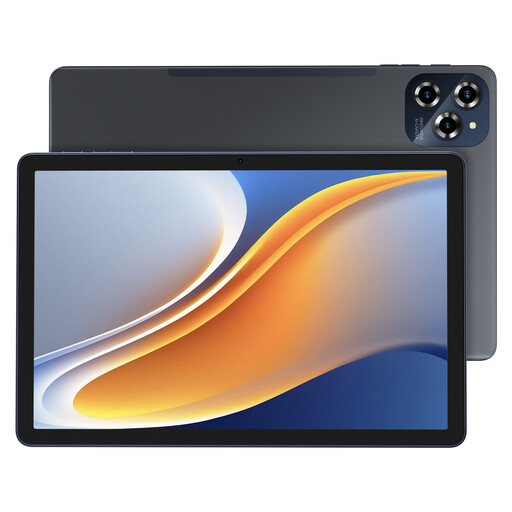
This model offers an 11-inch option for reading lists at a table; confirm your required apps and how you will prop it up.
The product name specifies Android 16 and 256GB storage. If handwriting is important, check pen compatibility and package contents before choosing it.
No, not if you mainly read lists or tap through flashcards. A stylus becomes more relevant when you write translations, mark mistakes or annotate documents; check the compatible pen and package contents for the exact tablet.
Check that your exact vocabulary, school and cloud-storage apps work on Fire OS. Amazon lists a 10.1-inch 1080p screen and 32GB or 64GB storage options, but screen size alone cannot establish whether your study workflow will work.
Use the supplied charger or a genuine replacement from a trusted supplier, and keep charging equipment uncovered. London Fire Brigade warns of fire risks involving damaged batteries and unsuitable charging equipment; stop using a battery that is swollen or damaged.
Arrange for it to be reused or recycled as electrical equipment rather than putting it in ordinary household waste. GOV.UK describes recovery, reuse and recycling as aims of the UK Waste Electrical and Electronic Equipment framework.