Offline route reviewers
You want to inspect a saved route and map area without relying on a connection throughout the journey. Google Maps Help says downloaded areas can be viewed offline, but walking directions are unavailable offline.


For reviewing a saved walking route on a train, start with a tablet that runs your chosen mapping app, has room for downloaded route material and is comfortable to carry; an 10–11-inch screen is a useful size to consider. Choose cellular connectivity for direct data access away from Wi-Fi, or pen support if you regularly annotate routes. Downloaded Google Maps areas can be viewed offline, but Google Maps Help says walking directions are unavailable offline.
You want to inspect a saved route and map area without relying on a connection throughout the journey. Google Maps Help says downloaded areas can be viewed offline, but walking directions are unavailable offline.
You mark waypoints, compare alternatives or write planning notes as you travel. A pen-compatible tablet may suit that workflow; check whether the pen comes with the exact configuration and works in your chosen app.
You want direct data access or location checking after leaving the train. Apple says its Wi-Fi + Cellular iPads include mobile-data and GPS/location capabilities; those features should not be assumed for a Wi-Fi-only iPad.
Check that you can open the route material you need before deciding how much screen space, pen input or direct mobile data matters to you.
| Concern | What to check | Who this matters to |
|---|---|---|
| Offline route access | Confirm the app opens your saved route and downloaded map area without a connection; check which features remain available offline. | If the train connection drops, I still need to inspect my saved route rather than request new directions. Around 36% of consumers put offline route access first. |
| Readable, portable screen | Compare screen size with the tablet’s dimensions and carrying comfort for your usual bag and route documents. | I want enough room to inspect map detail without carrying an awkwardly large tablet. For around 29% of consumers, that balance is the primary concern. |
| Route annotation | Check pen compatibility, whether a pen is included and whether your route app accepts the notes you make. | When comparing walking options, I need to mark points or write notes on the route. Around 21% of consumers place annotation first. |
| Direct data and location | Confirm the exact tablet variant’s cellular and location specifications, alongside the data plan and coverage you would use. | I may change plans away from Wi-Fi and want the tablet to access data directly. Direct connectivity is the leading need for around 14% of consumers. |
Google Maps Help says downloaded map areas can be viewed offline, but walking directions are unavailable without a connection.
Download the relevant area before travelling and try your route-review workflow in aeroplane mode. If offline walking guidance matters, check the chosen walking app’s behaviour separately.
Apple identifies direct mobile data and GPS/location capabilities for Wi-Fi + Cellular iPads, not for every iPad configuration.
Check the full model and connectivity variant if you need those features after leaving the train.
Amazon says Google Play is not supported on Fire Tablets, which matters if your route workflow depends on an app obtained through Google Play.
Check the availability of your mapping, GPX and note-taking apps, including any file-import requirements, before choosing a tablet.
Ordnance Survey describes a GPX trace as a guide whose accuracy can change with map scale, and advises using judgement and a paper map.
Review the route before setting out and take a suitable backup for the walk rather than relying solely on the tablet.
Consider an iPad if its apps suit your route workflow, particularly when choosing between Wi-Fi-only and Wi-Fi + Cellular configurations.
The Galaxy Tab S10 Lite 5G is one option to examine if you want a screen close to 11 inches and pen-supported route notes.
The Lenovo Tab Plus is worth examining when a larger viewing area matters more than compact carrying.
Consider a Fire HD 10 only after confirming that your mapping and route-file workflow works in its app environment.
These tablets offer different ways to review route material: compact and near-11-inch screens, pen-oriented configurations, and larger models with listed cellular connectivity. Check your chosen app and offline workflow for any model before relying on it during a journey.
 No image available
Consider this larger tablet if you want space for route notes and an included pen, and have room to carry its 12.7-inch format.
The product name lists a 2K display, 256GB storage, Dual SIM 4G LTE, GPS and an included stylus pen. Check that your mapping app handles the route files and offline tasks you need.
 No image available
The 11-inch screen suits route review if you prefer a size close to the portable range discussed above.
This is the Wi-Fi, 128GB configuration. Download route material before travel if you expect to review it without a connection; do not assume this variant has cellular features.
 No image available
This configuration is worth considering if you plan to annotate routes with the included Focus Pen.
The product name specifies 8GB RAM and 128GB storage. Check the exact screen dimensions, app compatibility and offline behaviour against your route-review workflow.
 No image available
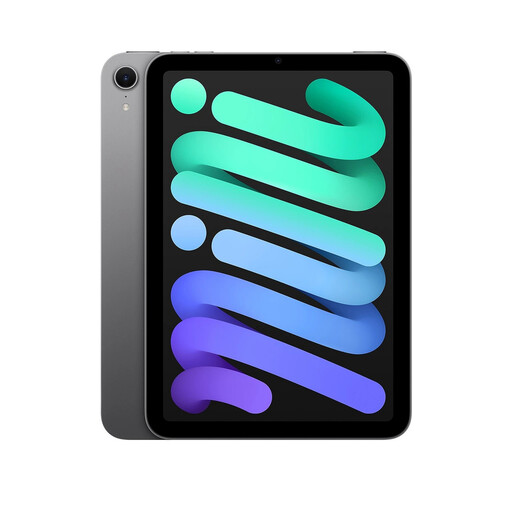
Consider this iPad Mini if compact carrying matters more to you than having a larger area for reading maps.
The product name identifies the A17 Pro model and 512GB configuration. Check its screen size, connectivity variant and route-app workflow before deciding whether it suits your journey.
 No image available
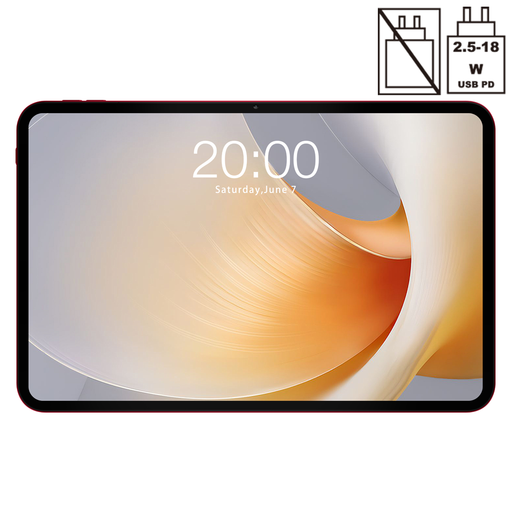
Choose this large-screen format only if viewing area takes priority over compact carrying on the train.
The product name lists a 13.4-inch 120Hz display, 256GB storage, Dual SIM 4G LTE and GPS. Confirm that your intended mapping app supports the route and offline features you need.
Not if you only need route material that you can save and open offline. Consider cellular for direct data access while travelling or location use away from Wi-Fi, and check the exact variant rather than assuming those features come with every tablet.
No. Google Maps Help says downloaded map areas can be viewed offline, but walking directions are unavailable offline. Check a dedicated walking app separately if you need that feature.
No; it is mainly useful when you regularly write notes, sketch alternatives or mark up route material. For reading a completed route, focus on whether the screen and app make that material comfortable to inspect.
Do not rely on an on-screen route trace alone. Ordnance Survey says a GPX trace is a guide whose accuracy can change with map scale, and advises using judgement and a paper map; plan a suitable backup for the conditions of your walk.