Long-form café writers
If you draft and revise several paragraphs at a time, the keyboard, screen angle and way you move through text matter as much as the tablet itself. Check the complete setup before committing to a model.


For regular book-review drafting in a café, choose a tablet only if its writing apps and a stable, compatible keyboard setup suit the way you work. A smaller screen takes up less table space, while a larger one gives you more room to read alongside your draft; if your review depends on desktop applications, consider a Windows 2-in-1 rather than assuming a tablet app will do the same job.
If you draft and revise several paragraphs at a time, the keyboard, screen angle and way you move through text matter as much as the tablet itself. Check the complete setup before committing to a model.
If a book and everyday belongings already fill your bag, compare the tablet's size and weight with the keyboard and case you would carry. The tablet's standalone weight is not the weight of the writing setup.
If your citations, final formatting or files depend on desktop applications, establish which software you need before choosing an operating system. A detachable keyboard alone does not make a tablet app equivalent to a desktop programme.
Start with the software needed to finish the review, then assess the typing setup and the space you can spare in your bag and on a café table.
| Concern | What to check | Who this matters to |
|---|---|---|
| Long-form typing | Check keyboard compatibility with the exact tablet model, its layout and whether the stand holds the screen at a useful angle. | If I spend a café session revising paragraphs rather than jotting down notes, I need a keyboard and screen position I can work with throughout the draft. Roughly 42% of consumers put that typing setup first. |
| Portability | Compare screen size and stated tablet weight, then account for the keyboard, case and charging equipment you plan to carry. | When I travel with a book and other daily items, I want the complete setup to fit my bag and the café table. For roughly 33% of consumers, carrying comfort is the primary concern. |
| App and file workflow | Confirm your writing app, cloud files, export format and any desktop-only tools on the operating system you intend to use. | If my references or final document require particular software, a convenient tablet is little use unless I can complete the review on it. Workflow compatibility comes first for roughly 25% of consumers. |
A tablet-only purchase may leave you without the physical typing setup you planned to use. Apple lists the Magic Keyboard for iPad Air separately.
Check the keyboard's compatibility with the exact tablet generation and confirm what is included before ordering.
Samsung states that Galaxy Tab S10 FE and FE+ packages do not include a travel adapter.
Check the contents and charging requirements for the exact model. If you plan to use an existing charger, confirm that its output and cable are suitable.
A larger screen gives you more room for source material and your draft, but the tablet and keyboard also need space on a café table and in your bag.
Decide whether reading room or compact carrying matters more, and assess the tablet with the keyboard attached.
The National Cyber Security Centre warns that attackers on insecure public networks may intercept or modify data.
Use a trusted connection or mobile data for sensitive logins, and keep the tablet's software updated.
The 11-inch iPad Air is an iPadOS option if your writing and reference apps work on it and you want a separate keyboard-and-trackpad accessory.
The Galaxy Tab S10 FE offers a 10.9-inch Android option for writers who also want S Pen support for notes or annotations.
The Idea Tab Pro is a larger-screen Android option when keeping source material visible alongside a draft matters more than a compact setup.
The 12-inch Surface Pro is a Windows 2-in-1 option when a review depends on desktop software or desktop-style file handling.
These tablets offer compact formats to consider for café drafting. The iPad Air has a separately purchased keyboard option; for the TABWEE models, check the exact keyboard setup and your writing apps before choosing.
 No image available
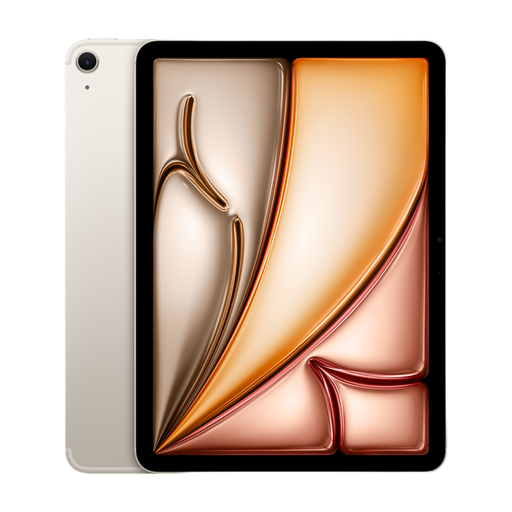
Consider this iPad Air if your writing apps work on iPadOS and you want an 11-inch tablet for café sessions. Apple specifies the 11-inch Wi-Fi model at 464 g; a compatible Magic Keyboard is sold separately, so check the exact accessory and account for its additional carrying weight.
 No image available
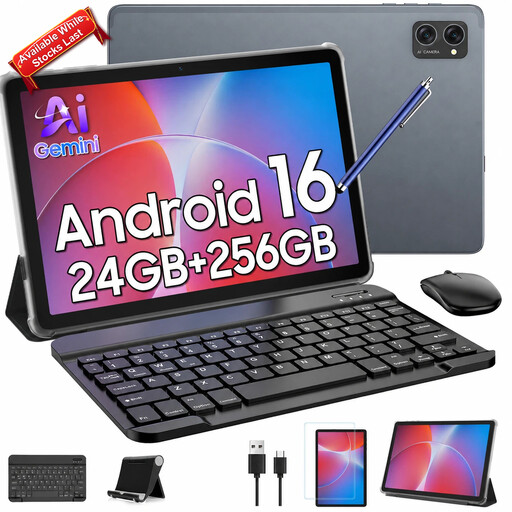
The 10.1-inch T20 is worth assessing if you want a smaller writing surface with a keyboard option. Its title lists 256GB storage and a keyboard, mouse and stylus; confirm the exact box contents, keyboard layout and stand angle. Check the supplied Android version and that your writing apps and files work as required.
 No image available
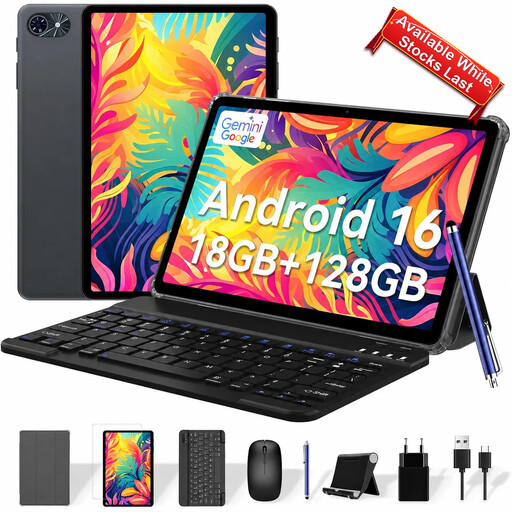
Consider the T80 if a 10-inch tablet suits your available bag and table space. Its title identifies Android 16, 128GB storage and a keyboard; confirm the exact keyboard contents, layout and stand before relying on it for extended typing. Check your required writing apps and file workflow as well.
Not necessarily for short notes, but a compatible physical keyboard and stable stand are worth prioritising for regular multi-paragraph drafting. Check the keyboard layout and viewing angle on the exact tablet-and-accessory combination you would use.
Choose around 11 inches if bag and café-table space are your main constraints; consider a 12.7- or 13-inch-class screen if you need more room to read extracts beside your draft. Compare the complete keyboard-equipped setups rather than screen sizes alone.
Check the compatible keyboard, stand, case and charging equipment for the exact tablet variant. Apple sells the iPad Air Magic Keyboard separately, while Samsung says Galaxy Tab S10 FE and FE+ packages do not include a travel adapter.
Use a trusted connection or mobile data for sensitive account activity: the National Cyber Security Centre warns that insecure public networks can expose data to interception or modification. When a tablet reaches the end of its life, GOV.UK says electrical products can be taken to a household waste recycling centre; devices with non-removable batteries should be treated as electrical products.