Bread-first households short on space
If the freezer is mainly for sliced bread and a small reserve of other food, the cabinet footprint, ventilation allowance and door opening may matter more than extra capacity.


If sliced bread is the main reason for buying a separate freezer and space is tight, consider a tabletop model; if bread will share the appliance with regular groceries or batch-cooked food, make room for an undercounter model. The product information lists a 33-litre LOGIK tabletop freezer measuring 51 × 44 × 47.5 cm, while Bosch GB and Beko UK list undercounter examples with 83 and 95 litres respectively. Measure the installed space, including ventilation and door clearance, before weighing capacity against defrosting work and energy-label information.
If the freezer is mainly for sliced bread and a small reserve of other food, the cabinet footprint, ventilation allowance and door opening may matter more than extra capacity.
If bread must share space with regular frozen groceries or batch-cooked meals, compare undercounter capacity and internal organisation as well as the space the appliance occupies.
If an undercounter appliance will fit, a frost-free or NoFrost model may be more relevant than the smallest tabletop cabinet. Check the defrost method of the exact model.
For a freezer to hold sliced bread in a small kitchen, establish where it can be installed first. Then decide how much other food it must hold and how much defrosting work you are willing to take on.
| Concern | What to check | Who this matters to |
|---|---|---|
| Fit and door access | Measure height, width and depth with the exact model’s ventilation allowance; check the full door-opening path. | If space is tight, I need the freezer to fit where its door can open properly. Around 42% of consumers put installation fit first. |
| Capacity and organisation | Allow for the loaves and other food you will store at once; check the stated volume and whether the layout accommodates bread bags. | When bread shares space with groceries or cooked meals, I need enough room to keep everything accessible; around 33% of consumers prioritise capacity and organisation. |
| Maintenance and appliance information | Check the defrost method, then compare annual energy use and noise information on labels for suitably sized models. | I would rather spend less time defrosting and understand the appliance’s ongoing energy use and noise before choosing. For around 25% of consumers, these are the primary concerns. |
A compact freezer can still be difficult to install if its required ventilation space or door swing extends beyond the measured gap. The listed specification covers 50 mm at the sides and above for the Essentials CTF34W18; that allowance is specific to that model.
Check the intended position against the exact freezer’s installation instructions, including ventilation, obstructions, socket access and door opening.
Ambient-temperature suitability depends on the model. The listing states that the LOGIK LTF33W23 is not for unheated areas, while Beko states that its compatible FreezerGuard models can operate down to −15°C.
If the freezer will go in a garage or outbuilding, check the exact model’s ambient-temperature specification and installation instructions.
The rating letter does not replace the appliance-specific energy-use figure. Energy Saving Trust advises looking at the other information on energy labels, including capacity and noise, when comparing appliances.
Choose a capacity that accommodates your food, then compare energy-use and noise information for suitable freezers of a similar type and size.
The specification lists the compact LOGIK LTF33W23 as manual defrost, whereas Beko describes the UFF4584 as Frost Free and Bosch GB identifies the GTV15NWEBG as Full NoFrost. Those features apply to the named models, not every freezer in either format.
Decide whether a smaller cabinet is worth periodic manual defrosting, and confirm the method on any model you shortlist.
The LTF33W23 is a tabletop option when a small cabinet matters more than generous freezer volume.
The named undercounter models offer routes for consumers who can allocate more space to frozen food.
The GTV15NWEBG is an undercounter alternative when 83 litres and reduced defrosting work suit the planned storage.
These choices include a built-under freezer for suitable cabinetry and freestanding undercounter freezers for kitchens with floor space. Compare their installation arrangements before deciding whether either format works better than a tabletop freezer for your bread storage.
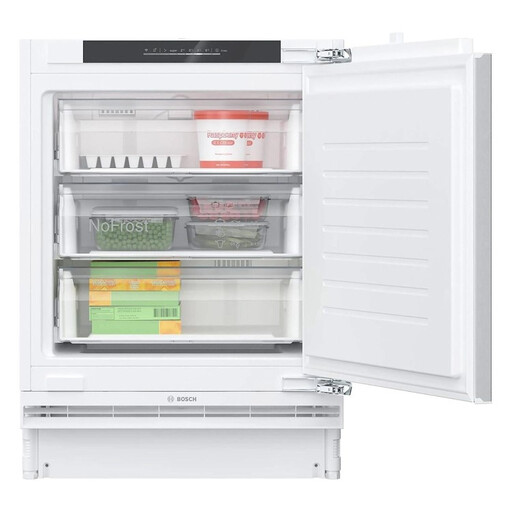 No image available
Consider this model if bread and other frozen food need a place beneath a worktop and your kitchen can accommodate a built-under appliance behind a furniture door.
The product title specifies No Frost and an E energy rating. Before choosing it, check the cabinetry arrangement, plinth ventilation and installed opening against the model’s instructions.
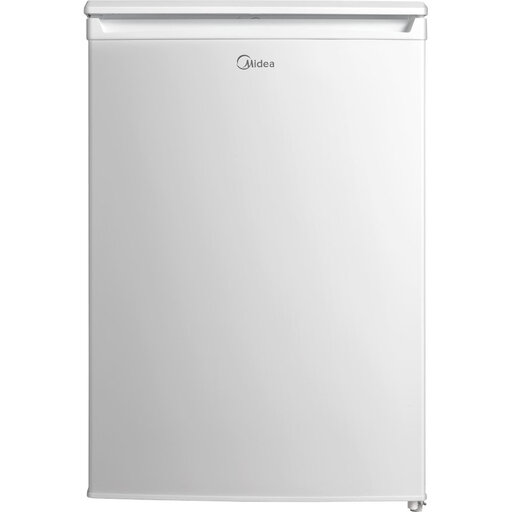
 No image available
Consider this freestanding option if sliced bread will share the freezer with other groceries and an undercounter position is available.
The product title states 85 L, 55 cm width and an E energy rating. Allow for periodic manual defrosting, and check the full installation clearance before choosing a position.
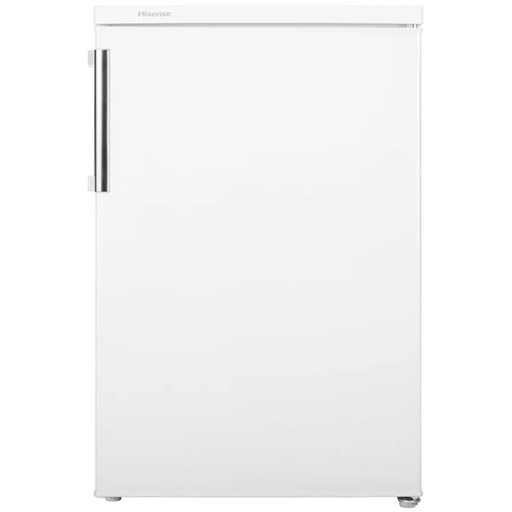
 No image available
This freestanding undercounter model is worth considering if you want to separate bread from other frozen food in drawers.
Confirm the capacity for this exact model before deciding how many loaves and other items it can hold: the product information gives both 83 L and 86 L. Plan for manual defrosting and check the installation clearance.
 No image available
Consider this model only after checking that its installed dimensions and storage space meet your bread-and-grocery needs.
Confirm the exact capacity, width and defrost method before ordering, as the product information gives conflicting figures and descriptions for those decision-critical details.
Allow for the appliance, its model-specific ventilation clearance and the full door-opening path. The listed specification covers 50 mm at the sides and above for the Essentials CTF34W18, but you should use the installation instructions for the freezer you actually choose.
It may be enough if bread is the main item and you keep only a small amount of other food frozen. For bread alongside regular groceries or batch-cooked meals, compare the storage layout and installed space of larger undercounter models; The LOGIK LTF33W23 is listed at 33 litres, while Bosch GB and Beko UK list undercounter examples at 83 and 95 litres.
Manual defrost can be a reasonable trade-off if a compact cabinet is the priority and you accept periodic maintenance. If avoiding that work matters more and an undercounter model fits, compare its exact defrost method: The specification gives the LOGIK LTF33W23 as manual defrost, while Beko describes the UFF4584 as Frost Free.
Compare the energy-use figures on the labels of suitably sized freezers rather than choosing by rating letter alone. Energy Saving Trust also points to label information on capacity and noise, which can help distinguish models that otherwise appear similar.
Only choose one whose exact model specification permits the expected ambient temperature. The product information states that the LOGIK LTF33W23 is not for unheated areas, while Beko states that compatible FreezerGuard models can operate down to −15°C; neither statement establishes suitability for a different model.