
24/7 Customer Support

Free returns

Same-day & Next-day Delivery

Quality Guaranteed

Unlock Your Welcome Offers: FREE Delivery | Up to 80% OFF | Free 30-day JoyPlus trial
Download the APP
A compact speaker can transform a desk, bookshelf or living room, but the wrong choice may lead to weak bass, awkward controls or a battery that rarely lasts through the day. When comparing tabletop wireless speakers, look beyond appearance and headline wattage.
The following buying guide explains the specifications that matter, common marketing traps and suitable options for different UK listening habits.
A high RMS figure can indicate stronger output, but it does not describe the entire listening experience. Driver size, cabinet construction, amplifier design and digital signal processing also affect clarity and bass response.
For example, a compact Bluetooth tabletop speaker with a well-designed two-way system may sound more balanced than a larger model that focuses mainly on power figures. Check whether the listing states RMS output, driver configuration and frequency response rather than relying on a single wattage number.
Some tabletop models use wireless streaming but still require continuous mains power. If you want to move a speaker between a home office, kitchen and garden room, check for a built-in battery, charging method, weight and carrying handle.
Battery claims should also be read carefully. “Up to” playtime generally depends on volume, connection type and lighting or processing features. A rechargeable tabletop speaker may offer convenient movement, but a permanently powered desktop model can be more suitable for uninterrupted daily use.
Features such as LDAC, AirPlay 2 and multi-room playback are useful only when your devices and network support them. LDAC is particularly relevant to compatible Android devices, while AirPlay 2 is designed for Apple devices on a suitable Wi-Fi network.
Before purchasing, check whether you need Bluetooth alone, wired USB-C or AUX input, Wi-Fi streaming or a complete multi-room speaker system. This avoids paying for features that will remain unused.
For music, films and gaming, examine the speaker’s RMS output, driver sizes and channel arrangement. A stereo pair can create wider left-and-right separation than a single cabinet. A 2.1 design adds a dedicated low-frequency element, while a two-way system commonly combines a mid-bass driver with a tweeter.
Frequency response can provide useful context, but it is not a guarantee of a particular sound signature. Room size, placement and listening distance all influence perceived bass and detail.
Bluetooth 5.3 or Bluetooth 5.4 can support current wireless connections, but the codec determines how audio is transmitted. An LDAC Bluetooth speaker may support higher-bitrate wireless playback from compatible Android hardware, with the source device and settings determining the actual result.
USB-C and AUX inputs remain valuable for laptops, desktop computers, monitors and older sources. A wireless desktop speaker with several input options can adapt more easily when your setup changes.
Measure your available space, including room behind the speaker for ports and bass reflex openings. Desktop speakers for music should be positioned at or angled towards ear level. Stands can help direct sound towards your listening position and reduce the need to place speakers flat on a desk.
For UK homes, also check the supplied power arrangement, charging requirements, warranty information and safety instructions. Look for appropriate product compliance information, avoid using damaged cables and keep mains-powered equipment away from water and excessive heat.
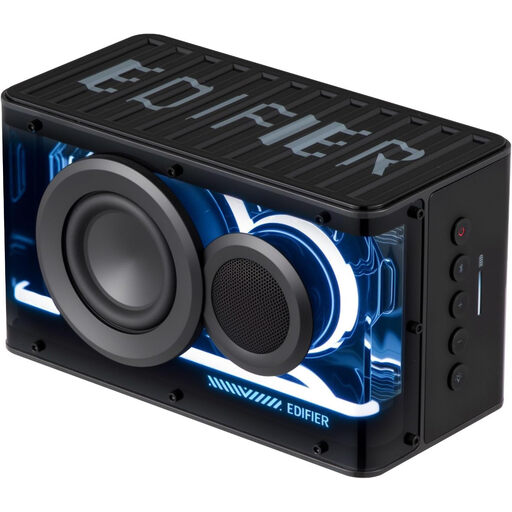
Why This Fits Their Persona: A compact choice for a bedroom desk, student workspace or occasional room-to-room listening, with battery operation for flexible use.
Its 25W RMS output is stated alongside driver details, while Bluetooth 6.0, USB-C charging and stereo pairing provide practical features rather than wattage alone.
Up to 15 hours’ stated playtime; Music, Game, Movie and Outdoor sound profiles; compact portable format.
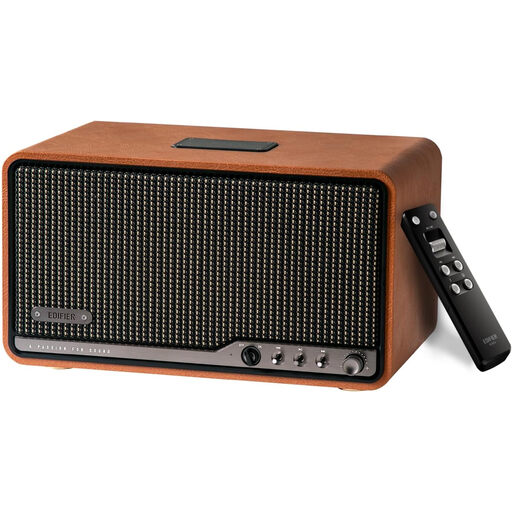
Why This Fits Their Persona: Suited to listeners who want a substantial bookshelf or living-room speaker with a wood cabinet and flexible home streaming.
The specification lists 80W RMS, 24-bit/96kHz support, Bluetooth 5.4 with LDAC, USB-C and AUX, making the feature set easier to assess.
AirPlay 2 multi-room support; left/right stereo pairing through the app; 48Hz–40kHz stated frequency response.

Why This Fits Their Persona: Designed for a small footprint where clear audio, laptop connectivity and correct listening angles matter.
Its compact dimensions are specified per speaker, and the bundled 15-degree stands help direct sound towards the user rather than across the desktop.
66W RMS; USB-C and AUX inputs; Hi-Res Audio and LDAC support; touch-sensitive controls.
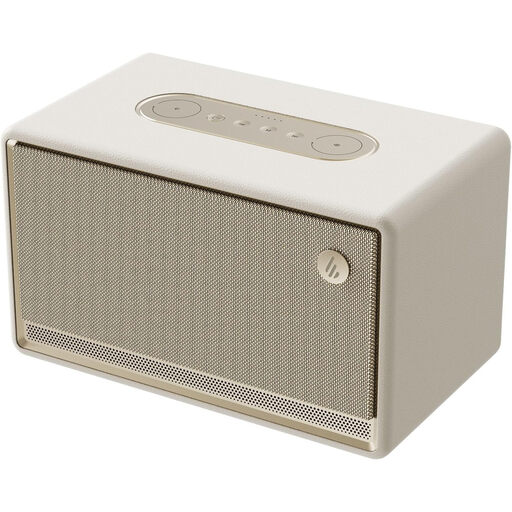
Why This Fits Their Persona: A practical match for listeners moving between home office, living room and other dry indoor spaces, with occasional portable use.
The built-in battery is clearly stated with up to 12 hours’ playtime, while Wi-Fi, Bluetooth, USB and AUX cover different listening sources.
AirPlay 2 multi-room grouping; simultaneous two-device Bluetooth connection; 4-inch mid-low driver and dual tweeters.
We have compiled a complete, real-time list of products that fully satisfy these strict selection criteria and UK safety regulations.
Yes, provided the dimensions and connection options suit your desk. A compact stereo system can improve music, meetings, podcasts and gaming audio, while USB-C or AUX can offer a direct connection to a computer. Place the speakers at ear level and avoid blocking ventilation or ports.
Battery-powered models use electricity mainly during charging. Mains-powered speakers draw power while switched on or in standby. Actual running cost depends on the device’s power consumption, standby behaviour and daily usage. Switching the speaker off at the socket when it is not needed can reduce unnecessary standby use.
Playtime varies with volume, codec, Wi-Fi use, lighting and battery condition. Treat quoted figures as maximum guidance rather than a guaranteed daily result. To help preserve the battery, use the supplied or compatible charger, avoid excessive heat and follow the manufacturer’s charging instructions.