Detailed-chart readers
If your astronomy books contain star maps, labelled diagrams or dense PDF pages, visible page area and the legibility of small text will shape your choice.


Choose a roughly 13-inch tablet if you often read full-page star charts or dense PDFs at a desk and can accept a heavier device. A roughly 11-inch model makes more sense when you carry or hold it frequently; whichever size you choose, check small-label legibility, reflections and the pen setup if you annotate.
If your astronomy books contain star maps, labelled diagrams or dense PDF pages, visible page area and the legibility of small text will shape your choice.
If you highlight passages or label diagrams, check both the pen arrangement and whether your reading app lets you keep and export your notes.
If you read near windows or under overhead lights, compare screen reflections and the appearance of dark images at the seat where you usually study.
For library astronomy reading, start by checking a page from your own book at normal reading distance. Then weigh the space it needs against how often you will carry or hold the tablet.
| Concern | What to check | Who this matters to |
|---|---|---|
| Readable page area | Open a representative chart or two-column PDF. Check small labels at your usual viewing distance and whether landscape orientation helps. | I want to see a full-page star chart without repeatedly zooming into its labels. Around 27% of consumers put readable page area first. |
| Annotation | Confirm the exact model's pen compatibility and box contents, then check whether your PDF app can export notes. | When I study diagrams, I want to mark passages and add handwritten labels without losing those notes later; annotation comes first for around 27% of consumers. |
| Carrying and handling | Compare the weights of the exact variants and decide whether you will usually read handheld or with the tablet supported. | I carry my tablet alongside books and would rather handle a smaller screen than a heavier device. Portability is the main concern for around 20% of consumers. |
| Reflections and long sessions | View dark sky images and small pale labels under similar lighting; compare reflections and text appearance. | Reflections at my usual seat can obscure the details I am trying to read, so the screen finish matters to me; around 26% of consumers place this concern first. |
A larger page can be useful for charts, but holding it may be less convenient. Samsung specifies 664 g for the Galaxy Tab S10 FE+ Wi-Fi model, while Apple specifies 464 g for the 11-inch iPad Air Wi-Fi model.
Decide whether you will normally read at a desk or hold the tablet, and compare the weights of the variants you are considering.
A stand or protective case may also be useful if you expect to read at a desk for extended periods.
Samsung lists an in-box S Pen for the Galaxy Tab S10 FE and FE+, whereas Apple specifies Pencil compatibility for iPad Air without establishing that a Pencil is included.
Check the exact bundle and compatible pen before choosing a tablet primarily for handwritten notes.
Depending on the model and bundle, obtaining a compatible pen may be an additional step.
Matte and anti-reflective descriptions do not tell you on their own how small labels or dark sky images will look under your library's lighting.
Where possible, inspect a familiar astronomy PDF under similar lighting and compare reflections, text sharpness and image appearance.
The cited iPad Air range offers an 11-inch option for carrying and a 13-inch option for more page area.
The cited Galaxy Tab S10 FE range offers 10.9-inch and 13.1-inch screen sizes with an in-box S Pen.
The cited Tab P12 Matte Display bundle is a large-screen route for readers comparing display finishes and pen-equipped configurations.
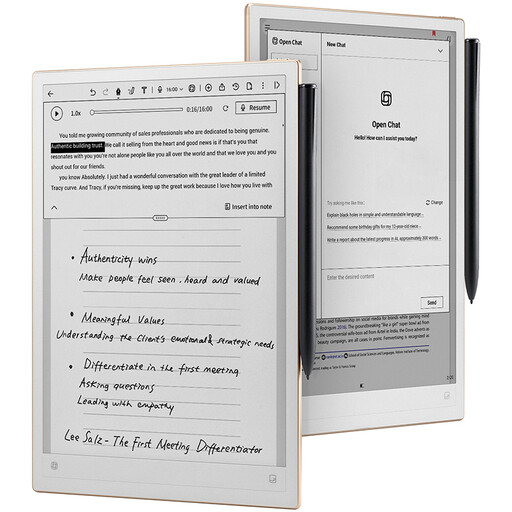
These options include an E Ink note-taking tablet and Pad or ArtPad models relevant to reading astronomy books. Compare a page from your own books and check each model's annotation setup before choosing.
 No image available
For reading astronomy material and taking notes, try a representative illustrated page before deciding whether this E Ink display suits your books.
The product title specifies a 10.65-inch E Ink tablet and a protective case. Check whether you will need a reading light at your usual seat.
 No image available
If you plan to carry astronomy PDFs between home and the library, check chart labels at your usual zoom level and confirm the pen arrangement if you annotate.
The listed variant has 8G RAM, 128GB storage and Wi-Fi.
 No image available
The larger screen is worth considering if you usually read charts with the tablet supported and want to mark up diagrams.
The title specifies a 12.7-inch 2K display, 256GB storage and an included stylus. Check its handling weight and reflections for your usual reading position.
 No image available
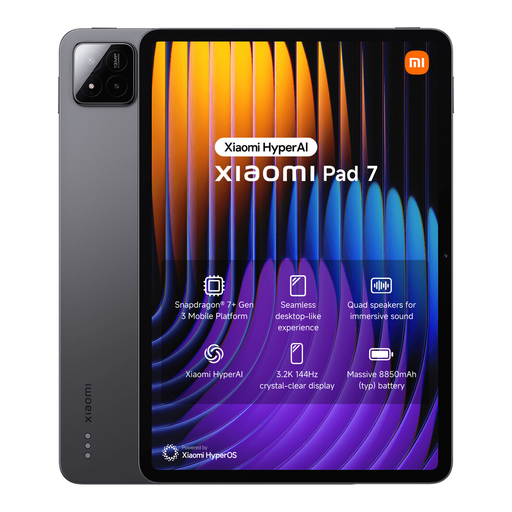
This configuration is relevant if handwritten notes are part of your astronomy reading; check that your preferred PDF app supports the annotation workflow you need.
The title specifies 8GB RAM, 128GB ROM and an included Focus Pen. Compare handling and reflections before committing to long library sessions.
 No image available
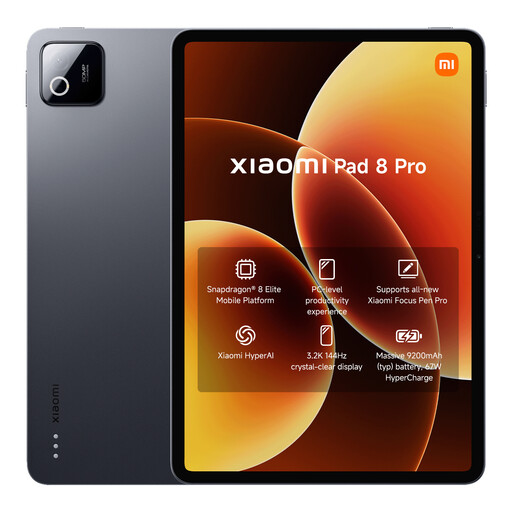
If this model appeals for reading astronomy PDFs, assess a detailed chart on its screen and check its carrying weight for your library routine.
The listed variant has 12G RAM and 512G ROM. If you want handwritten annotations, check the compatible pen separately rather than assuming it is included.
Choose roughly 13 inches if you regularly view dense charts or two-column PDFs with the tablet supported on a desk; choose roughly 11 inches if carrying and holding it matter more. For a concrete weight comparison, Apple specifies 464 g for the 11-inch iPad Air Wi-Fi model, while Samsung specifies 664 g for the 13.1-inch Galaxy Tab S10 FE+ Wi-Fi model.
No, but a stylus is useful if you plan to label diagrams or make handwritten notes in PDFs. Samsung lists an in-box S Pen for the cited Galaxy Tab S10 FE models; Apple lists Pencil compatibility for iPad Air, so check the exact bundle before counting on a pen being included.
A matte finish is worth comparing if reflections interfere with your reading, but it cannot guarantee comfort or preserve the appearance you prefer in dark astronomy images. Lenovo describes the cited Tab P12 Matte Display as anti-glare, while Apple specifies an anti-reflective coating for the cited iPad Air models; view your own material under similar lighting where possible.